· marketing · 7 min read
Real-Time Analytics: Why Timing is Everything in Digital Marketing
Learn how real-time analytics turns minutes into measurable advantage. This post explains why timing matters, shows case studies from Oreo, Netflix, Uber and Starbucks, and gives a practical playbook and toolset to move from lagging reports to instant action.
Make decisions in minutes, not months
You can win or lose in the same afternoon. That’s the short promise of real-time analytics in digital marketing. Act fast on what customers are doing now - not what they did last week - and you’ll convert more, reduce wasted spend, and protect your brand reputation before stories trend.
This article shows you what real-time marketing actually looks like in practice. You’ll get case studies from brands that turned timing into advantage, a practical implementation playbook, recommended tools, and the metrics that matter. Read it if you want to move from hindsight to foresight.
Why timing matters: three quick truths
- Customers expect relevance in the moment. A late coupon is a missed opportunity.
- Digital channels change lightning-fast. One viral post can overwhelm infrastructure or demand in hours.
- Competitive edge increasingly comes from speed - fast experiments, fast personalization, fast triage.
Short answers get quick wins. Longer projects create durable capability. Do both.
Four real brands that proved timing wins
1) Oreo - the Super Bowl blackout social lesson
When the Super Bowl lights went out in 2013, Oreo’s social team published the now-famous “You can still dunk in the dark” tweet within minutes. It turned a live event disruption into a viral brand moment, generating massive engagement and long-term visibility for minimal media spend.
Why it worked: rapid social listening, an empowered creative team, and a decision loop measured in minutes. Oreo’s example is the classic proof that when your brand is prepared to act in real time, small content can outrisk expensive ads.
Further reading: coverage of Oreo’s Super Bowl tweet and its impact is widely documented (for example, see this piece from The Atlantic).
(Reference: https://www.theatlantic.com/technology/archive/2013/02/how-oreo-ripped-up-the-super-bowl-ad-game/273128/)
2) Netflix - personalization and experimentation at streaming speed
Netflix continuously experiments with thumbnails, recommendations, and messaging. Their engineering and data teams run thousands of near-real-time experiments and tune personalization algorithms to respond quickly to session behavior.
Why it worked: Netflix treats viewer actions as immediate signals. When a recommendation or title preview underperforms, experiments are adjusted and new variants rolled out quickly, improving engagement and retention across millions of users.
Further reading: Netflix discusses many of their systems and experimentation practices on the Netflix Tech Blog.
(Reference: https://netflixtechblog.com/)
3) Uber - a real-time marketplace and pricing engine
Uber is essentially a real-time matching system: supply and demand change by the minute. Surge pricing, driver dispatch, and rider ETA adjustments rely on immediate data - GPS, traffic, cancellations - processed and turned into decisions in seconds.
Why it worked: immediate data -> algorithmic decision -> user-facing action. That loop is the core of Uber’s business model and demonstrates how real-time analytics isn’t just marketing; it can be the product.
Further reading: Uber Engineering publishes articles on marketplace systems and real-time operations.
(Reference: https://eng.uber.com/)
4) Starbucks - personalized offers and the mobile moment
Starbucks uses real-time signals from mobile orders, loyalty activity, and location to serve contextually relevant offers and to optimize in-store staffing and inventory. Their digital flywheel makes each visit more valuable the faster they react to customer behavior.
Why it worked: combining loyalty data with real-time transaction and location signals allowed Starbucks to personalize offers that drove incremental visits and higher spend per customer.
Further reading: Starbucks’ stories and newsroom detail their digital and loyalty strategies.
(Reference: https://stories.starbucks.com/)
What real-time analytics can actually do for marketing (concrete use cases)
- Real-time personalization - change website recommendations, creative, and offers within the same session.
- Dynamic pricing and promotions - update offers based on demand, inventory, and competitor signals.
- Social listening and reactive creative - spot trends, sentiment shifts, or crises and respond within minutes.
- Campaign optimization - reallocate budget mid-flight to high-performing channels or creative variants.
- Fraud and anomaly detection - stop a problematic campaign, bot attack, or operational issue before it scales.
Each use case requires a simple loop: sense - analyze - decide - act, in that order, and all within the business timeframe you care about.
A practical playbook: build real-time capability in 6 steps
Define the decision windows
- What decisions must happen in seconds, minutes, hours, or days? For social response, minutes matter. For weekly assortment, they don’t.
Choose the use-cases you’ll win with
- Start with 2–3 high-impact use-cases (e.g., real-time personalization on the homepage, social listening for brand mentions, and campaign reallocation for paid search).
Instrument events at source
- Capture clicks, impressions, location pings, transactions, and social mentions as they occur. Avoid batch-only collectors.
Build a streaming pipeline
- Use a message broker and stream processing to move and enrich events in real time.
Layer decision logic and actions
- Turn insights into rules, models, or experiment variants that trigger actions (API calls, creative swaps, ORMs for pricing, automated social posts).
Observe, iterate, govern
- Monitor performance, ramp gradually, and add guardrails to prevent runaway automation or privacy violations.
Follow this sequence and you’ll create repeatable flows that scale.
Essential tech stack (what to consider)
- Event streaming - Apache Kafka is the standard for moving high-volume event streams reliably. (
- Real-time OLAP & analytics - Apache Druid or ClickHouse for sub-second queries on event data. (
- Product analytics - Amplitude or Mixpanel for session-level funnels and behavioral playback. (
- Tagging & routing - Segment (or equivalents) to simplify instrumentation across many endpoints.
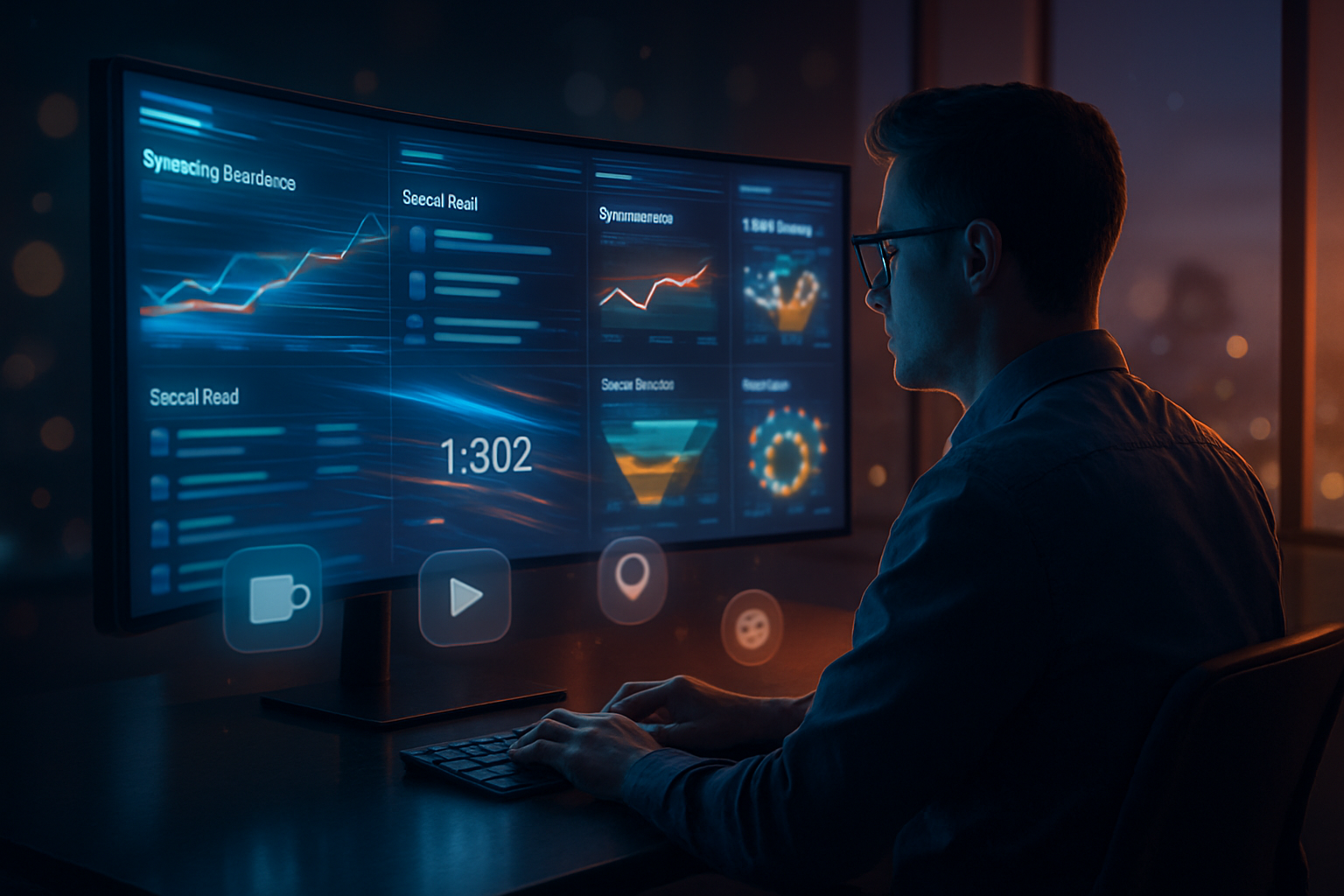
- Real-time dashboards & alerts - dedicated dashboards for minute-by-minute metrics and automated alerting when thresholds breach.
- Decision & orchestration - an API layer or edge-decision engine that injects personalization, creative swaps, or pricing changes into live experiences.
You don’t need all of these at once. Start with simple event capture and a dashboard, then add streaming and decisioning as the value becomes clear.
KPIs to measure real-time marketing success
- Time-to-action - how long from event to decision to execution? Aim for minutes for social and personalization, seconds for product-critical flows.
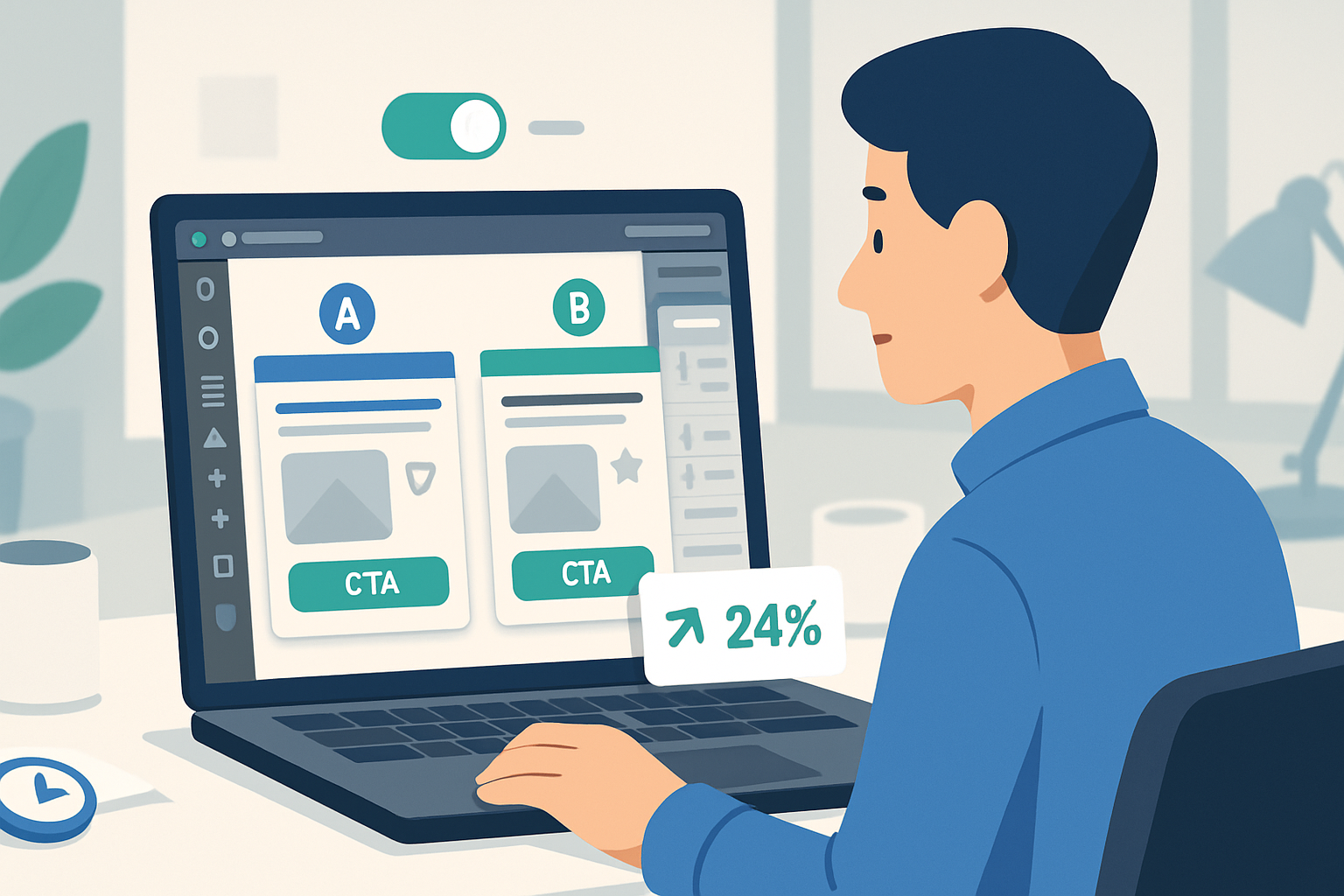
- Incremental conversion lift - A/B test real-time tactics versus standard controls.
- Cost per acquisition (CPA) improvement when optimizing mid-campaign.
- Reduction in negative incidents (brand complaints, outages) thanks to faster triage.
- Operational metrics - data latency, events processed per second, decision error rates.
Measure both business outcomes and the health of your real-time pipeline.
When not to go real-time
Real-time brings cost and complexity. Don’t adopt it for its own sake. Skip it if:
- Your decisions are inherently strategic and weekly/monthly (long-term product roadmap, category strategy).
- The marginal uplift from faster action is negligible relative to cost.
- You lack reliable instrumentation; real-time on bad data only moves bad signals faster.
Smart teams pair real-time for tactical wins with slower, careful analysis for strategy.
Fast-response playbook: triggers and actions (operational cheatsheet)
- Social spike (sentiment turns negative) - trigger an escalation to PR + prepared creative within 15–30 minutes.
- Paid campaign underperforming by >20% relative to baseline in one hour - pause, reassign 50% budget to top-performing creative, run quick A/B.
- High cart abandonment spikes - push a session-level discount or one-click checkout messaging within the same session.
- Unexpected traffic surge to product pages - auto-scale infrastructure + display urgency messaging for available inventory.
Create playbooks per trigger, and practice them with simulation drills.
Common pitfalls and how to avoid them
- Acting on noise - guard with statistical thresholds and short A/B tests.
- Over-automation - keep human-in-the-loop for brand and PR-sensitive actions.
- Privacy missteps - real-time personalization must respect consent and data residency rules.
- Technical debt - prioritize idempotent actions and observability to recover from mistakes.
A thoughtful balance of automation and oversight is the practical secret to sustainable real-time marketing.
Final checklist before you go live
- Do you know which decisions need to be real-time and why? Check.
- Are events instrumented end-to-end and validated? Check.
- Is your streaming pipeline tested for spikes? Check.
- Are playbooks, governance, and rollback paths defined? Check.
- Have you planned experiments to prove uplift? Check.
If you can tick these boxes, you’re ready to turn time into advantage.
Conclusion
Real-time analytics isn’t magic. It’s a disciplined system: capture the right signals, analyze them immediately, and connect decisions to actions - with governance and experimentation baked in. Do this well and you win more moments, reduce wasted spend, and defend your brand faster than competitors.
Start with a short list of high-impact use-cases. Instrument, test, and automate carefully. Move fast, but with rules. Timing isn’t just important; it’s often the difference between a missed chance and a market-making moment.