· marketing · 7 min read
Integrating AI with Instapage: Future-Proof Your Marketing Strategy
A practical guide to combining AI tools with Instapage features to deliver hyper-personalized landing experiences that increase conversions and scale with your marketing operations.

Outcome first: deploy AI-driven, personalized Instapage landing experiences that lift conversions, shorten creative cycles, and automatically scale segmentation without exploding your ops team.
You’ll walk away with concrete workflows, technical patterns, measurement plans, and governance checkpoints so you can start experimenting today and scale what works tomorrow.
Why combine AI and Instapage (fast wins)
Instapage already gives you a powerful canvas: drag-and-drop pages, Dynamic Text Replacement (DTR), heatmaps, A/B testing, forms, and integrations. Add AI and you add continuous personalization, automated creative generation, predictive scoring, and on-page recommendations. The result: landing pages that adapt to each visitor and get better over time.
Short experiments turn into scalable strategies. Small tests compound into major lifts.
Useful reading: Instapage features and developer resources: https://instapage.com/features and https://developers.instapage.com/.
Core Instapage capabilities to leverage
- Dynamic Text Replacement (DTR) - swap page copy based on query params.
- JavaScript widget support - run on-page scripts for richer personalization.
- Form webhooks + integrations - stream leads to CRMs, functions, or automation tools.
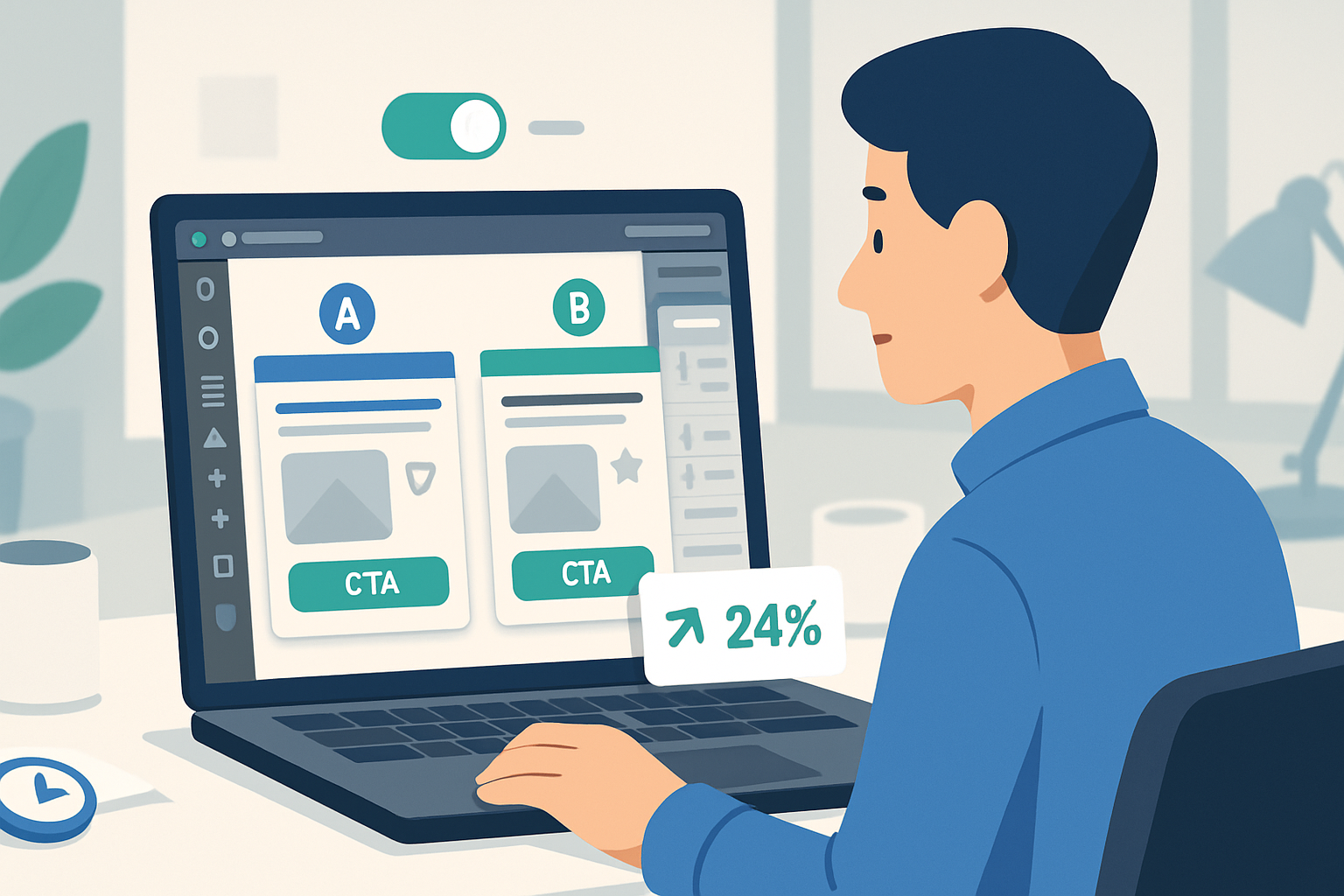
- A/B testing & analytics - run experiments and measure lift.
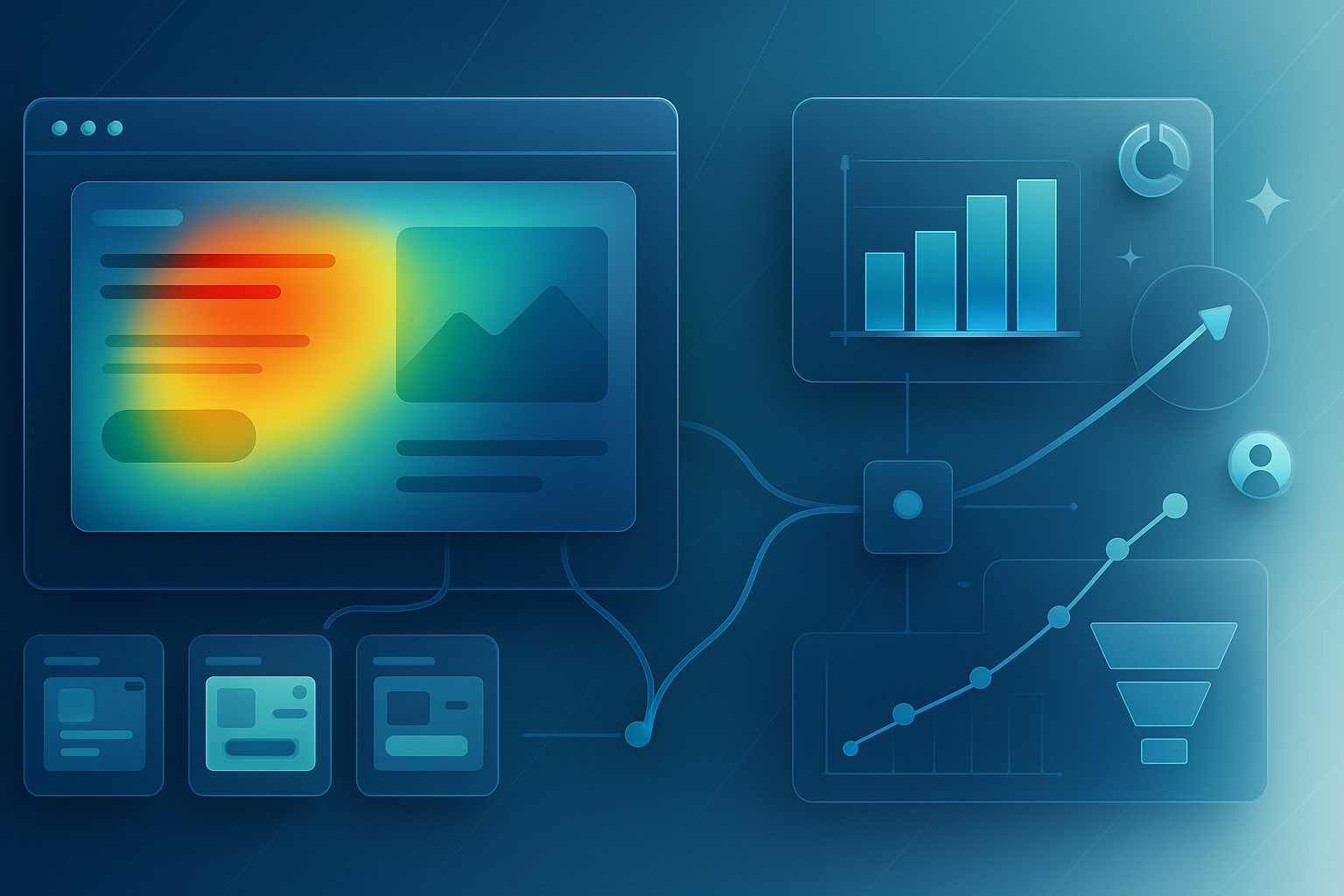
- Heatmaps & session recordings - understand behavior at scale.
- AdMap and conversion analytics - connect paid channels to landing performance.
These are the levers you’ll use with AI.
High-impact AI use cases for landing pages
- Personalized hero content and CTAs
- Use visitor signals (UTM, ad creative, referring site, first/third-party data) to tailor headlines and CTAs in real time.
- Dynamic creative generation
- Auto-generate multiple headline/body combinations and imagery variants for rapid A/B tests.
- Predictive lead scoring and routing
- Score leads at submission to prioritize sales outreach or decide which follow-up flow to trigger.
- On-page product or content recommendations
- Show the product, case study, or testimonial most likely to convert each visitor.
- Conversational assistants on landing pages
- Use AI chat to qualify visitors, capture micro-intent, and push richer data into follow-ups.
- Continuous CRO helper
- Use AI to analyze heatmaps, session data, and experiment results to propose next tests.
Practical workflows (step-by-step)
Below are compact, real workflows you can implement in weeks - not months.
Workflow A - Personalized landing via query params + AI copy variations
- Capture ad-level metadata in your ad links - add utm_source, utm_campaign, creative_id, and a creative_tag param.
- On Instapage, enable DTR for headline and CTA placeholders or use a small JS snippet to read query params.
- Use an AI copy engine (OpenAI, Cohere, etc.) to generate 5–8 headline and subheadline variations per creative_tag. Store them in a small DB or JSON file.
- On page load, select the best-fit variation for the query params (and optionally for a visitor profile returned by an enrichment API) and inject it into the page.
- A/B test the AI-suggested winners vs. baseline and iterate.
Why it works: you match the ad messaging to the landing instantly. The result: fewer friction points and higher conversion.
Workflow B - Lead enrichment and routing with webhooks + serverless AI
- Configure your Instapage form to POST to a webhook (Zapier, Make, or your serverless endpoint).
- In the webhook handler, call a lead enrichment service (Clearbit, FullContact) and an AI scoring model to compute a conversion probability and recommended follow-up.
- Push enriched lead + score into your CRM and trigger segmented nurture flows (high-score → sales SLA, low-score → marketing nurture).
- Optionally return a real-time personalization token to Instapage (via redirect with query param or a client-side fetch) so the post-submit page is tailored to that lead.
Outcome: reps only chase the best leads. Marketing messages get sharper.
Workflow C - On-page recommendations via lightweight ML
- Track product/category clicks and page behavior (Instapage events, Google Analytics, or your CDP).
- Use a small recommendation model (could be collaborative filtering or simple rules-based with ML enrichment) hosted as a REST endpoint.
- On page load, call the recommender with visitor signals and render the returned items into an Instablock or JS widget.
- Measure CTR and conversion uplift by running the recommender against a control group.
This is personalization without heavy engineering overhead.
Technical implementation patterns
A. Calling AI from the client vs server
- Server-side is best for - sensitive enrichment, scoring, and models requiring secret keys. It’s secure and auditable.
- Client-side is fine for - non-sensitive personalization where latency is critical and you can expose no secrets.
B. Using Instapage webhooks & redirects
- Form webhooks let you stream every lead to automation stacks for enrichment and scoring.
- Use 302/307 redirects with query params to pass personalization tokens to the next page.
C. Dynamic Text Replacement (DTR) and JS injection
- DTR handles straightforward substitution from URL params.
- For richer logic and fallbacks, add a JS widget that:
// Example: read query param and insert into a DTR element
function getQueryParam(name) {
  return new URLSearchParams(window.location.search).get(name);
}
const name = getQueryParam('first_name');
if (name) {
  document
    .querySelectorAll('[data-dtr="hero-name"]')
    .forEach(el => (el.textContent = name));
}
D. Calling an AI endpoint from a serverless function (pseudo-code)
// Node.js pseudo-code for a webhook that enriches and scores
const fetch = require('node-fetch');

async function handleLead(lead) {
  const enriched = await fetch('https://api.clearbit.com/v2/people/find', {
    /*...*/
  });
  const scoreResp = await fetch('https://your-ai-api/score', {
    method: 'POST',
    headers: { 'Content-Type': 'application/json' },
    body: JSON.stringify({ lead, enriched }),
  });
  const { score, segment } = await scoreResp.json();
  // push to CRM, trigger sequence
}
E. Automating content generation for experiments
- Use AI to generate headline variants and metadata (tone, primary benefit, length bucket).
- Store variants and auto-create Instapage A/B variations via API or by injecting content via DTR/JS.
F. Integrations: low-code options
- Zapier or Make for simple enrichment and CRM pushes.
- Reverse webhooks to send personalization decisions back to the page via redirect or client polling.
Relevant integration reference: Instapage Zapier integrations - https://zapier.com/apps/instapage/integrations
Choosing AI tools and models
- Short-form copy & variants - OpenAI (GPT series), Anthropic, Cohere.
- Image generation for hero assets - Midjourney, DALL·E, Stable Diffusion.
- Recommendations & scoring - Vertex AI, AWS Personalize, or a lightweight custom model in Python/R.
- Conversational assistants - Dialogflow, Rasa, or commercial chatbots (Intercom, Drift) backed by LLMs.
Useful docs: OpenAI docs - https://platform.openai.com/docs/; Vertex AI - https://cloud.google.com/vertex-ai; AWS Personalize - https://aws.amazon.com/personalize/.
Measurement: what to track and how
Primary metrics
- Conversion rate (by experiment, segment, and traffic source)
- Cost per acquisition (CPA) and ROAS for paid channels
- Lead quality (SQL rate, pipeline contribution)
- Time-to-contact for high-scoring leads
Secondary signals
- Engagement - time on page, scroll depth, CTR on recommended items
- Heatmap changes across experiments
- Chatbot deflection & handoff accuracy
Experimentation approach
- Start with guardrail A/B tests - AI-driven vs baseline.
- Use sequential testing or Bayesian methods for faster decisions.
- Always segment results by device, channel, and first- vs returning visitors.
Tools for analysis: Google Analytics, GA4 event model, your CRM, or CDP (Segment) + a BI tool.
Data privacy, compliance & ethical guardrails
- Avoid sending PII to third-party AI endpoints without consent.
- Store minimal profile data client- and server-side. Use tokenization for personalization tokens.
- Log model decisions with enough context to review and audit scoring and content outputs.
- Implement a human review loop for any generated content displayed to users at scale.
- Check regional rules (GDPR, CCPA) before using enrichment or cross-border APIs.
This is non-negotiable. Trust depends on it.
Operational considerations & governance
- Model version control - tag which model/weights produced each variation.
- Creative ownership - keep an “approved” bank of creative templates to constrain AI outputs.
- Monitoring - set up quality alerts for sudden drops in conversion or spikes in negative feedback.
- Rollback plan - automated reversion to baseline if an experiment underperforms by a preset threshold.
Implementation checklist (quick-start)
- Inventory - catalog landing pages, high-impact funnels, and existing data signals (UTMs, CRM fields).
- Pick a pilot - choose 1–2 pages with high traffic and clear conversion goals.
- Build minimal infra - webhook endpoint + lightweight DB, or use Zapier for speed.
- Run a closed pilot - generate copy variants with AI and test DTR/JS injection.
- Measure, iterate, and scale - expand to product recommendations, chat, and predictive routing.
Closing: where this gets you
You will move from static landing pages to dynamic, context-aware experiences that learn and improve. You’ll cut creative cycle time, increase conversion relevance, and give sales higher-quality leads. Do it with disciplined experimentation and privacy-aware systems.
AI is not a magic button. But when you pair it with the structural features of Instapage - DTR, webhooks, A/B testing, and JavaScript support - you get a practical engine for personalization that scales. Start small. Measure strictly. Then scale your winners.