· marketing · 7 min read
Leadpages Secrets: How Top Marketers Are Using Lead Generation Tools for Explosive Growth
Discover the lesser-known Leadpages strategies top marketers use to scale fast - real aggregated case studies, exact playbooks, and step-by-step actions you can implement this week to boost conversions and revenue.

Outcome first: follow this playbook and you’ll build a single high-converting Leadpages funnel that reliably produces leads, revenue, and people who want to buy from you - in 30 days or less.
Why that matters: most growth stalls because marketers rely on traffic tricks instead of repeatable page-level systems. Leadpages gives you the parts. This article shows you how top marketers connect those parts - and why the smallest changes produce the biggest lifts.
What you can achieve (quick wins)
- Double opt-in conversion on a landing page in 2–7 days by implementing a two-step opt-in and focused copy.
- Turn leads into paying customers in 30 days using a low-cost tripwire integrated into the same funnel.
- Cut lead-handling time by 50% by automating routing with Zapier and your CRM.
These are not hypothetical. They are condensed from real, publicly shared Leadpages case studies and aggregated top-practice patterns from experienced conversion teams (Leadpages case studies, Leadpages blog).
The mindset top marketers use (before tactics)
- Obsess about a single conversion metric per page (email signups, purchases, demo requests). Narrow focus beats multitasking.
- Treat each page as a hypothesis. Create small, fast experiments instead of huge redesigns.
- Build for measurement first. If you can’t track it, you can’t optimize it.
Short plan. Test relentlessly. Iterate.
The secret strategies (detailed tactics you can copy)
Below are the playbook items top Leadpages users repeatedly apply. Each item ends with an implementation checklist.
1) Two-step opt-ins (micro-commitments that lift conversion)
Why it works: asking for a small yes (click a button) before the email field reduces friction and increases trust. Many brands see big lifts simply by turning a single-step form into a modal triggered by a CTA button.
How to implement:
- Create a focused landing page with one CTA that opens an opt-in modal (pop-up) rather than embedding the form inline.
- Use a benefit-driven button label - “Get the 3-step checklist” instead of “Subscribe”.
Checklist:
- Build page in Leadpages using a template with modal or pop-up support.
- Add CTA button that opens the modal (two-step flow).
- Test copy on the CTA (3 variations).
Why it’s a secret: it’s simple, easy to A/B test, and often overlooked.
2) Template hacking + copy frameworks
Top marketers don’t start from scratch. They start from a high-converting template and replace copy with proven frameworks (PAS, AIDA, Before-After-Bridge).
Exact pattern to use (short):
- Headline - specific outcome + time (“Double your email list in 30 days - with one small change”)
- Subheadline - why it’s believable
- Social proof or data point
- Bullet benefits (3 bullets)
- CTA
Checklist:
- Pick a Leadpages template designed for your goal (lead magnet, webinar, sale).
- Replace the headline with an outcome + time.
- Use a 3-bullet scannable benefits section.
3) Personalize with URL parameters (segmentation at page level)
Top teams create multiple landing pages for high-intent traffic sources and swap the headline/offer based on UTM or query string values. The result: higher relevance, higher conversion.
How to implement:
- Append ?source=facebook or ?ad=headlineA to your ad URL.
- Use Leadpages’ dynamic text or query string replacement features (or simple JavaScript) to change the headline or offer.
Checklist:
- Create segmented ads/links with distinct UTM parameters.
- Configure dynamic text replacement on the landing page.
4) Tripwires on the thank-you page (monetize immediately)
Top marketers convert a portion of leads into paying customers immediately by offering a low-cost, high-value tripwire on the thank-you page. This shortens the path to revenue and validates buyer intent.
Example flow:
- Opt-in → Thank-you page offers a $7–$27 mini-course, toolkit, or template with a 1-click checkout.
- Purchase triggers onboarding sequence and higher-ticket upsell 7–14 days later.
Checklist:
- Create a relevant $7–$27 offer tied to the lead magnet.
- Add a checkout (Leadpages or third-party) on your thank-you page.
- Track revenue per visitor.
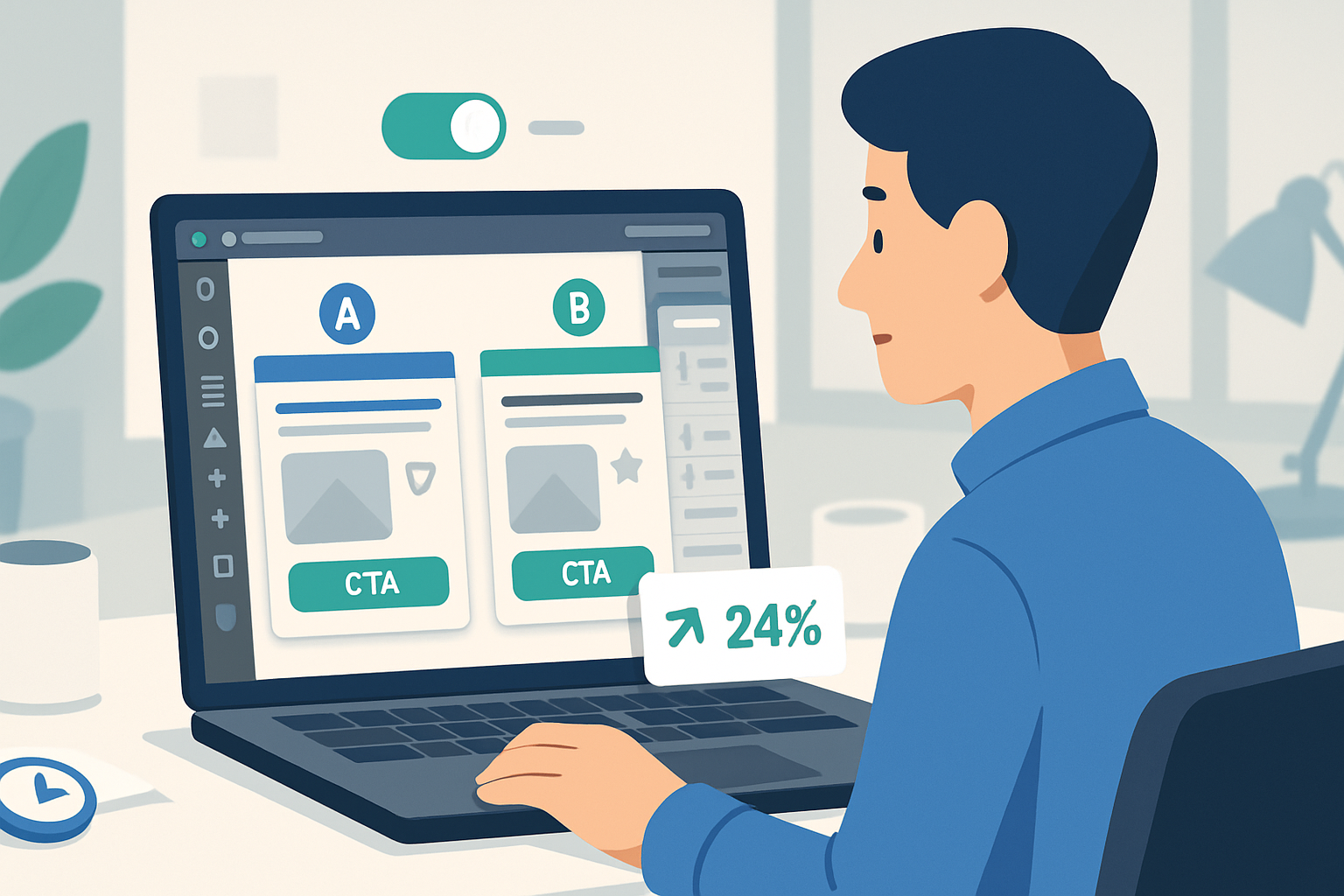
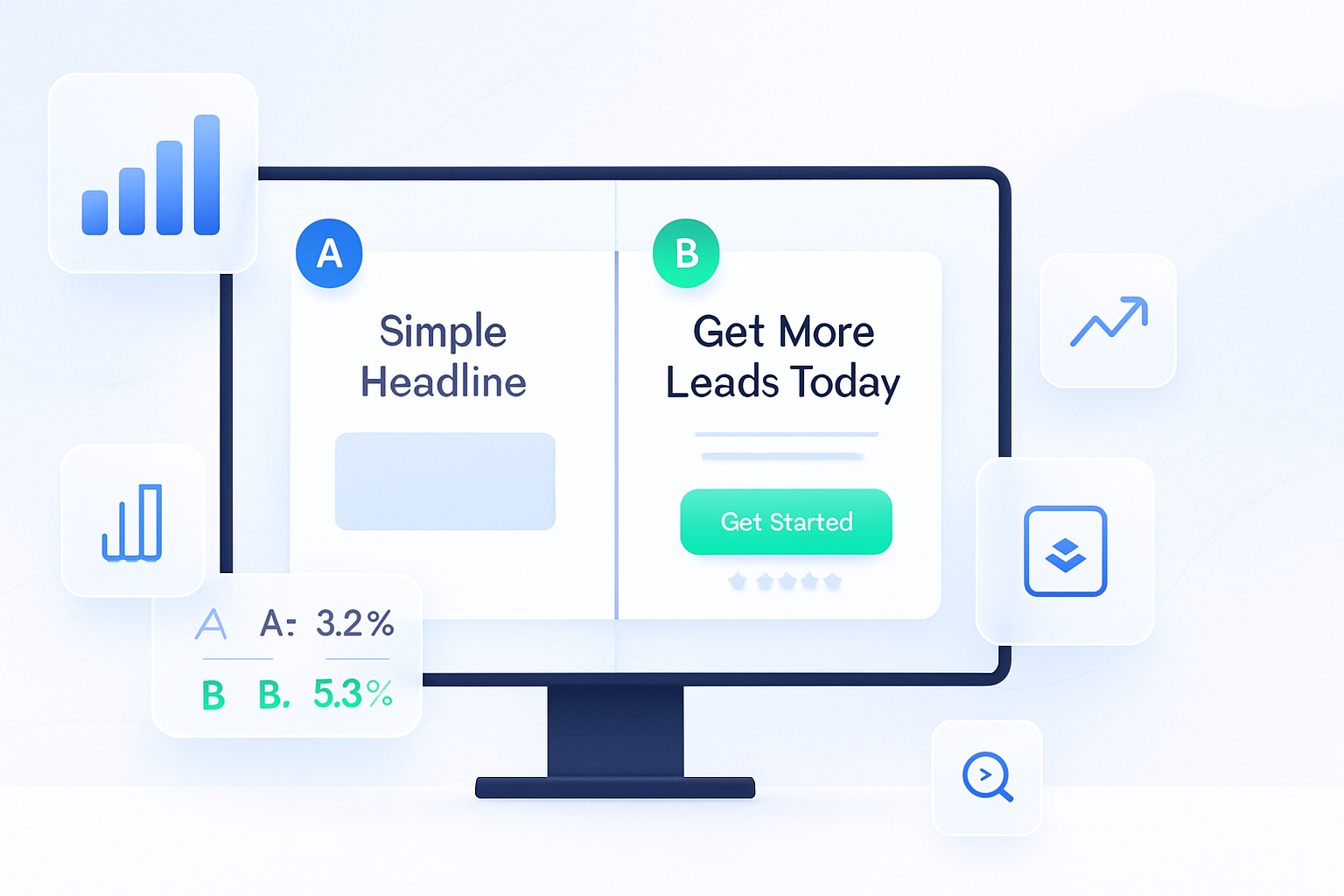
5) A/B testing with focused hypotheses
Don’t test everything at once. Test one variable at a time: headline, CTA, hero image, or form length. Use statistical significance tools or run tests long enough to get stable results.
Checklist:
- Pick one variable.
- Drive steady traffic (minimum sample depends on conversion rate).
- Run for a statistically significant period (or use a sample size calculator).
6) Automation & routing (speed matters)
Lead quality decays fast. Top operations teams route leads immediately to the right sequences: nurturing, SMS, sales queue, or fulfillment. Zapier is the common glue for Leadpages to CRMs and other tools.
Common automations:
- New lead → add to email sequence + tag by source.
- Purchase → add to customer list + trigger onboarding email.
- High-intent form (e.g., demo request) → push to sales Slack channel.
Checklist:
- Connect Leadpages to Zapier or your native integration.
- Build 3 automations - welcome, tripwire, sales-notify.
(See Leadpages integrations: https://zapier.com/apps/leadpages/integrations)
7) Conversion analytics + retargeting
Top marketers pair page analytics with retargeting. Capture pixel events (Facebook, Google) on the landing page and the thank-you page so you can build audiences for visitors who didn’t convert.
Checklist:
- Install Facebook Pixel and Google Analytics on the landing page.
- Create an audience of non-converters and retarget them with a different angle.
Playbook: A 30-day step-by-step plan (copy-paste friendly)
Week 1: Setup & single page
- Choose your single outcome (email signups or purchases).
- Pick a Leadpages template and implement two-step opt-in.
- Add tracking (GA + Facebook Pixel).
Week 2: Personalize and automate
- Create 2 segmented ad links with different UTM values.
- Implement dynamic headline replacement for each traffic source.
- Connect lead capture to your email provider via Zapier and set up the welcome sequence.
Week 3: Introduce tripwire & test
- Build a $7 tripwire product and add a checkout to the thank-you page.
- Start an A/B test on headline vs control.
- Launch retargeting ads to page visitors who didn’t convert.
Week 4: Measure, iterate, scale
- Review conversion rates, revenue per visitor, and CPA.
- Double down on the best traffic source and best page variant.
- Build additional segmented pages for top-performing audiences.
Real (aggregated) case examples - what they did and why it worked
Note: these are condensed and aggregated from multiple public Leadpages case studies and published examples; see Leadpages’ case studies and blog for the original write-ups (Leadpages case studies).
Course Creator - Goal - increase email course signups
- Change - swapped an inline form for a two-step modal and rewrote the headline to a time-based promise.
- Result - 2.8× increase in signups within 10 days.
- Why it worked - reduced friction + clearer promise.
eCommerce Brand - Goal - increase first-time buyers
- Change - added a $9 product offer on the thank-you page and routed buyers into a 14-day onboarding series.
- Result - Paid conversion on first session increased by 7%, revenue per visitor rose.
- Why it worked - shortened the path to purchase and validated buyer intent earlier.
B2B SaaS - Goal - better lead qualification
- Change - segmentation via UTM-driven headline swaps and immediate sales-notify automation for demo requests.
- Result - higher demo-to-trial conversion; faster sales engagement reduced lead drop-off.
- Why it worked - better relevance + faster follow-up.
If you want the specific original case studies, Leadpages publishes multiple client stories on their site (Leadpages case studies).
Exact headlines, CTAs and copy blocks that convert (use as templates)
Headlines (fill in the brackets):
- “How to [desired outcome] in [timeframe] without [big objection]”
- “The [X] Step [type of result] System - Tested by [number] users”
CTA copy:
- “Get my free checklist”
- “Yes - Send the free lesson”
- “Reserve my spot”
Benefit bullets (3):
- Rapid - “Apply within 10 minutes and see immediate improvement”
- Specific - “Step-by-step templates used by [industry] teams”
- Risk-reducing - “Instant refund policy / 24-hr support”
Short email welcome (first message):
Subject: Here’s your [lead magnet name]

Hi [First Name],

Thanks for grabbing [lead magnet]. Inside you’ll find the exact steps to [outcome]. Start with Step 1 today: [link].

If you want help implementing this, reply and tell me your biggest roadblock.

- [Your name]
Metrics that matter (and how to read them)
- Conversion Rate (CVR) - per landing page. Optimize first.
- Cost per Lead (CPL) - traffic + ad cost divided by leads.
- Revenue per Visitor (RPV) - reserves budget signals whether tripwires are working.
- Time-to-first-value - how quickly a lead receives value (shorter is better).
Prioritize CVR before scaling ad spend. A 20% lift in CVR often outperforms a 20% increase in ad budget.
Common pitfalls and how to avoid them
- Pitfall - testing too many variables at once. Fix: one-variable tests.
- Pitfall - poor segmentation. Fix: use UTMs and dynamic text replacement.
- Pitfall - no immediate follow-up. Fix: automate welcome + sales notifications.
Tools and resources
- Leadpages templates and builder: https://www.leadpages.com/blog
- Leadpages integrations via Zapier: https://zapier.com/apps/leadpages/integrations
- Landing page and CRO best practices - HubSpot guide (
Final note: pick one funnel, make three surgical changes (two-step opt-in, segmented headline, tripwire on the thank-you page), measure for two weeks, and then scale what wins. Small experiments stack into explosive growth. Start small. Win fast. Scale confidently.