· marketing · 6 min read
Case Studies: How Top Brands Are Mastering Optimizely for Unprecedented Conversion Rates
Real-world case studies and playbooks showing how leading brands use Optimizely to lift conversions. Learn the strategies, experiments, and implementation steps you can replicate to build a high-performing experimentation program.
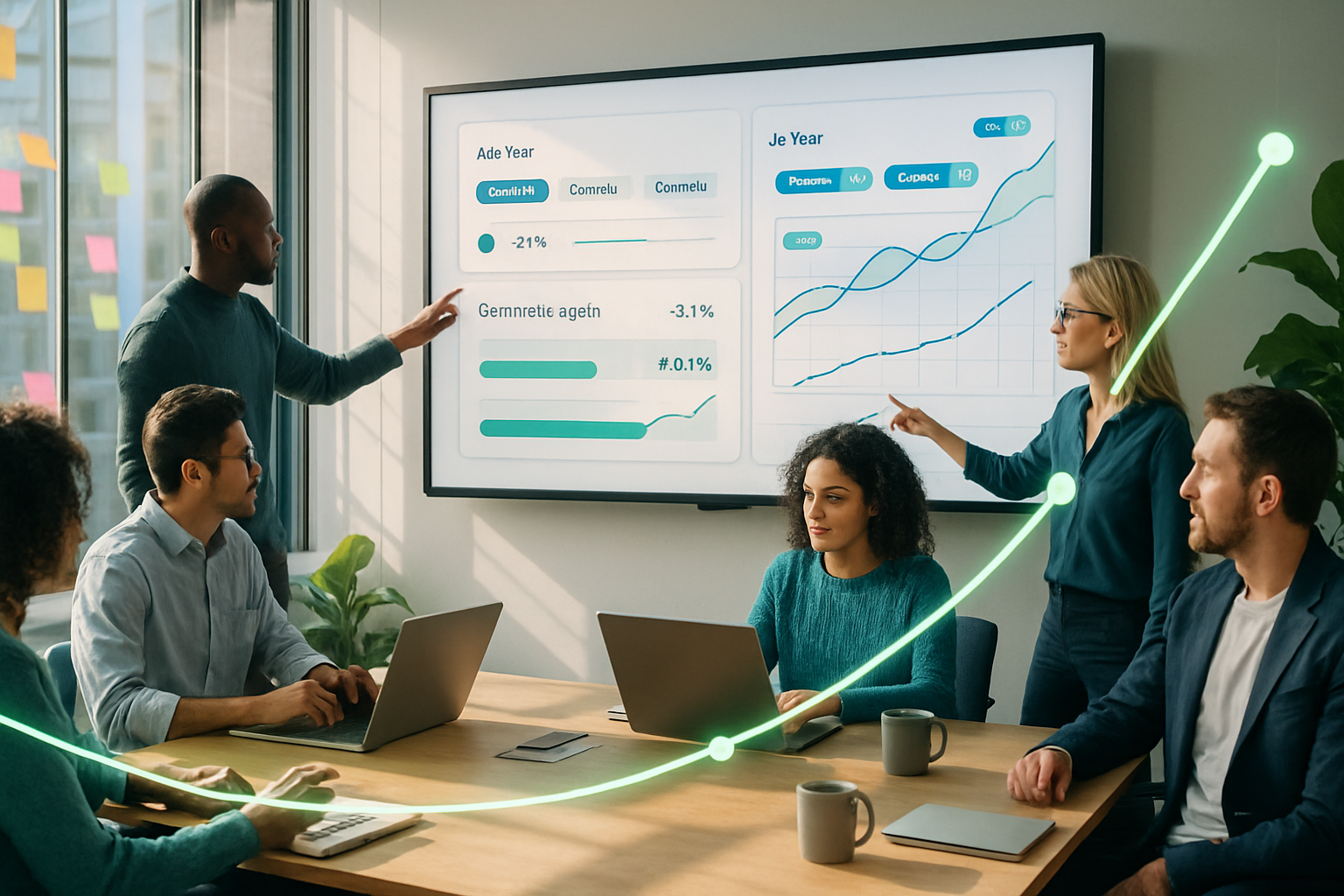
Outcome first: read this and you’ll have a clear, repeatable playbook to design Optimizely-powered experiments that move revenue, not just vanity metrics. You’ll learn exactly what top brands did - the experiment types they prioritized, the engineering and analytics patterns that made results reliable, and the tactical steps you can copy in weeks, not months.
Why this matters - and what you can achieve
Experimentation is no longer a boutique skill for conversion teams. It’s the operating system for modern digital growth. When executed correctly it does three things at once: reduces risk, accelerates product-market fit, and compounds conversion gains across pages and product features. Top brands use Optimizely not just to run A/B tests, but to build repeatable systems that deliver consistent, measurable uplifts.
Read on for condensed, practical case studies and the exact lessons you can replicate.
Case study snapshot: What top brands are optimizing (themes)
Across successful Optimizely implementations, certain patterns repeat:
- Personalization at scale - dynamic content tailored to segments (new vs returning, geo, device). Short tests, big wins.
- Full-stack feature experiments - server-side flags used to safely roll out and measure changes behind the scenes.
- Cross-channel funnels - coordinated tests across web, mobile, and checkout that capture the whole customer journey.
- Analytics-first rigor - experiments instrumented with guardrails and validated metrics to avoid false positives.
These common threads are what separate fleeting wins from enterprise-scale conversion programs.
Case Study 1 - Peloton (subscription & product experience)
What they tested
- Product page messaging and bundled offers.
- Onboarding flows for first-time buyers vs returning visitors.
How Optimizely was used
Peloton leveraged Optimizely to run both client-side and server-side experiments. For content and messaging changes they used A/B and multivariate page tests. For pricing and trial logic they used feature flags and full-stack experiments to safely measure impact behind the scenes before ramping to 100%.
Why it worked
- Strong segmentation - experiments targeted high-propensity segments (e.g., trial users coming from a specific marketing campaign).
- Measurement alignment - business stakeholders agreed on a primary metric (trial-to-paid conversion) and one key guardrail (churn within 30 days).
- Rapid iteration - experiments were small, focused, and rolled forward quickly using feature flags.
Key takeaway to copy
Start server-side for high-risk changes (billing, pricing, orchestration). Use feature flags to decouple deployment from exposure, and always tie success to a downstream business metric, not just click-throughs.
Case Study 2 - B2B SaaS leader (Atlassian-style playbook)
What they tested
- Signup flows and trial qualification prompts.
- In-app onboarding nudges and contextual help.
How Optimizely was used
The team implemented full-stack experiments using Optimizely’s SDKs to test backend logic (trial length, feature gating) and used the Web layer for UI/UX permutations. They integrated experimentation data into their analytics warehouse for cross-analysis with product usage.
Why it worked
- Cross-functional squads - product, engineering, and analytics worked from the same hypothesis and success metrics.
- Long-horizon metrics - beyond immediate signups, they measured trial activation and 90-day retention using event-based analytics.
- Technical discipline - feature flags allowed gradual rollouts and instant rollback on negative signals.
Key takeaway to copy
Align teams on a small number of north-star metrics and instrument experiments to measure downstream behavior (activation, retention) - not just front-end conversion points.
Case Study 3 - Large Retailer (omnichannel checkout optimization)
What they tested
- Checkout flow simplifications and layout variations.
- Product recommendation modules and urgency messaging.
How Optimizely was used
This retailer ran multivariate tests for layout and checkout steps on the web storefront while using the full-stack product to test recommendation algorithms that run server-side. They used Optimizely to coordinate experiments across pages so that customers saw consistent variants across the product journey.
Why it worked
- Funnel-aware testing - experiments were designed to minimize leakage between variants across stages.
- Unified experiment registry - every change went through a single experimentation registry - so experiments didn’t conflict.
- Real-time monitoring and guardrails - they monitored both micro-conversions and payment errors to catch issues early.
Key takeaway to copy
When optimizing funnels, make the experiment scope include the whole funnel piece you care about - not just a single page. And register all experiments centrally to avoid overlap and interference.
Common tactical patterns across these brands (the replicable playbook)
Hypothesis-first experiments
- Write a one-sentence hypothesis (if we change X for user segment Y, then metric Z will increase by at least N%). Keep it measurable.
Segment and personalize, but start simple
- Target high-value segments first (paid lifers, likely buyers). Personalization multiplies lift, but scale after you confirm a baseline improvement.
Use full-stack experimentation for logic, front-end for UX
- Server-side flags for pricing, recommendation engines, or feature exposure.
- Client-side experiments for layout, copy, and micro-interactions.
Instrument for downstream impact
- Primary metric + 2 guardrails. Example - revenue-per-visitor (primary), cart abandonment and payment error rate (guardrails).
Protect statistical validity
- Pre-register your primary metric and stopping rules. Avoid peeking-driven decisions. For an accessible deep dive on pitfalls, see the A/B testing primer by Evan Miller.
Centralize experiment management
- Keep an experiment registry, reuse audiences, and establish rollout/rollback playbooks.
Turn winners into product
- Use feature flags to release winners progressively and bake them into mainline code once validated.
(Reference: Optimizely’s customer stories and product guidance are useful for specific platform patterns: https://www.optimizely.com/customers/)
Implementation checklist - what to do in your first 90 days
Week 1–2: Align & instrument
- Pick 1–2 north-star metrics.
- Audit existing analytics and ensure event instrumentation covers the funnel.
Week 3–4: Run fast experiments
- Launch 3 rapid A/B tests on high-traffic pages with clear hypotheses.
- Keep tests short (2–3 weeks) but ensure sample size targets are met.
Month 2: Move to full-stack
- Introduce server-side feature flags for one backend experiment (pricing, recommendation, or onboarding logic).
- Integrate Optimizely events into your data warehouse.
Month 3: Scale and govern
- Build an experiment registry and issue playbooks for rollouts and rollbacks.
- Train squads on experiment design and statistical basics.
Measurement & analytics: pitfalls to avoid
- Stopping early - looking at results before the sample is adequate invites false positives.
- Multiple comparisons without correction - running many visible tests without correction leads to noise.
- Misaligned metrics - optimizing for a micro-metric that harms long-term retention.
If you want a short technical read on statistical pitfalls in A/B testing, Evan Miller’s primer is a practical resource: https://www.evanmiller.org/ab-test-significance.html
Final checklist: governance, speed, and safety
- Governance - single experiment registry, naming conventions, shared dashboards.
- Speed - small, decoupled experiments; use feature flags to reduce deployment friction.
- Safety - define rollback triggers and monitor guardrails in real time.
Do these three things and you won’t just run tests. You’ll build an engine that reliably converts experiments into growth.
Closing - what top brands prove
Top brands don’t win by random tweaks. They win by building disciplined experimentation systems: tight hypotheses, rigorous measurement, and engineering practices (feature flags, full-stack tests) that remove risk and accelerate learning. Do that, and conversion gains stop being one-off wins and become the way you run your business.