· creativity · 7 min read
Sudowrite vs. Traditional Writing: A Comparison of Styles and Effectiveness
A practical, analytical comparison of Sudowrite (an AI-assisted writing tool) and traditional writing techniques. Learn how they differ across idea generation, voice, revision, learning, ethics, and workflows - and how to combine them to write faster without losing craft.
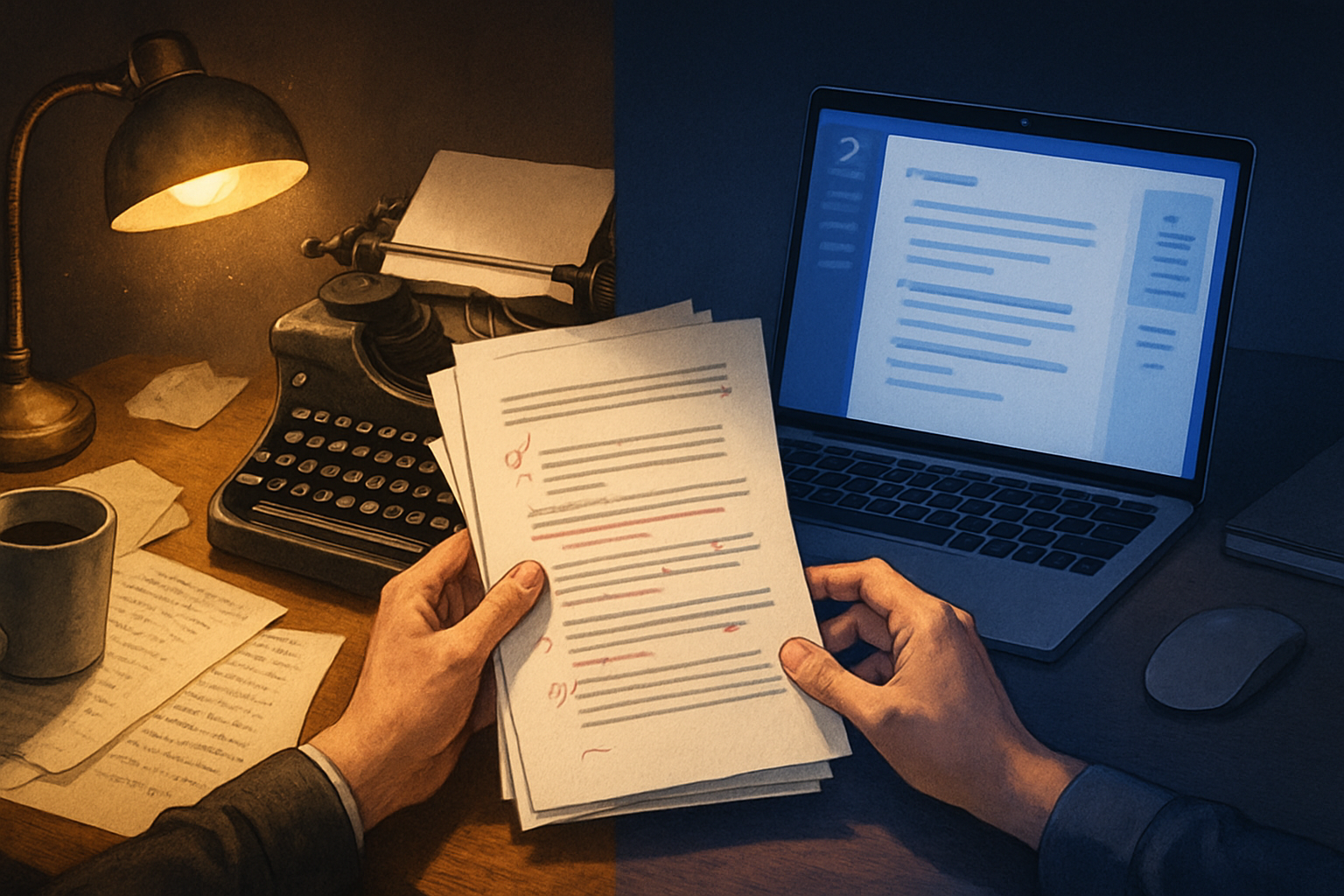
Outcome: By the time you finish this article you’ll be able to decide whether Sudowrite belongs in your toolkit, know where it helps most (and where it hurts), and have a set of actionable workflows to try tonight.
Why this comparison matters - up front
AI tools promise speed. Traditional craft promises depth. Both can win. Which one fits your goals depends on what you value: fresh ideas, a distinct voice, faster drafts, tighter editing, or long-term skill growth. This article lays out concrete differences and practical recommendations so you can choose - and combine - approaches with confidence.
How Sudowrite works (briefly)
Sudowrite is an AI-assisted creative writing tool that extends prompts to produce prose, suggest rewrites, brainstorm ideas, and help with description and dialogue. It analyzes the text you provide and generates continuations or alternatives based on patterns learned from large corpora of writing. Think of it as a collaborator that specializes in rapid ideation and variations.
Learn more: Sudowrite’s official site - https://www.sudowrite.com
What “traditional writing” means here
By traditional writing I mean the craft-centered approach taught in workshops, books, and practiced by generations of authors: deliberate planning, iterative drafting by the author alone, careful attention to voice, line-level revision, and learning through apprenticeship, reading, and critique. It’s slower. It’s also how literary voice and deep craft are usually forged.
Recommended general craft resources: Purdue OWL - https://owl.purdue.edu and The Elements of Style (online) - https://www.bartleby.com/141/
Side-by-side comparison across the most important dimensions
1) Idea generation and overcoming blank page
- Sudowrite - Excellent. It quickly supplies hooks, sensory details, scene starters, and alternate directions. Use cases: getting unstuck, exploring possibilities, producing many-wildcard ideas fast.
- Traditional - Depends on the author. Techniques (freewriting, prompts, research) can produce richer, personally resonant ideas, but they’re slower.
Verdict: Sudowrite wins for speed and quantity. Traditional wins for depth and ownership of the idea.
2) Voice, tone and authorial identity
- Sudowrite - Can mimic tones and suggest stylistic variations, but it doesn’t truly own a unique voice. It blends learned patterns. Its outputs often require substantial editing to sound authentically “you.”
- Traditional - Voice grows from sustained practice, risk-taking, and revision. It’s where authors invest time to be distinctive.
Verdict: Traditional wins for voice. Sudowrite can suggest ways to vary voice, but you must refine the output to make it yours.
3) Drafting speed and productivity
- Sudowrite - Supercharges drafting. You can go from outline to a long draft far faster. It handles the grunt work: scene scaffolding, sensory layering, and alternative phrasing.
- Traditional - Slower but sometimes more deliberate. The draft may have fewer “noise” problems (incoherent bits, generic phrasing) because the author controlled every word.
Verdict: Sudowrite wins for sheer speed and momentum.
4) Revision quality and craft development
- Sudowrite - Offers rewrite tools and suggestions, but it won’t replace line-editing skills. It can, however, suggest options you wouldn’t have tried and expose you to phrasing and structures you can learn from.
- Traditional - Iterative manual revision hones craft. You learn to recognize problems and solutions in your own work over time.
Verdict: Traditional is stronger for long-term craft development. Sudowrite is a useful revision partner in the short term.
5) Consistency and coherence across a manuscript
- Sudowrite - Good at local coherence. It can sometimes drift on larger narrative arcs, character consistency, or thematic throughlines unless you carefully feed it constraints and notes.
- Traditional - The author who plans and revises will typically manage global coherence better because they track the work’s arc intentionally.
Verdict: Traditional has the edge on manuscript-level coherence. Sudowrite requires disciplined inputs and strong oversight.
6) Learning curve and accessibility
- Sudowrite - Low barrier to start. Writers can get useful outputs quickly. It’s helpful for beginners who need examples and templates.
- Traditional - Requires time, feedback, and reading. Harder to shortcut but more durable in the long run.
Verdict: Sudowrite increases accessibility to idea generation and drafting for new writers.
7) Ethics, originality and attribution
- Sudowrite - Raises questions about ownership, derivative phrasing, and the ethics of using a trained model. Different publishers and markets have varied policies on AI-assisted work. The tool can output common patterns - sometimes bordering on clichés - so careful editing and originality checks are wise.
- Traditional - Clearer authorship lineage. The ethical concerns are more about research, representation, and plagiarism (human forms), but those are usually easier to adjudicate.
Verdict: Traditional has clearer ethical boundaries today. If you use Sudowrite, be transparent and intentional about how you integrate it.
Insights from experienced authors (aggregated perspectives)
- Many experienced novelists use Sudowrite as an ideation engine - “It’s like having a creative sparring partner for the messy middle.” They value it for generating options they’d never have tried.
- Short-form authors and copywriters appreciate the speed and the ability to produce multiple tones in minutes.
- Some literary authors worry about overreliance - the danger is flattening risk-taking if you always accept “safe” AI suggestions.
- Long-term craft-builders treat AI output the way they treat a bad first draft - raw fuel to be reworked, not a finished product.
Taken together: seasoned writers rarely let a tool replace their judgment. They use it to push themselves into new directions, then apply craft to make the results sing.
Practical workflows - how to combine Sudowrite and traditional craft
Below are tested workflows you can try. Short, actionable. Pick one and run it tonight.
The Idea-Mine Workflow (best for getting unstuck)
- Spend 10–20 minutes freewriting about your scene.
- Paste that into Sudowrite and ask for 6 alternate scene openings or conflict escalations.
- Pick one, write a rough scene by hand, then revise for voice.
The Voice-First Workflow (best for preserving authorial signature)
- Draft a page or two in your preferred voice.
- Use Sudowrite only to produce three alternate phrasings for lines you’re unsure about.
- Choose the option that matches your voice and adapt it.
The Revision-Partner Workflow (best for iterative improvement)
- After a draft, run problematic paragraphs through Sudowrite’s rewrite tool to see possibilities.
- Treat each output as an experiment. Edit heavily and track what worked.
The Hybrid Outliner (best for long projects)
- Create a 1–2 page outline manually.
- Use Sudowrite to expand each bullet into a 300–800 word scene draft.
- Reconcile voice and continuity manually in a middle-pass revision.
When not to use Sudowrite (and why)
- If your primary goal is to cultivate a unique literary voice without shortcuts.
- When you need airtight originality for a sensitive or highly novel concept (legal or proprietary risks may arise).
- If you plan to publish in venues that prohibit or frown upon AI assistance without disclosure.
In these cases, the time spent learning craft and drafting manually is an investment that pays back in voice and ownership.
Quick checklist for ethical, effective use
- Keep a version history. Save the raw AI outputs separately.
- Edit AI text heavily to match your voice - treat it as a draft, not a finished piece.
- Be transparent with collaborators and publishers when required.
- Use AI for ideation and iteration, not as the final authority.
Mini case: How a midlist novelist might work
Scenario: You’re writing a 90k-word novel and are stuck in the middle.
- Step 1 - Use Sudowrite for 20 minutes to generate five possible escalations for the midpoint conflict.
- Step 2 - Pick the most intriguing one and hand-draft the next 1,000 words using your voice.
- Step 3 - Use the Revision-Partner Workflow on rough sections, then do two full manual passes focusing on character consistency and theme.
Outcome: Faster problem-solving without losing authorial control.
Final verdict - an honest synthesis
If your priority is speed, experimentation, overcoming writer’s block, or producing multiple variations quickly, Sudowrite brings genuine value. It excels at ideation and accelerating early drafts.
If your priority is a molded, distinctive voice, deep craft development, manuscript-level coherence, or ethical clarity around authorship, traditional methods are still essential. They build skills that make your writing recognizably yours.
Best practice: use both. Treat Sudowrite as a smart collaborator for ideation and rapid drafting, and use traditional craft disciplines - careful revision, critique, and reading - to turn those drafts into work with depth and voice.
Choose what you want to protect in your writing: speed, or signature. You don’t have to pick just one. Use Sudowrite to stretch faster. Use traditional craft to make the stretch meaningful.
Further reading
- Sudowrite - official site: https://www.sudowrite.com
- Purdue Online Writing Lab - https://owl.purdue.edu
- The Elements of Style (online) - https://www.bartleby.com/141/