· marketing · 5 min read
Controversial Marketing Automation: Should You Trust Sendinblue’s AI to Craft Your Emails?
A practical, balanced look at Sendinblue’s (Brevo) AI-powered email features - what they do well, where they fall short, and how to combine human expertise with automation so your emails stay effective and authentic.
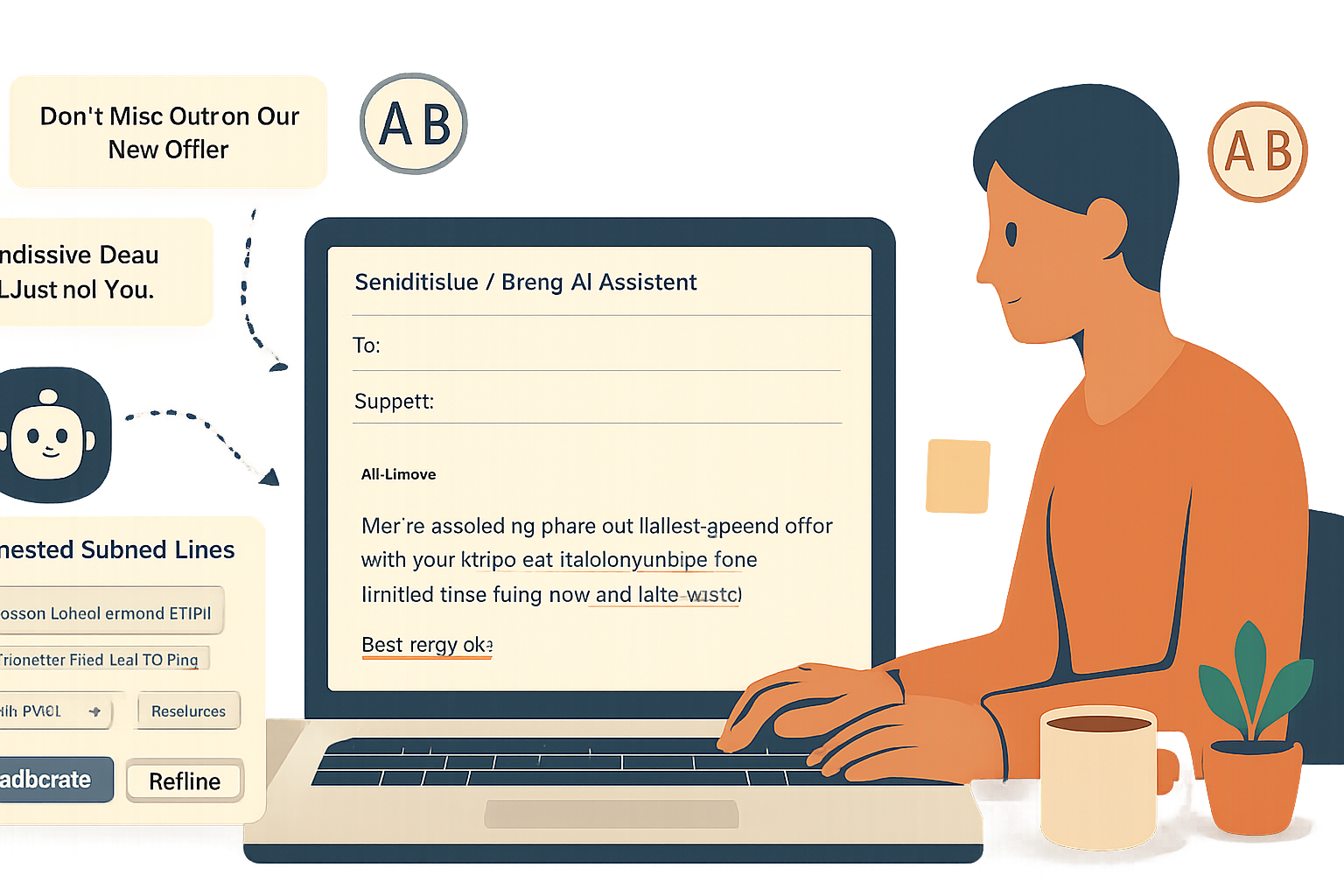
Outcome-first: after reading this you’ll have a clear, actionable framework to decide when to let Sendinblue’s AI write your email - and when to keep a human hand on the wheel.
Why this matters. Automation saves time. It scales personalization. But it can also erode your brand voice, create privacy risks, and produce copy that looks technically fine yet emotionally hollow. This post explains the real trade-offs, gives concrete guardrails, and suggests workflows you can implement this week.
What Sendinblue’s AI (Brevo) actually does - a practical snapshot
Sendinblue (now also known as Brevo) has added AI features into its email marketing toolkit to help with tasks like:
- Generating subject-line options and preview text.
- Drafting full email copy or content blocks from prompts.
- Suggesting personalization tokens and dynamic content.
- Helping with send-time optimization and performance predictions.
If you want their official product page, start here: https://www.sendinblue.com/ or https://www.brevo.com/ for product details.
Important: exact feature names and capabilities change rapidly. Treat the AI as a tool for ideation and scaling, not an autopilot replacement for brand strategy.
The upside - what automation does well
Speed and scale. Produce dozens of subject-line variants or personalized message bodies in minutes instead of hours.
Data-powered personalization at scale. When paired with accurate segments and tokens, the AI can help tailor messages for hundreds of micro-segments.
Removes writer’s block. For busy teams, an AI draft is a concrete starting point you can refine.
Consistent optimization. Suggesting subject lines, testing variations, and recommending send times can lead to measurable uplift when used thoughtfully.
Low barrier for small teams. Smaller marketing teams can compete with larger teams because AI reduces the content workload.
The danger zone - where you should be careful
Loss of brand voice. AI tends to default to neutral, generic phrasing. Overuse leads to a bland, interchangeable tone.
Hallucinations and factual errors. AI can confidently produce wrong facts, product specs, or promises. Always verify.
Privacy and compliance risks. Personalization requires data. Misuse of personal information can trigger GDPR, CAN-SPAM, or other legal issues. See practical guidance from the ICO on data protection: https://ico.org.uk/.
Over-optimization. AI may chase short-term opens and clicks (sensational subject lines) at the expense of long-term trust.
Deliverability signals. Repetitive or templated content can affect spam filters and deliverability over time if not varied and monitored.
Ethical issues. Using AI-generated language to impersonate human behaviors or manipulate emotions can erode customer trust.
How to know whether you can trust Sendinblue’s AI for a given email
Use this quick decision checklist:
- Is the email transactional or sensitive? (receipts, legal notices, legal changes)
- If yes - do not rely on AI for final copy. Keep strict templates and human review.
- Is the email high-stakes for brand relationship? (welcome series, apology, pricing change, churn-prevention)
- If yes - use AI for drafts only. Humanize heavily and A/B test against human-crafted control.
- Is this a low-risk promotional or informational campaign? (weekly newsletter, product highlight)
- If yes - AI-generated drafts are appropriate after prompt tuning and review.
- Do you have clean data and defined segmentation?
- If no - don’t trust personalized AI output - fix data first.
If you answered “no” to any of the safe-practice boxes above, default to human-written or heavily edited AI drafts.
Practical workflow: human + Sendinblue AI (a repeatable pattern)
- Start with a clear brief. Define audience, goal (open, click, purchase), brand tone, and one key CTA.
- Prompt the AI to produce variants. Ask for 3 subject lines, 2 preview teks, and 1 body draft in a specific tone.
- Example prompt - “Write 3 subject lines for a re-engagement email to past customers who haven’t purchased in 9 months. Tone: warm and curious. Offer: 15% off. Avoid hype and urgency words like ‘Act now’.”
- Human edit pass. Fix factual details, tighten the CTA, and inject brand-specific idioms.
- A/B test. Run the AI-derived subject line vs. a human subject line. Measure opens, clicks, conversions - not just opens.
- Monitor deliverability and long-term metrics. Don’t optimize purely for opens.
- Log what works. Build a short swipe file of best-performing AI prompts and edits for reuse.
Guardrails and quality checks you should enforce
- Fact-check every claim the AI makes about product features, dates, prices, or availability.
- Keep a brand voice cheat sheet (phrases to use, phrases to avoid) and apply it during edits.
- Never let the AI insert legal or regulatory language without legal review.
- Use rate limits and variation to avoid repeated templates that can trigger spam filters.
- Store and monitor opt-outs, and ensure personalization respects privacy consents.
Metrics that matter (beyond open rate)
Open rate is easy. But it’s not the whole story. Track:
- Click-through rate (CTR).
- Conversion rate (from click to desired action).
- Revenue per email / revenue per recipient.
- Unsubscribe and spam-complaint rates.
- Long-term retention and customer lifetime value (CLTV).
Why? AI can game subject lines to inflate opens. If clicks and revenue don’t move, you’ve lost nothing but attention - and maybe trust.
Real-world example ideas to test this month
- Subject-line A/B test - AI variant vs. top-performing human subject line from your archive.
- Re-engagement sequence - use AI to generate 3 draft emails, humanize the best one, and run a cohort test on churn reduction.
- Micro-seg personalization - pick 2 small segments and see whether AI-driven copy improves CTR and conversion vs. templated copy.
Document each experiment and run at least two iterations before drawing conclusions.
Legal and ethical quick notes
- GDPR and similar regimes require lawful bases for processing data and sending personalized messages. Don’t rely on AI as a legal defense - document consent and purpose.
- Be transparent. If AI materially changes how you interact with customers (e.g., chat responses), consider disclosing it as part of your policy.
- Avoid manipulative tactics (fear, undue urgency) that might increase short-term conversion but damage trust.
Bottom line - a practical recommendation
Trust Sendinblue’s AI to assist - not to replace - your email marketing craft. Use it for idea generation, rapid personalization at scale, and to lift routine work off your team. But keep human oversight where brand, compliance, or customer relationships are at stake.
Automation is a force multiplier. It can make good teams great. But unchecked, it can make average copy louder and less honest. The best approach is a hybrid: let AI speed you up, and let humans keep the promises.
Further reading
- Sendinblue / Brevo product pages: https://www.sendinblue.com/ and https://www.brevo.com/
- Practical AI in email marketing (HubSpot): https://blog.hubspot.com/marketing/email-marketing-ai
- ICO (data protection guidance): https://ico.org.uk/