· marketing · 8 min read
ActiveCampaign vs. The Competition: Who Wins on ROI?
A practical, data-informed comparison of ActiveCampaign and its leading rivals, focused on which platform delivers the best return on investment for different business needs.
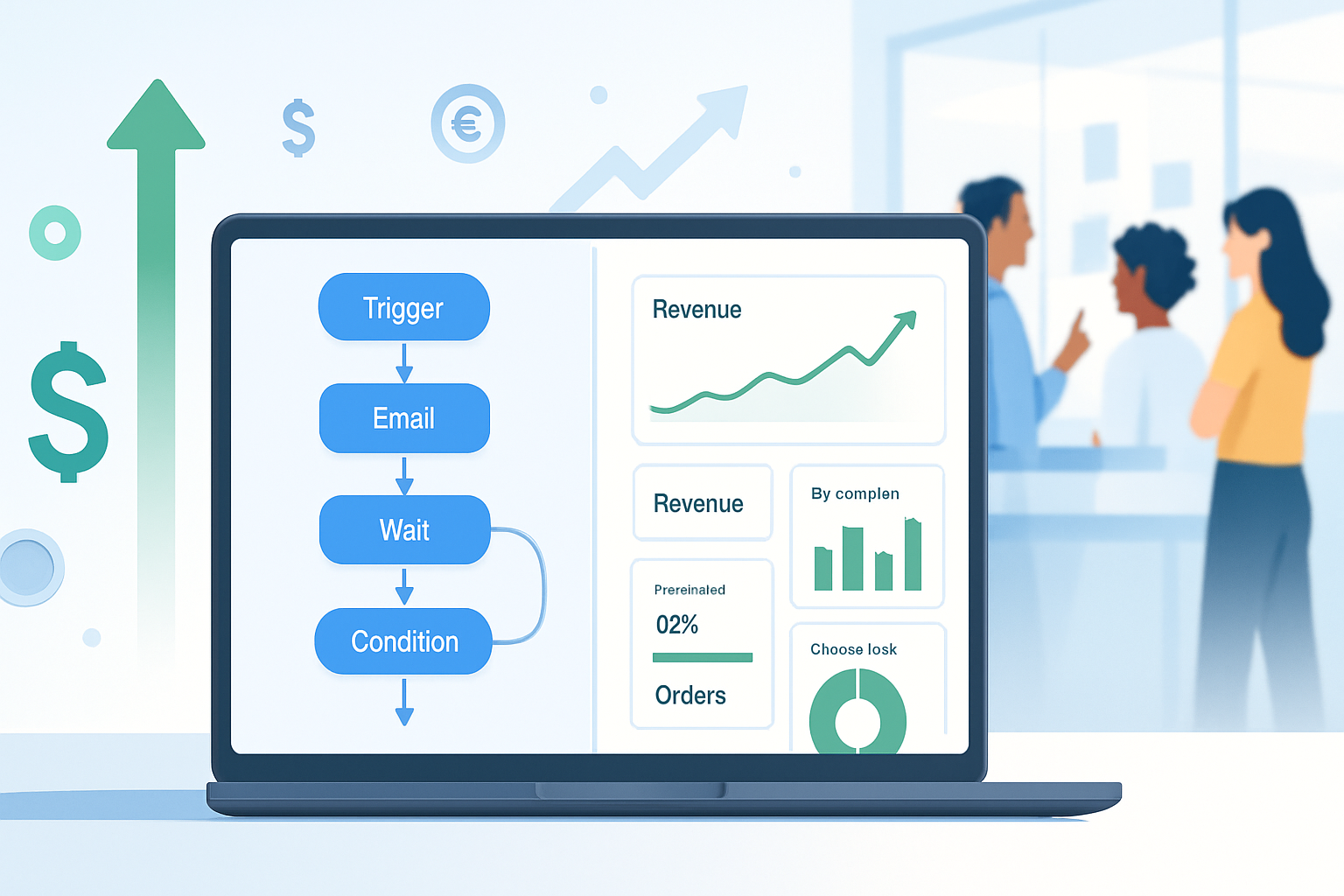
Outcome first: pick the tool that pays back more than it costs. Read this and you’ll know exactly which email platform is most likely to boost your net revenue - and why.
Why this matters now
Email still returns more than most channels when executed well. The platform you choose determines how much of that value you capture. Pick a tool with weak automation, poor segmentation, or a pricing model that punishes growth, and your ROI evaporates. Pick one that fits your business model and workflows, and every campaign compounds value.
In this article you’ll get:
- A clear framework for measuring ROI from email platforms.
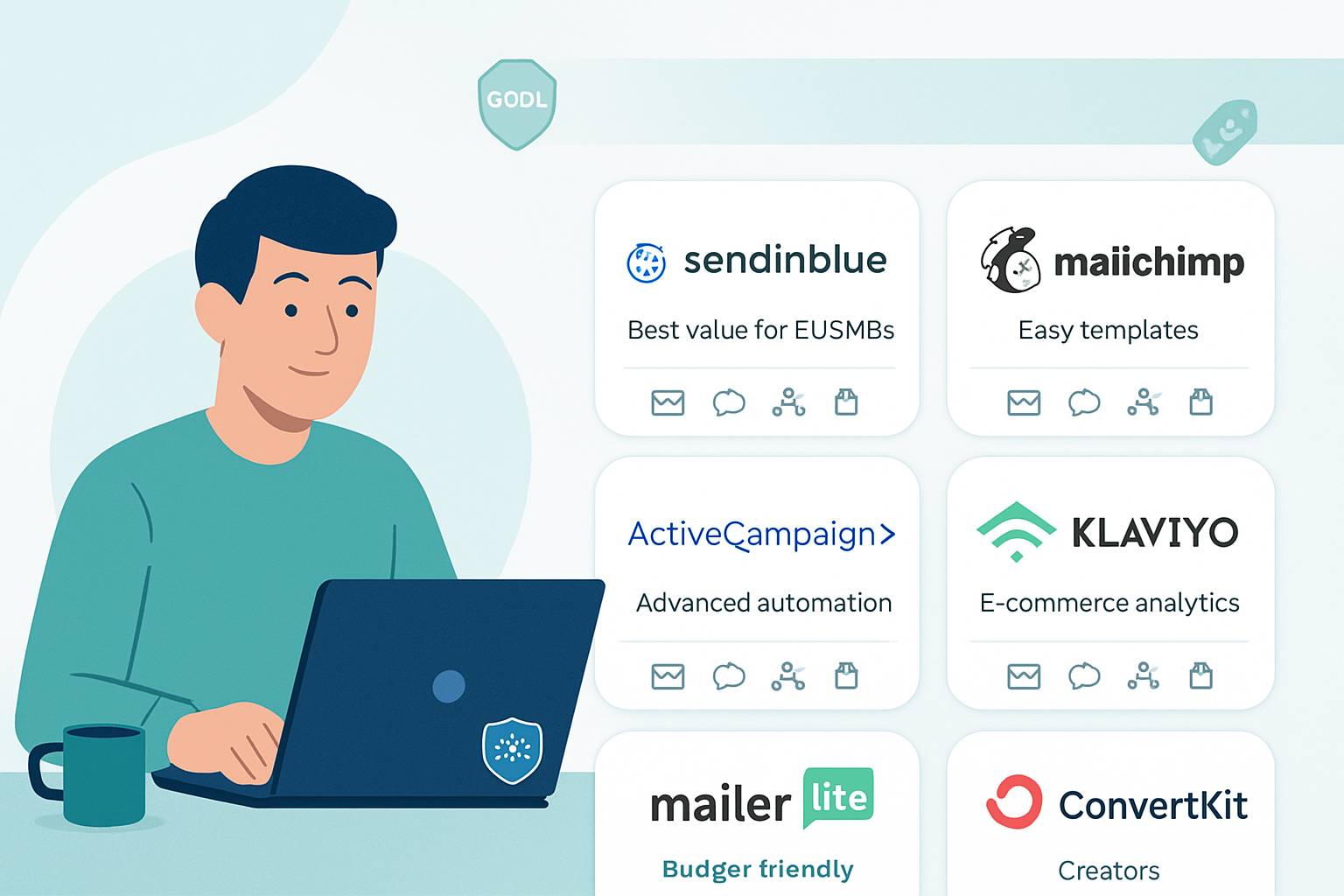
- A feature-driven comparison of ActiveCampaign vs. Mailchimp, HubSpot, Klaviyo, Sendinblue, and ConvertKit.
- Three realistic, transparent ROI scenarios with simple math you can reuse.
- A final verdict and a short checklist to pick the winner for your business.
How to think about ROI for email platforms
ROI from an email platform isn’t magic. It’s the result of three things:
- Revenue impact - how much extra money the platform helps you generate (campaign conversions, lifecycle automation, cart recovery).
- Cost of ownership - subscription fees, list-size pricing, add-ons (SMS, transactional email), and the time cost of using the tool.
- Operational leverage - how much time you save and how reliably you can scale personalization and automation.
Put simply:
ROI = (Incremental revenue attributable to the platform - Costs) / Costs
So the platform that wins on ROI is the one that maximizes incremental revenue and efficiency for a given cost.
Key levers that drive email platform ROI
- Automation and workflows. More sophisticated automation yields more saved time and higher incremental revenue from lifecycle messaging.
- Segmentation and personalization. Better data handling means higher conversion rates.
- Deliverability. If your messages never reach the inbox, nothing else matters.
- Pricing model. Per-contact vs. per-send vs. blended - each aligns differently with list growth and sending frequency.
- Integrations and data sync. The easier it is to get customer data in and out, the more precise your campaigns.
- Support and onboarding. Faster time-to-value matters, especially for smaller teams.
The players (short primer)
- ActiveCampaign - Known for strong automation and built-in CRM capabilities, positioned for small-to-medium businesses that need advanced workflows without enterprise pricing. activecampaign.com
- Mailchimp - Very popular with beginners. Strong template/creative tools and brand recognition, but automation and CRM features are more limited compared to ActiveCampaign at scale. mailchimp.com
- HubSpot - Full CRM + marketing suite. Extremely powerful for B2B and enterprise use, but cost escalates quickly as contacts and features grow. hubspot.com
- Klaviyo - Built for ecommerce. Deep ecommerce integrations, excellent segmentation for purchase behavior, typically drives high revenue lifts for stores but can be pricey. klaviyo.com
- Sendinblue - Offers email, SMS, and transactional email with volume-based pricing (sends per month) rather than per contact; attractive for heavy senders with large lists. sendinblue.com
- ConvertKit - Creator-first platform with simple automation and tagging; easy for creators but less powerful for complex segmentation or enterprise workflows. convertkit.com
(For user-review context, see aggregated review platforms such as G2 and Capterra to compare satisfaction and common complaints: G2 | Capterra)
Feature-by-feature: where ActiveCampaign shines and where competitors pull ahead
Automation and workflows
- ActiveCampaign - Advanced automation builder with conditional logic, multi-step sequences, and built-in CRM triggers. Great for complex journeys.
- Klaviyo - Strong ecommerce automation (flow templates for carts, win-backs). If you run an online store, Klaviyo’s ecommerce triggers often convert better out-of-the-box.
- HubSpot - Extremely sophisticated workflows tied to a full CRM. Best when you need account-based or sales-marketing orchestration.
Winner: ActiveCampaign for SMBs wanting deep automation; Klaviyo for ecommerce revenue lift; HubSpot for enterprise CRM-driven workflows.
Segmentation & personalization
- ActiveCampaign - Very capable - tags, custom fields, event tracking.
- Klaviyo - Exceptional for product-level purchase behavior and predictive segmentation.
- Mailchimp / ConvertKit - Simpler segmentation; adequate for newsletters and basic automation.
Deliverability & sending infrastructure
Deliverability is often more about sender reputation, list hygiene, and content than about platform alone. That said:
- All major vendors (ActiveCampaign, Klaviyo, Mailchimp, HubSpot) maintain strong sending infrastructure.
- Platforms that provide dedicated IPs and deliverability support (usually at higher tiers) help high-volume senders.
Pricing and true cost of ownership
- ActiveCampaign - Per-contact pricing with tiers that bundle automation and CRM. Good middle ground for growing lists.
- Klaviyo - Per-contact pricing often higher, but revenue per contact for ecommerce stores can justify the expense.
- HubSpot - Pricing can escalate quickly; cost-effective only if you need the wider CRM/marketing ecosystem.
- Sendinblue - Per-send pricing can be attractive for large lists with low send frequency.
- Mailchimp/ConvertKit - Lower entry prices; automation features become limited unless you upgrade.
Which pricing model favors ROI?
- Per-contact pricing favors frequent, personalized messaging (automation-driven revenue). It aligns with high-LTV customers.
- Per-send pricing can favor large, low-frequency lists.
User satisfaction (qualitative)
- ActiveCampaign users commonly praise the depth of automation and the value-for-money compared with enterprise CRMs.
- Complaints often center on a learning curve for complex automations and occasional UI quirks.
- Klaviyo users praise ecommerce revenue increases but note that costs rise steeply with list size.
For real-time satisfaction metrics and review breakdowns, check G2 and Capterra pages for each platform: ActiveCampaign on G2, Klaviyo on G2, HubSpot on G2.
Three realistic ROI scenarios (transparent, repeatable math)
Each scenario compares ActiveCampaign vs. a primary competitor for that use case. Numbers are hypothetical but conservative - use them as templates and swap in your own figures.
Scenario A - Freelancer / Creator (newsletter-driven revenue)
Assumptions (annual):
- List size - 5,000
- Open rate - 25%
- Conversion rate from email to paid product - 0.5%
- Average purchase value - $50
- Sends per month - 4
ActiveCampaign costs: assume $XX/month for this list tier including automation. Competitor (ConvertKit / Mailchimp) costs: assume $YY/month (often slightly cheaper at low tiers).
Revenue per month = list size _ open rate _ conversion _ AOV = 5,000 _ 0.25 _ 0.005 _ $50 = $312.50
Annual incremental revenue (with better automation/personalization on ActiveCampaign): add a conservative 20% lift = $750 extra.
If ActiveCampaign costs an extra $200/year vs. competitor, ROI = (750 - 200) / 200 = 2.75 -> 275%.
Bottom line: For creators who can capture small lifts in conversion with better automation, ActiveCampaign often pays for itself quickly.
Scenario B - Ecommerce SMB (cart recovery, flows)
Assumptions (monthly):
- List size - 25,000
- Monthly ecommerce revenue - $100,000
- Email-attributable revenue (baseline) - 20% ($20,000)
- Klaviyo usually drives stronger ecommerce lifts with product-level flows. Suppose Klaviyo achieves a 15% lift over baseline; ActiveCampaign a 10% lift.
Incremental monthly revenue: Klaviyo = $3,000; ActiveCampaign = $2,000.
Cost differential: Klaviyo might cost $X/month more (often significant for large lists).
If Klaviyo costs $1,200/month more but returns $1,000/month extra revenue vs. ActiveCampaign, ROI is negative vs. ActiveCampaign - unless the higher lift or LTV increases over time.
Bottom line: Klaviyo often wins ecommerce ROI when per-contact revenue is high and flows materially lift average order value or purchase frequency. ActiveCampaign wins for stores that need advanced automation at lower total cost.
Scenario C - B2B / Sales-driven (lead-to-deal nurturing)
Assumptions (annual):
- Contacts - 10,000 leads
- Sales cycle average deal value - $10,000
- Email-influenced close rate improvement with full CRM orchestration - 1 additional deal per quarter
HubSpot advantage: deep CRM + sales integration results in faster pipeline acceleration. If HubSpot closes 4 more deals/year due to integrated orchestration = $40,000 incremental revenue.
HubSpot cost premium vs. ActiveCampaign could be $20,000+ per year depending on tier.
ROI: (40,000 - 20,000) / 20,000 = 1 -> 100% (break-even+). But this is sensitive to actual deal influence.
Bottom line: For complex B2B deals where marketing and sales must tightly coordinate, HubSpot frequently justifies higher costs.
Synthesis - who wins on ROI?
- ActiveCampaign wins ROI for most small-to-medium businesses that need robust automation and CRM-lite functionality without enterprise pricing. It’s an especially strong pick for service businesses, creators scaling automations, and SMBs who want to squeeze more revenue from lifecycle emails.
- Klaviyo often wins for ecommerce stores where per-contact revenue is high and behavior-driven flows (product recommendations, browse abandonment, predictive segments) materially lift revenue. The higher price can be justified by higher revenue per contact.
- HubSpot wins when the business requires a full CRM + marketing + sales stack and incremental revenue from pipeline acceleration offsets higher costs.
- Sendinblue, Mailchimp, ConvertKit, and others each win in narrow cases - Sendinblue for heavy-volume low-frequency senders; Mailchimp/ConvertKit for simple creator newsletters and low-cost entry.
Checklist: How to choose the ROI winner for your business
- What’s your primary objective? (ecommerce revenue, lead-to-deal velocity, subscription retention, creator monetization)
- What’s your average revenue per contact (AOV or LTV)? Higher AOV/LTV tolerates higher per-contact costs.
- How much will automation lift conversion? (Estimate conservatively - 5–20% depending on baseline.)
- How fast do you need time-to-value? Does your team have capacity to build complex automations?
- What integrations do you need? ERP, ecommerce platform, CRM, helpdesk?
- What pricing model aligns with growth? (Per-contact vs. per-send)
If you answered:
- Ecommerce + high AOV -> test Klaviyo versus ActiveCampaign (run identical flows for 60 days).
- SMB/service or content creator -> ActiveCampaign often wins.
- Enterprise B2B -> HubSpot or another full-suite CRM is likely the better long-term ROI.
Final verdict (short)
There is no universal winner. But for most SMBs seeking the best balance of automation power, deliverability, and price, ActiveCampaign is the ROI-friendly choice. Klaviyo is the ROI king for ecommerce when revenue per contact is high. HubSpot is the right ROI bet for companies that need tight marketing-sales coordination and can absorb higher platform costs.
Next steps (practical)
- Run a 30–90 day pilot focusing on one high-value automation (welcome series, cart recovery, or lead nurture) and track incremental revenue.
- Use a control group (no automation or current platform) to quantify lift.
- Model costs vs. incremental revenue using the simple formula above.
References and where to read more
- ActiveCampaign: https://www.activecampaign.com
- Klaviyo: https://www.klaviyo.com
- HubSpot Marketing Hub: https://www.hubspot.com/products/marketing
- Mailchimp: https://mailchimp.com
- Sendinblue: https://www.sendinblue.com
- ConvertKit: https://www.convertkit.com
- Review platforms for satisfaction insights: https://www.g2.com | https://www.capterra.com
Takeaway
If you want a platform that scales with clever automation and gives you the most revenue per dollar for typical SMB workflows, start with ActiveCampaign. If your business is ecommerce and each contact has high purchase value, test Klaviyo first. If you need CRM-driven pipeline wins and can invest in an integrated stack, HubSpot can deliver ROI despite higher costs.
Decide by testing - measure lift, not bells and whistles. That’s the only way to know which tool truly wins ROI for your business.