· business · 6 min read
Navigating Payment Disputes: Expert Tips for Using Stripe to Protect Your Business
Practical, step-by-step strategies to prevent, respond to, and win payment disputes using Stripe’s tools - so you secure revenue and reduce operational pain.
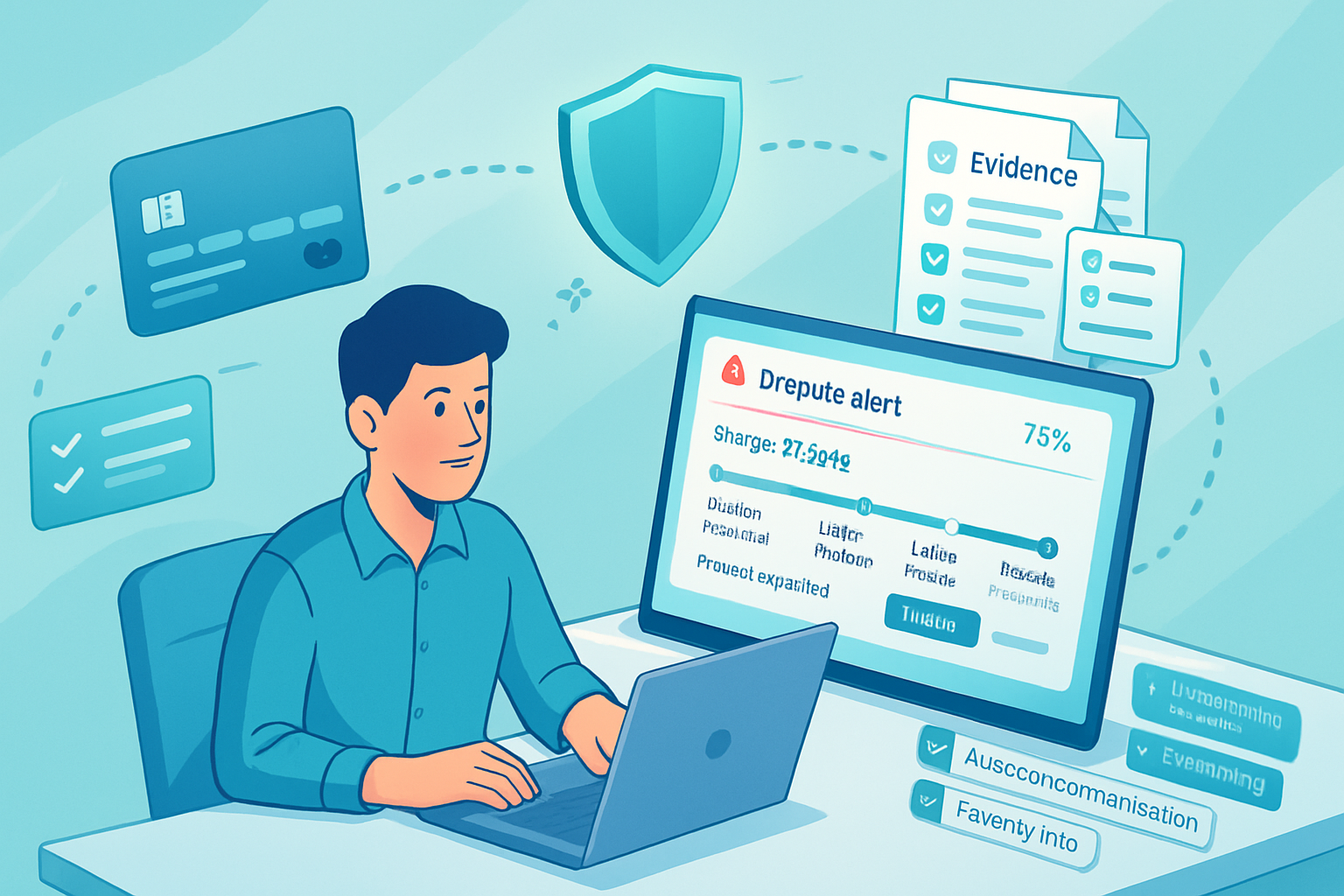
Outcome first: You can stop losing predictable revenue to avoidable disputes and, when disputes do appear, win them more often and faster by using Stripe the right way. Read this and you’ll leave with a repeatable playbook - prevention rules you can deploy today, exact evidence to collect, webhook and automation ideas, and sample narrative templates that increase your win rate.
Why this matters - fast
A dispute is not just a transaction reversal. It’s time, friction, and lost revenue. You may get funds returned immediately by the card network and face administrative cost and fraud risk. But disputes are also beatable. Stripe gives you the tools. Use them deliberately and you convert a chaotic process into a predictable, defensible workflow.
Quick wins you can implement today
- Make your descriptor clear. Use a recognizable merchant name and product reference so cardholders know who charged them. Confusing descriptors cause many disputes.
- Show an immediate, detailed receipt (email or SMS) with order ID, amount, itemization, and contact info.
- Add metadata on each charge - order_id, customer_id, email, product_sku. Metadata is searchable in Stripe and invaluable for evidence.
- Turn on Stripe Radar and enable core rules for fraud prevention. Use 3D Secure for higher-risk transactions.
- Ship with tracking and signature for physical goods. For digital goods, record access logs and delivery confirmations.
Implement these and you’ll stop many disputes before they start.
When a dispute arrives - a short triage checklist
- Acknowledge the event immediately. Subscribe to the Stripe webhook
charge.dispute.created(or the updateddispute.*events) so your ops team or system is notified the instant a dispute is opened. See Stripe webhooks for details: https://stripe.com/docs/webhooks - Lock the transaction record. Prevent automated refunds or accidental changes to the order while you gather evidence.
- Determine dispute type quickly (fraud, product not received, subscription canceled, duplicate, quality/service issue). The dispute reason guides the evidence you need.
- Set an internal SLA. Typical card networks give you a short window - usually 7–21 days depending on network and region - to submit evidence. Act fast. See Stripe’s dispute timelines: https://stripe.com/docs/disputes
Assembling winning evidence - the exact items judges want
Card networks evaluate the totality of evidence. Provide the strongest possible, well-organized case. Include everything below when relevant:
- Transaction-level data
- Charge ID, amount, date/time, payment method last4 and network, billing and shipping address, IP address and geo data.
- Full payment descriptor as seen on the cardholder statement.
- Proof of delivery / fulfillment
- Carrier tracking number, delivery date/time, delivery signature scan, shipment proof (photos if available).
- Customer communications
- Order confirmation, receipts, support tickets and timestamps, chat transcripts, refund offers, cancellations, explicit acceptance of terms.
- Product access logs (for digital goods)
- Login timestamps, IPs, download records, activation keys, invoice/receipt tied to user account.
- Refund history
- Any refund attempts, partial or full, with timestamps.
- Contractual terms
- Signed agreements, trial terms, cancellation policy screenshots, and where the customer accepted TOS or subscription terms.
- Visuals and screenshots
- Product pages, checkout page with prices and terms, screenshots of the customer portal showing subscription status.
Stripe’s evidence guidance is comprehensive - follow it: https://stripe.com/docs/disputes/evidence
Evidence organization tips
- Put the strongest, most dispositive evidence first. A carrier signature or authenticated customer acknowledgment matters more than a long chat log.
- Attach short, tightly written narrative summaries (see templates below) - judges read the narrative first.
- Use consistent filenames and a clear folder structure when uploading multiple files to Stripe.
Sample narrative templates (use and adapt)
Fraud / Unauthorized Transaction (short):
“The cardholder’s email and account (email: jane@example.com, account id: acct_123) created the order at 2025-09-10T14:02Z from IP 203.0.113.45, completed 3D Secure authentication, and used a shipping address that matched billing address. Carrier tracking (UPS 1Z999…) shows delivery with signature on 2025-09-12. Attached: order confirmation, AVS/CVV, 3DS payload, tracking and signature.”
Service Not Received (digital product):
“Customer purchased subscription plan Pro (SKU: PRO-1) on 2025-10-02 and account shows first login and feature usage on 2025-10-03 at 09:45 UTC. Attached: access logs, invoice, screenshots of portal usage, and support chat offering help.”
Keep the narrative factual, chronological, and concise.
Using Stripe features to automate and strengthen responses
- Disputes Dashboard - Use the Stripe Dashboard to review disputes, add evidence manually, and check outcomes. Good for one-offs and small volumes.
- Evidence API / Dispute update - Automate evidence submission through the API so you meet deadlines instantly. Example (Python):
import stripe
stripe.api_key = "sk_live_xxx"

# add evidence to a dispute (replace dp_... with dispute id)
stripe.Dispute.modify(
  "dp_12345",
  evidence={
    "customer_name": "Acme Corp",
    "product_description": "Monthly subscription - Pro Plan",
    "customer_purchase_ip": "203.0.113.45",
    "receipt": "https://your-cdn.example/receipts/rcpt_12345.pdf"
  }
)- Webhooks - Configure
- Metadata - Add structured metadata on the original charge (order_id, customer_id, sku) to simplify evidence lookup. Metadata is searchable in Dashboard and via API.
- Radar rules - Build custom Radar rules for your business (e.g., block high-risk countries, require 3DS for large amounts). Keep false positives in mind - balance security with conversion. Learn more:
- Chargeback protection - For eligible U.S.-issued cards and some use-cases Stripe offers dispute protection products; review availability and coverage if you process high-risk volumes. See Stripe Dispute Protection products:
Operationalize: build your dispute playbook
- Assign ownership. Decide who handles triage, evidence collection, and submission. Clear roles speed responses.
- Build automated evidence collectors. Link your CRM, fulfillment, and logging systems to a single evidence pipeline that can attach files to a dispute record automatically.
- Track metrics. Key metrics - dispute rate (disputes / successful charges), win rate, time-to-evidence, chargeback cost. Aim for a low dispute rate and a win rate above your historical baseline.
- Retrospectives. After each lost dispute, capture root cause and add preventive controls (descriptor changes, new Radar rules, better TOS acceptance).
Playbook for common dispute types
- Unauthorized/fraudulent
- Evidence priorities - 3DS challenge results, IP, device fingerprinting, login/auth logs, customer communication proving possession.
- Use Radar effectively and require 3DS when risk is high.
- Product not received
- Evidence - carrier tracking, delivery confirmation, signature.
- If undelivered, offer refund quickly - cardholder satisfaction often prevents disputes.
- Quality / service not as described
- Evidence - product images matching delivery, support dialog offering resolution, proof of delivery.
- For subscriptions, show account usage or login timestamps.
- Duplicate / incorrect amount
- Evidence - transaction ledger, original invoice, timestamps showing the correct charge. Consider offering a quick refund where appropriate.
Legal and recordkeeping considerations
- Keep raw evidence for the full statute-of-limitations your legal team requires. Card networks may query historical patterns.
- Avoid speculative statements in narratives. Stick to facts and timestamps.
- If a dispute escalates to litigation, preserve an evidentiary chain (logs, access controls, export of receipts).
When to take refunds vs. fight
Fighting every dispute wastes time. Decide by calculus:
- Low ticket value + weak evidence = refund quickly to save ops cost.
- High ticket value + strong evidence = fight.
- Customer retention matters - a quick refund and outreach may be better than a contentious fight.
Create a decision matrix (amount threshold x evidence strength) to automate refund decisions.
Final checklist (start here)
- Confirm webhooks for dispute events are set up.
- Add metadata to all charges (order id, customer id, plan id).
- Enable Radar and sensible 3DS rules.
- Build an automated evidence pipeline (CRM, fulfillment, logs).
- Create narrative templates and train ops to use them.
- Track dispute KPIs and run monthly retrospective.
Be proactive. Prevent the dispute and you never have to fight. Automate the ones you can’t prevent and you win more often. Put clear descriptors, fast receipts, and automated evidence collection at the center of your payments stack - and you protect revenue without turning your finance team into a 24/7 claims department.
References
- Stripe Disputes overview: https://stripe.com/docs/disputes
- Evidence guide for disputes: https://stripe.com/docs/disputes/evidence
- Stripe Radar fraud detection: https://stripe.com/radar
- Webhooks and event handling: https://stripe.com/docs/webhooks