· creativity · 6 min read
From Concept to Creation: How to Structure Your Content Using Writesonic
A step-by-step guide to turning vague ideas into clear, engaging, publish-ready content using Writesonic. Learn how to capture an idea, choose an angle, generate hooks and outlines, expand sections with AI, and optimize for SEO - with exact prompts and best practices.
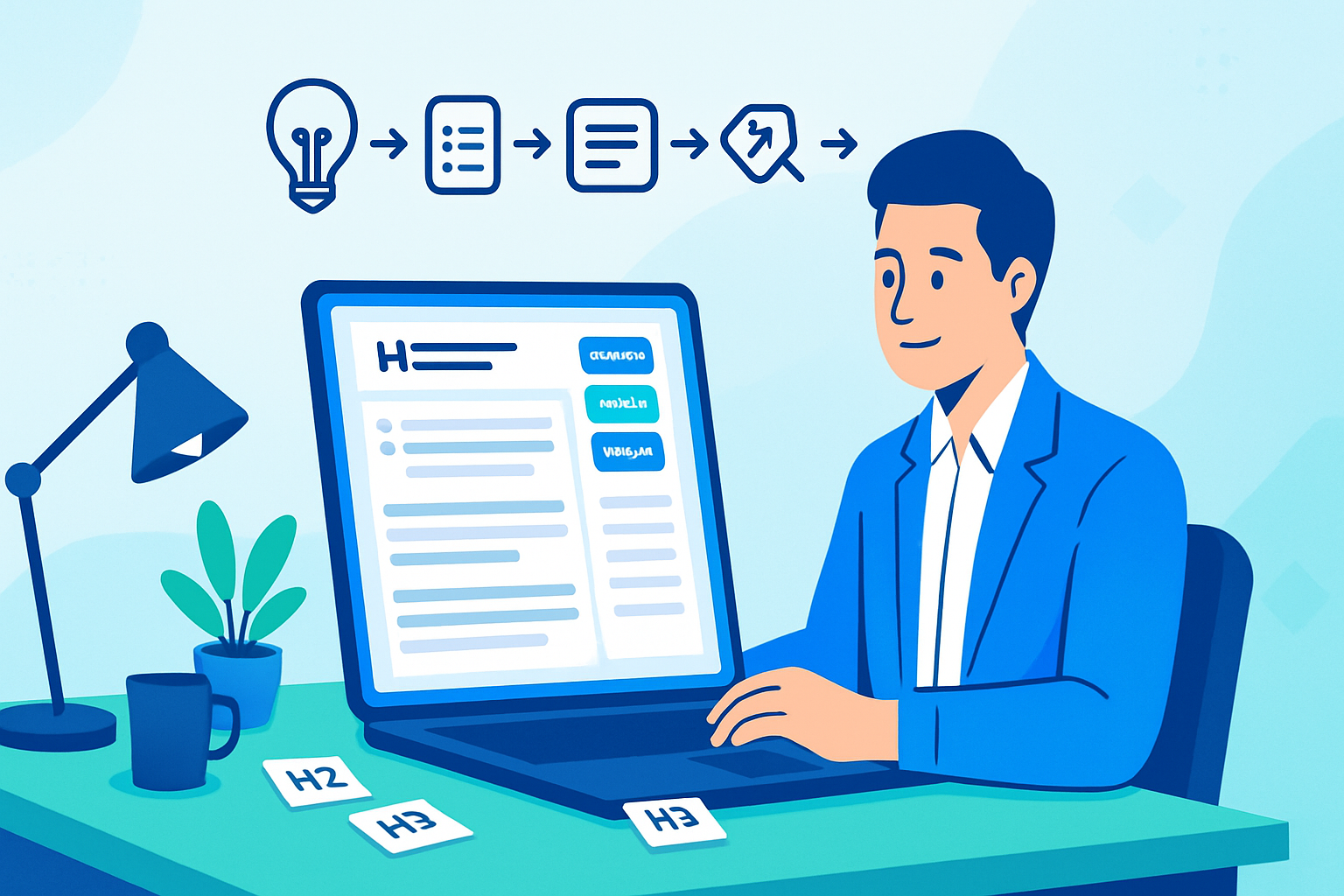
Outcome first: by the time you finish this article you’ll have a clear, repeatable workflow to turn a fuzzy idea into a structured, engaging piece of content using Writesonic - fast and with fewer rewrites.
You will save time. You will avoid the blank-page trap. You will produce content that reads like it was planned, not patched together.
Why this matters. Because good content is structure plus voice. Without a reliable structure, even great ideas get lost. With one, ideas become pieces that connect, persuade, and rank.
How to use this guide
Follow the steps in order. Use the example prompts where helpful. Iterate. Treat Writesonic as a creative co-pilot, not an autopilot. Keep your editorial judgment engaged.
Quick primer: What in Writesonic helps you here
- Sonic Editor / Long-form AI Writer - create outlines and expand sections quickly.
- Headline & Meta generators - produce hooks and SEO metadata in seconds.
- Paragraph/Section Expanders - flesh out individual sections with tone and length control.
- Tone and creativity settings - adjust voice from formal to conversational.
(If you want more detail on features, start at the Writesonic homepage: https://writesonic.com.)
The 9-step workflow: concept → creation
Below is a practical, repeatable workflow. Each step includes exact prompt examples you can paste into Writesonic.
Step 0 - Capture the seed (1–2 minutes)
Start with one clear sentence that defines the idea.
Goal: a single-sentence brief you can refer back to.
Example seed: “How to onboard remote employees so they feel productive and connected in their first 30 days.”
Why: short briefs keep the AI focused and make every output relevant.
Step 1 - Clarify the audience and outcome (2–4 minutes)
Answer two questions: Who is reading? What should they be able to do after reading?
Write a one-line audience statement: “SaaS people ops managers who need a practical 30-day onboarding plan for remote hires.”
Prompt for Writesonic (Chat / Sonic Editor):
Audience: SaaS people ops managers. Outcome: a practical 30-day remote onboarding plan they can implement. Create a 1-sentence content brief and 3 pain points this article should solve.Expected output: a crisp brief and 3 pain points (e.g., low engagement, slow ramp time, inconsistent process).
Step 2 - Pick an angle and keywords (5–10 minutes)
Decide how you’ll approach the topic. Angle examples: “step-by-step checklist”, “case-study-led”, “myth-busting”.
Use Writesonic or an SEO tool to generate 6–10 keywords and a primary focus keyword.
Prompt:
Suggest 8 keywords and a primary focus keyword for: "30-day remote employee onboarding". Include search intent (informational, transactional, etc.).Why keywords matter now: they shape the outline, headings, and meta - not just the intro.
Step 3 - Generate 8–12 hooks and 5 headline variants (3–5 minutes)
Hooks are the first sentences that promise value. Headlines are your promise.
Prompt:
Write 8 short hooks (1–2 sentences) and 5 headline variants for the brief: [paste brief]. Tone: practical and urgent.Tip: Pick one hook and one headline. Keep the hook under 20 words.
Step 4 - Build a robust outline (5–10 minutes)
This is the most important step. A strong outline is a commuter map for your reader.
What a good outline includes:
- A clear intro with the promise (use your hook).
- 3–6 H2s that each solve a pain point or advance the lesson.
- H3s that contain steps, examples, or mini-checklists.
- A concrete CTA or next step.
Prompt:
Using the brief and the chosen headline/hook, produce a detailed article outline with H2s and H3s. Include suggested word counts per section and one practical checklist to include.Example outline snippet (from our sample topic):
- H2 - Preparing before day 1 (300 words)
- H3 - Preboarding checklist (email, access, welcome kit)
- H2 - Week 1 - connection and context (350 words)
- H3 - 5 check-ins managers should do
Why word counts: they keep expansion focused and avoid runaway sections.
Step 5 - Expand each section with targeted prompts (10–30 minutes)
Use Writesonic to expand one H2 at a time. Keep prompts precise: specify tone, target word count, audience, and any examples or frameworks to include.
Prompts (repeat per section):
Expand this heading into ~350 words in a helpful, practical tone for SaaS people ops managers. Include a short 5-point checklist and one real-world example. Keep sentences varied; end with a one-sentence takeaway.Tip: Use the “expand paragraph” or “long-form” mode to generate draft copy, then ask the AI to shorten, simplify, or reframe as needed.
Step 6 - Add evidence, examples, and supporting assets (10–20 minutes)
Good content balances claim and proof. Use the AI to draft examples, but verify data and attribute sources.
Prompts:
Add two short case-study-style examples (3–4 sentences each) showing how companies cut ramp time with a 30-day onboarding plan. Note: flag any statistics for verification.Best practice: add links to primary sources. If you use a stat, keep a note to fact-check before publishing.
Step 7 - Refine voice, readability, and microcopy (10–15 minutes)
Now switch to polishing: tighten sentences, vary rhythm, and add transitions.
Prompts:
Rewrite the following paragraph to be more conversational, active, and 15% shorter. Preserve meaning.Also generate: bulleted summaries, pull-quotes, and a short conclusion that restates the promise.
Step 8 - SEO, metadata, and publish-ready checks (5–15 minutes)
Create the SEO title, meta description, slug, and suggested internal link anchor texts.
Prompt:
Generate: SEO title (60–65 chars), meta description (155–160 chars), URL slug, and 3 suggested internal link anchors for focus keyword: [keyword].Quick items to verify before publishing:
- Primary keyword in H1/H2 and naturally in body.
- Meta description includes the main benefit.
- Images have alt text that includes the keyword where appropriate.
Step 9 - Iterate with analytics (ongoing)
After publishing, measure: time on page, bounce rate, CTR, and conversion (newsletter signups, demo requests). Use the data to iterate: improve headings, add examples, or expand sections.
Prompt for iteration:
Based on analytics (low time on page and high bounce), suggest 6 improvements to make the article more engaging in the first 60 seconds.Short worked example (applied prompts)
Seed: “How to onboard remote employees so they feel productive and connected in their first 30 days.”
- Headline prompt - “Write 5 headline variants for: [seed]”
- Outline prompt - “Create a detailed outline for the chosen headline, include H2s, H3s, and word counts.”
- Section expand prompt - “Expand ‘Week 1 - connection and context’ to ~350 words. Include 5 manager check-ins and a closing takeaway. Tone: practical.”
In minutes you have intro + 3 full H2 sections + conclusion + meta.
Best practices and guardrails
- Iterate multiple outputs. Ask for 3–5 variants and pick the best parts of each.
- Keep humans in the loop for facts, brand voice, and legal/practical claims.
- Use short prompts for micro-tasks (rewrite, shorten, tone) and longer prompts for big tasks (full outlines, section drafts).
- Use temperature/creativity controls to get conservative vs. bold phrasing.
- Preserve readability - aim for 8–12 minute read for long posts, and use lists and examples liberally.
Common pitfalls and how to avoid them
- Pitfall - Too broad an initial prompt. Fix: narrow the audience and outcome first.
- Pitfall - Over-reliance on AI facts. Fix: mark statistics for verification and cite sources.
- Pitfall - No clear CTA. Fix: decide the next action (subscribe, download, sign up) during the outline step.
Quick checklist before publish
- Hook and headline chosen
- Outline with H2/H3 and word counts complete
- Each section expanded and edited
- At least two examples or case notes included
- SEO title, meta, slug, and alt texts set
- All statistics verified and linked
Final note
Writesonic speeds the creative heavy lifting. But structure is still the secret sauce. Start with a tight brief, build a deliberate outline, and expand in small, controlled steps. The AI becomes a multiplier when you give it direction.
References
- Writesonic - main site: https://writesonic.com
- How to write a blog post (structure and process): https://blog.hubspot.com/marketing/how-to-write-a-blog-post