· creativity · 7 min read
The Ethical Implications of Using AI in Creative Work: A Runway ML Perspective
An actionable guide for creators using Runway ML and similar tools. Learn the key moral dilemmas - authorship, consent, bias, labor, and environmental impact - and practical strategies to act responsibly while still harnessing AI to amplify creativity.

Outcome-first: read this and you will have a practical ethical toolkit for using Runway ML (or any creative AI) so you can create boldly - and responsibly. You’ll be able to recognize common moral traps, apply clear rules of thumb in your workflow, and explain your choices to collaborators and audiences with confidence.
Why this matters - fast
AI tools like Runway ML lower the barrier to professional-quality images, video, and generative assets. That unlocks incredible creative possibilities. But power brings responsibility. What you choose to generate, how you disclose it, and which data you used will affect other creators, subjects in images, and the public trust in creative work.
Read on for a clear map of the ethical landscape, actionable strategies you can apply today, and a simple checklist you can follow every time you hit “export.”
The core ethical issues creators face
Below are the common moral dilemmas that recur when creatives adopt generative AI tools.
Authorship and copyright - Who owns the output - you, the model creator, or both? Laws vary; policies and platforms matter. See government guidance on AI and copyright for context
Training data provenance - Models are trained on huge datasets scraped or licensed from the web. If those sources included copyrighted or private material, the ethics of generating derivative outputs becomes murky. WIPO discusses intersections of IP and AI here:
Consent and deepfakes - Generating realistic likenesses of real people - especially public figures, private individuals, or vulnerable subjects - raises consent and harm concerns. The technology can be used for satire or for malicious manipulation.
Attribution and transparency - Audiences assume creative works are human-made unless told otherwise. Hidden AI usage undermines trust and can mislead. Clear disclosure is a simple but powerful ethical practice.
Labor and economic impact - As AI accelerates asset production, it shifts demand for some skills and pressures wages and freelance markets. Creators and studios must weigh these distributional effects.
Bias and representation - If a model’s training data encodes skewed or stereotyped representations, outputs can reproduce harm, marginalizing groups or misrepresenting histories.
Environmental cost - Training and running large models consumes energy. Creators should consider resource intensity when choosing models or production pathways.
What Runway ML specifically brings to the table
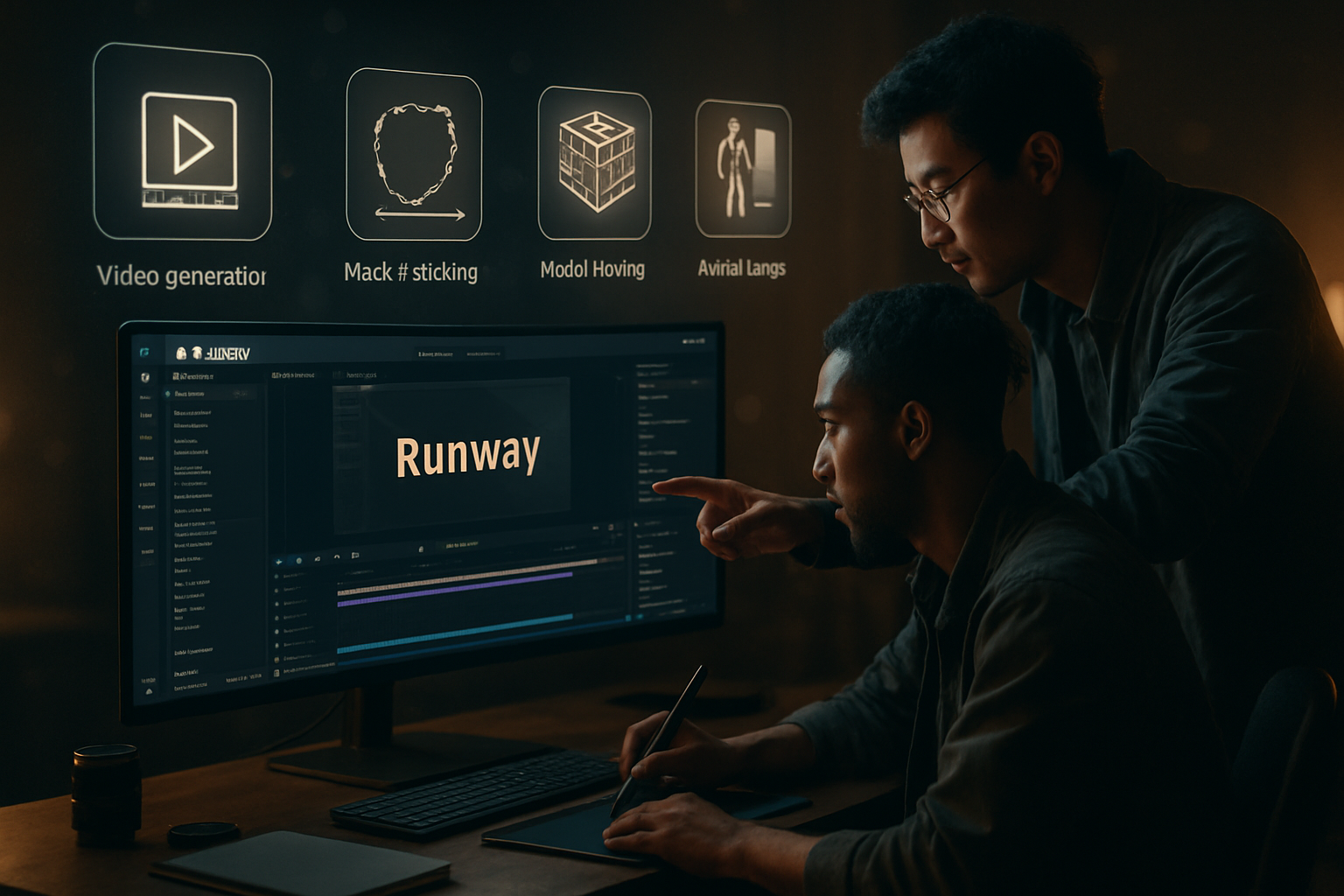
Runway ML packages state-of-the-art models into a user-friendly workflow for creators - image synthesis, video editing, background removal, style transfer, and more. That convenience changes the moral calculus: barriers to misuse are lowered even as tools empower new forms of expression.
For platform specifics, see Runway’s site and documentation: https://runwayml.com and https://runwayml.com/docs.
Key implications for users of Runway-style tools:
- Rapid iteration means many more outputs are created, increasing the chance of accidentally generating problematic content.
- Model provenance is not always obvious to end users, so scrutinizing terms of service and model licensing is essential.
- Built-in sharing features and integrations make dissemination faster - and make early disclosure and watermarking more important.
Practical strategies to navigate the ethical waters
These are pragmatic, implementable actions you can use now.
- Start with transparent intent
- Before you generate - ask why. Is the goal to augment your unique voice or replace another artist’s work? Be explicit about intentions with collaborators and clients.
- Check licenses and platform policies
- Read Runway ML’s terms and the licenses for any models or assets you use. Some models are open for commercial use; others require attribution or forbid commercial exploitation. When in doubt, ask or choose an alternative dataset/model with clear licensing.
- Practice provenance hygiene
- Keep a short manifest for each project - which model/version you used, the prompts, datasets (if known), and any post-processing. This helps with attribution, dispute resolution, and your own later reflection.
- Disclose AI involvement
- Label AI-generated assets in client deliverables, social posts, and gallery captions. Honesty preserves trust and avoids misleading audiences. Many platforms and institutions are beginning to require or recommend disclosure (see UNESCO AI Recommendation).
- Obtain consent for likenesses and private content
- Don’t create realistic likenesses of people without express consent. For public figures, consider the social harm and legal context; for private individuals, require explicit permission.
- Prefer ethically sourced or licensed datasets
- When possible, use models trained on explicitly licensed or public-domain datasets. Favor vendors and models that publish dataset provenance and curation practices.
- Maintain human oversight
- Use AI as an assistant, not an autopilot. Keep a human in the loop to catch representational harm, inaccuracies, or possible copyright conflicts.
- Adopt technical mitigations
- Watermark outputs (visible or robust invisible watermarks), embed provenance metadata (e.g., Content Authenticity Initiative-style metadata), and consider tools that detect synthetic media.
- Be mindful of economic impacts
- If AI reduces freelance income in your niche, consider sharing resources, retraining, or building collaborative workflows that split AI-enabled productivity gains fairly.
- Build inclusive testing
- Test outputs with diverse reviewers who can spot bias, misrepresentation, or harmful stereotypes before public release.
A short ethics checklist you can use before publishing
- Did I document the model and prompt used?
- Are there any possible copyright or creator attribution issues? If yes, resolve them now.
- Does any output use a real person’s likeness? Do I have consent or a defensible public-interest argument?
- Have I disclosed AI involvement in presentational contexts (client, platform, or public)?
- Has a diverse reviewer looked for bias or harmful representation?
- Have I considered energy/resource cost and chosen an efficient workflow where reasonable?
- Am I transparent with collaborators and paying fair compensation where relevant?
If you answer “no” to any of these, pause and resolve it before distribution.
Two short scenarios: dos and don’ts
Scenario A - You’re producing promotional images for a brand. Do: Use licensed models, document your process, disclose AI usage in ad copy if required, and ensure no protected or trademarked elements are generated without permission. Don’t: Pass off generated images as photographed shoots by a named photographer when none occurred.
Scenario B - You’re creating hyper-realistic likenesses for a documentary. Do: Obtain signed consent for any private-person likenesses, flag synthesized segments with clear captions, and consider less realistic stylizations when consent is partial. Don’t: Use AI to fabricate statements or events attributed to real people.
The legal and governance context - what to watch for
Laws and regulations are evolving rapidly. Key developments to monitor:
- National copyright offices and courts are clarifying how copyright applies to AI-assisted works (U.S. Copyright Office guidance).
- The EU is advancing regulatory frameworks for AI risk management and transparency (European approach to AI).
- International bodies like UNESCO publish ethics recommendations that influence institutional policy (UNESCO AI Recommendation).
Your ethical practice should anticipate regulatory change: document, disclose, and build workflows that can adapt.
Governance, community norms, and professional responsibility
Ethics isn’t only about compliance. It’s about shaping the culture around new tools. Professional communities (studios, guilds, collectives) can set norms around attribution, licensing, and fair pay. The ACM Code of Ethics is a useful general framing for professional behavior: https://www.acm.org/code-of-ethics.
Take part in conversations in your field. Share your provenance manifests, advocate for dataset transparency, and reward platforms that publish clear licensing and provenance information.
Final practical takeaways
- Be proactive - document and disclose.
- Be respectful - get consent and treat other creators’ labor with care.
- Be selective - choose models and datasets with clear licensing and provenance.
- Be human-centered - keep humans in the loop for judgment areas where nuance and empathy matter.
The technology will keep changing. But the core ethical obligation doesn’t: creators must use tools in ways that do not mislead, exploit, or harm others. Use Runway ML to amplify your voice - not to erase someone else’s.
References and further reading
- Runway ML: https://runwayml.com and https://runwayml.com/docs
- U.S. Copyright Office - Artificial Intelligence: https://www.copyright.gov/policy/artificial-intelligence/
- WIPO - AI & IP: https://www.wipo.int/about-ip/en/artificial_intelligence/
- UNESCO Recommendation on the Ethics of Artificial Intelligence: https://unesdoc.unesco.org/ark:/48223/pf0000373434
- European Commission - European approach to artificial intelligence: https://digital-strategy.ec.europa.eu/en/policies/european-approach-artificial-intelligence
- ACM Code of Ethics: https://www.acm.org/code-of-ethics