· creativity · 6 min read
MidJourney vs. Traditional Design: Is AI Really a Game Changer?
A practical, balanced look at how MidJourney and other generative-AI tools are reshaping design. Learn the real advantages, the hidden trade-offs, and how to build a future-proof, ethical workflow that combines human craft with machine scale.
Outcome first: by the end of this article you’ll understand when MidJourney can save you days of work, when it will create more problems than it solves, and how to build hybrid workflows that preserve craft while increasing speed and reach. You’ll be equipped to decide whether-and how-AI is a true game changer for your creative practice.
What we mean by “MidJourney” and “traditional design”
- MidJourney - a popular generative-image AI that turns text prompts into visuals. Fast, experimental, and widely used for concepting, moodboards, and ideation. (See MidJourney docs:
- Traditional design - human-led processes using skills, tools (sketching, Photoshop, Illustrator, Figma), critique cycles, and craft honed through training and iteration.
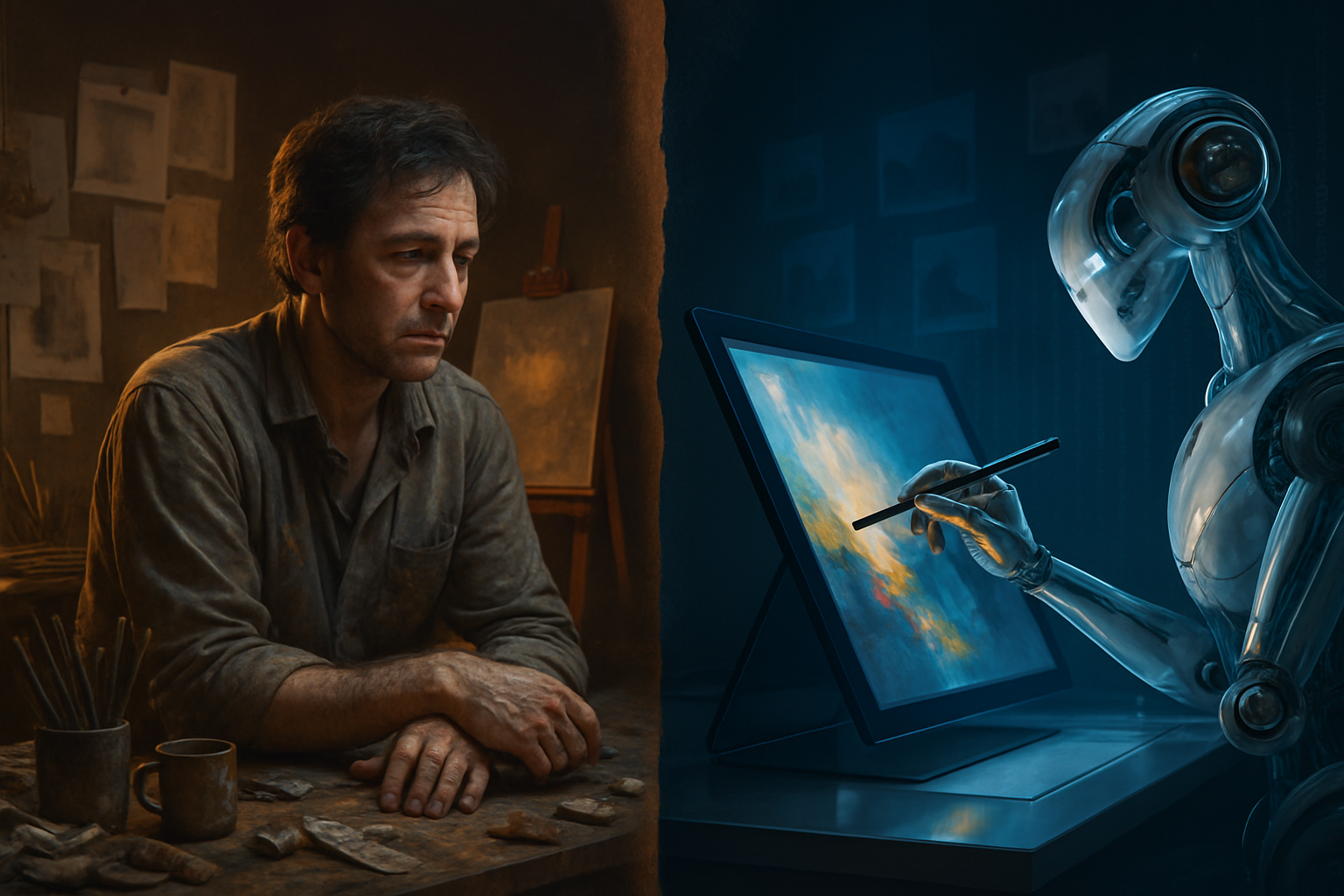
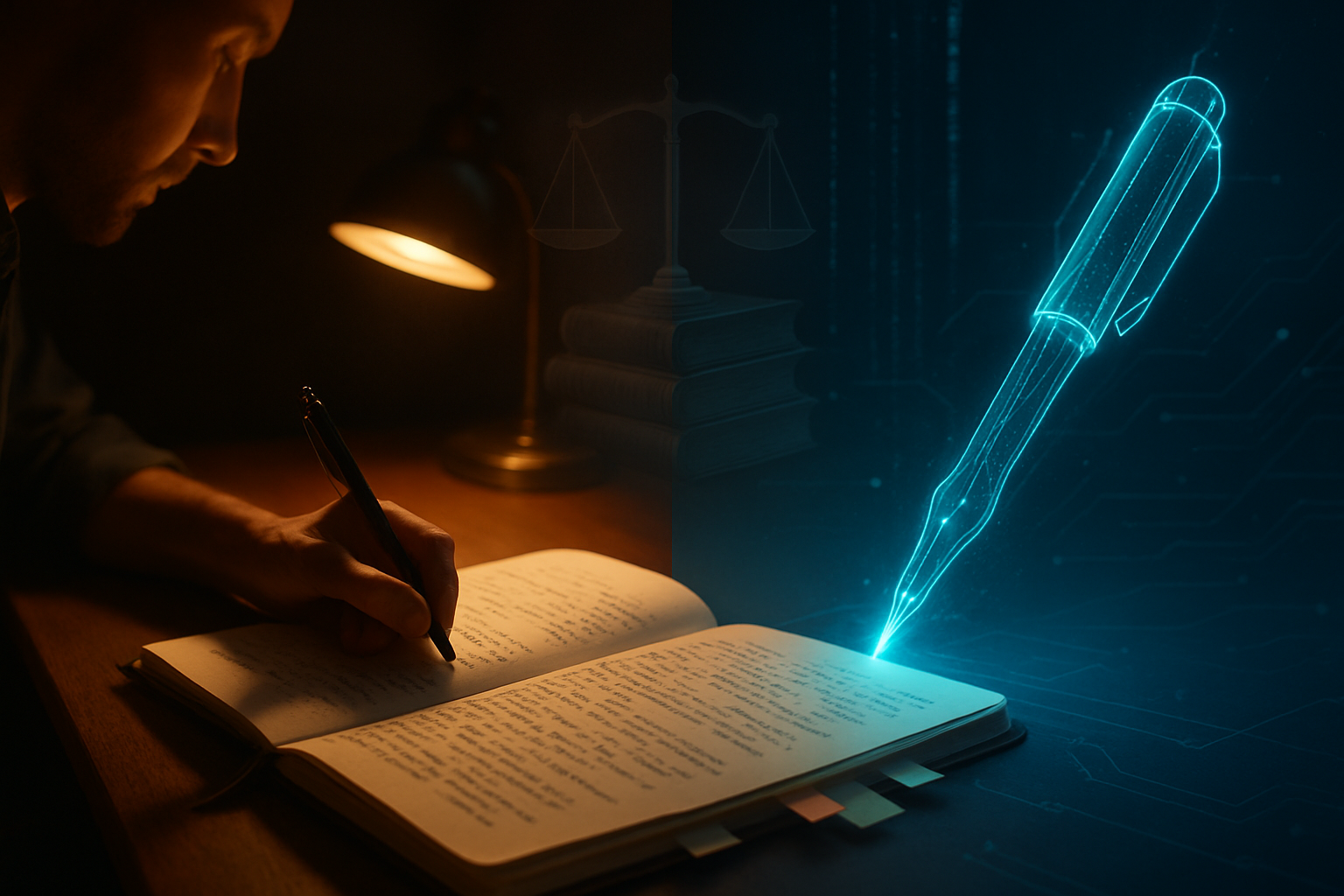
Both approaches aim to solve visual problems. The difference is who drives the creative leap-the human mind or algorithmically learned patterns-and how reproducible and defensible the output is.
The upside: why MidJourney feels revolutionary
- Speed and volume
- You can generate dozens of distinct visual directions in minutes. That compresses ideation cycles and reduces the time between brief and visual exploration.
- Rapid ideation and concepting
- MidJourney surfaces combinations of styles, motifs, and lighting that a single designer might not conceive quickly. It’s a fast idea engine.
- Lowered barriers and accessibility
- Non-designers can create polished visuals for presentations, social media, and prototypes without deep tool mastery.
- Cost efficiency for early-stage work
- For small teams and startups, AI reduces studio costs for moodboards or multiple iterations, letting budgets focus on final design and implementation.
- Creative serendipity
- Unexpected blends-like ‘Renaissance cyberpunk’-can inspire fresh directions and break creative ruts.
- Scalability and variants
- When you need many variations (ad sizes, colorways), AI can produce base variants quickly that humans can refine.
The downside: important trade-offs and limitations
- Authorship, ownership, and copyright uncertainty
- Legal doctrine is in flux. Some courts and offices require a human author for copyright eligibility. Training data for these models often includes copyrighted works, which has led to lawsuits (e.g., Getty Images suing a model-maker) and contested norms (see coverage: https://www.theguardian.com/technology/2023/jun/21/getty-images-sues-stability-ai-copying-photos and the U.S. Copyright Office guidance https://www.copyright.gov/policy/ai/).
- Surface-level understanding vs. deep problem solving
- MidJourney excels at imagery but not at brand strategy, user experience, information architecture, or anything requiring deep, contextual reasoning.
- Consistency and identity issues
- Generative models can struggle to maintain consistent character, logo fidelity, or brand voice across outputs unless heavily constrained and post-processed.
- Quality control and noise
- Hallucinated details, odd artifacts, and inconsistent anatomy or typography can appear. Fixing these often requires traditional design skills.
- Ethical and bias risks
- Datasets mirror cultural and representational biases. Outputs may inadvertently stereotype or erase groups unless designers actively audit and correct them.
- Skill atrophy and overreliance
- If teams rely on AI for basic compositional decisions, junior designers may miss opportunities to learn foundational craft.
Where MidJourney wins-practical use cases
- Concept art and ideation - Start rapidly with dozens of visual directions.
- Moodboards and visual research - Quickly test stylistic ranges for client alignment.
- Storyboarding and worldbuilding - Iterate environments and lighting fast.
- Prototyping marketing visuals and social posts - Low-cost A/B creative experiments.
Example prompt (MidJourney-style):
"noir city street, cinematic lighting, rain-soaked asphalt, neon reflections, 35mm film grain, high contrast, concept art" --v 5 --ar 3:2That one prompt can give multiple, distinct directions in minutes-something a single designer would take hours to produce.
Where traditional design still leads
- Brand strategy and identity systems - Brand identity requires narrative, values, and repeatable systems beyond a single image.
- UX, accessibility, and product design - These require user research, testing, and human-centered criteria.
- High-end craft - Illustration, typography, and bespoke crafts still rely on human subtlety that machines struggle to replicate reliably.
- Legal and client-sensitive work - Contracts, trademarked logos, and regulated industries demand audit trails and defensible authorship.
Hybrid workflows: the practical middle path
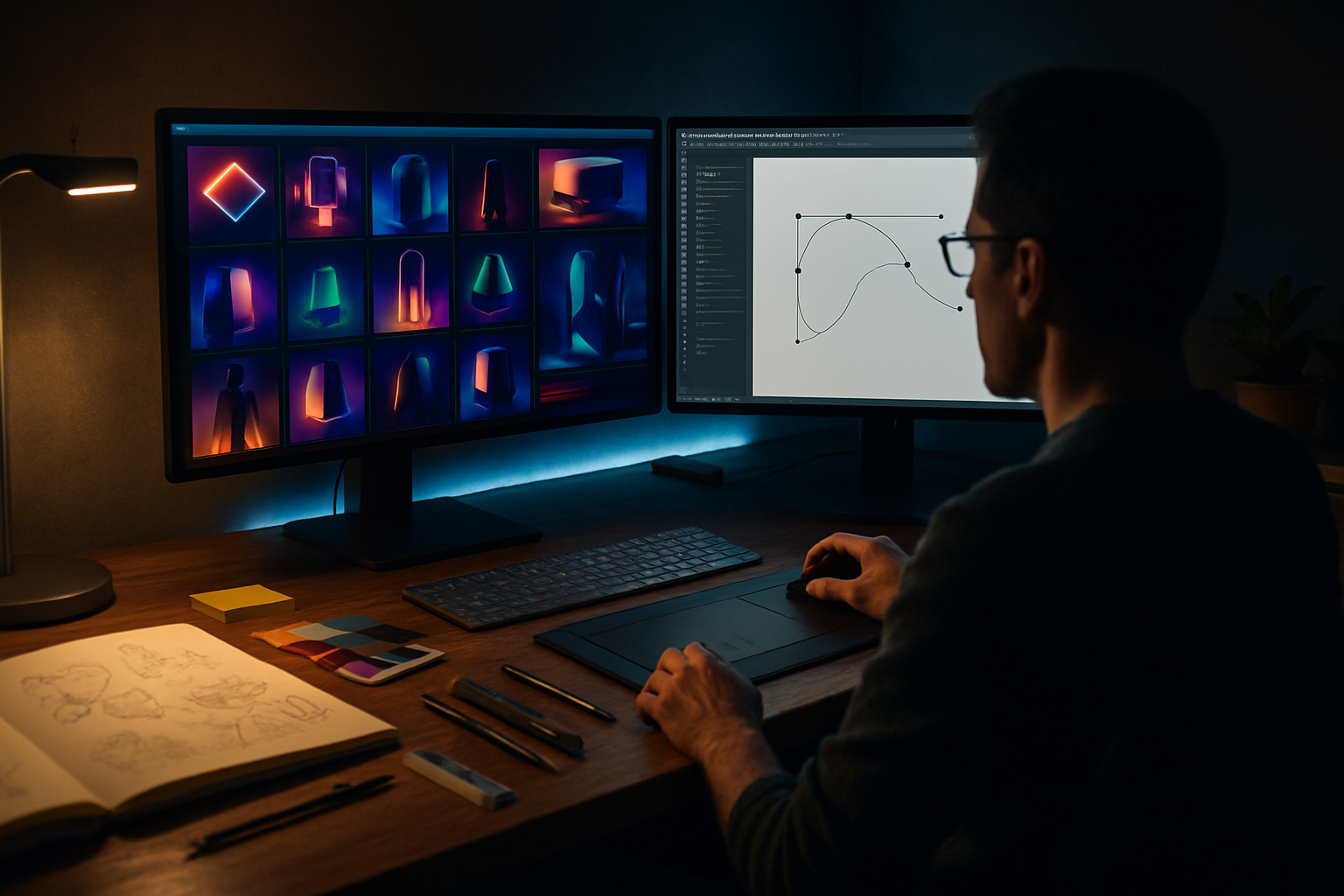
You don’t have to choose one side. The most productive teams combine them.
- Prompt-first ideation, human vetting
- Use MidJourney to generate 20 directions. The design lead curates 4 and refines them in Illustrator or Figma.
- AI as a collaborator, not a replacement
- Treat the AI output as a rough sketch. Designers rework composition, correct artifacts, and craft final deliverables.
- Iterative human-AI loops
- Generate → select → edit → prompt-refine → finalize. Each loop reduces meaningless variations and increases craft.
- Create guardrails
- Establish style tokens, color palettes, and typography constraints so AI outputs are easier to convert into consistent systems.
Team, process and skill recommendations
- Keep craft training in-house - ensure junior designers still practice fundamentals (drawing, typography, grid systems).
- Document provenance - track which assets came from AI, what prompts were used, and who edited the final piece.
- Build prompt literacy - prompt-writing becomes a core skill, akin to sketching or wireframing.
- Invest in post-production skill - retouching AI outputs is a different but necessary skill set.
Legal and ethical guardrails to adopt now
- Audit training and outputs for potential copyrighted matches before using commercially.
- Avoid using AI-generated images as final logos or trademarked marks without human re-drawing and legal counsel.
- Obtain clear client consent when AI was materially used in deliverables.
- Maintain diversity checks and bias audits for representational work.
For deeper reading on legal and policy issues, see the U.S. Copyright Office’s AI page: https://www.copyright.gov/policy/ai/ and news coverage of major lawsuits: https://www.theguardian.com/technology/2023/jun/21/getty-images-sues-stability-ai-copying-photos
Economic and career impacts: a frank assessment
- Short term - faster pipelines, cheaper early-stage work, and greater output for marketing teams.
- Medium term - commoditization of routine deliverables-stock-like visuals become inexpensive-while bespoke, strategic design rises in value.
- Career advice - designers should lean into what machines struggle with-strategy, systems thinking, leadership, cross-disciplinary problem solving, and ethical judgment.
The debate: Is AI a threat to creativity or its amplifier?
Two simplified positions emerge:
- AI as threat - It automates the novelty layer, displaces some entry-level roles, and risks eroding craft.
- AI as amplifier - It democratizes ideation, lets designers focus on higher-order decisions, and multiplies productive output.
Both are true in part. The outcome depends on who controls the workflows, how industries adapt economically, and the social choices designers and clients make.
Practical checklist before you choose MidJourney for a project
- Does the brief require repeatable brand assets or legally protected marks? If yes - avoid raw AI output for final files.
- Is speed or volume more important than final polish? If yes - AI can be prioritized for phase one.
- Will post-production be done by a trained designer? If no - reconsider-the AI output often needs human finishing.
- Do you have documentation and client sign-off about AI usage? If not - get it.
Final verdict and a provocative closing thought
MidJourney and similar generative tools are not a magic eraser for design problems. They are powerful accelerants for idea generation and low-cost experimentation. But they do not replace the human abilities that make design strategic, meaningful, and defensible: judgment, ethics, storytelling, and craft.
The real game changer is not that AI can make images fast. It’s that AI forces a redefinition of value in design. If you want to stay relevant, stop competing on speed alone. Compete on judgment-on the human decisions that turn smart images into effective products, brands, and experiences. The designers who pair craft with AI will win. Those who treat AI as a shortcut to replace craft will lose.
Is that dramatic? Yes. True? Also yes. The future favors the thoughtful, not the automated.