· marketing · 6 min read
The Ethical Dilemma of Canva Templates: Originality vs. Accessibility
Templates make professional design accessible - but they raise ethical questions about originality, brand identity, and cultural sensitivity. This article explores the trade-offs and gives a practical framework for using templates responsibly.
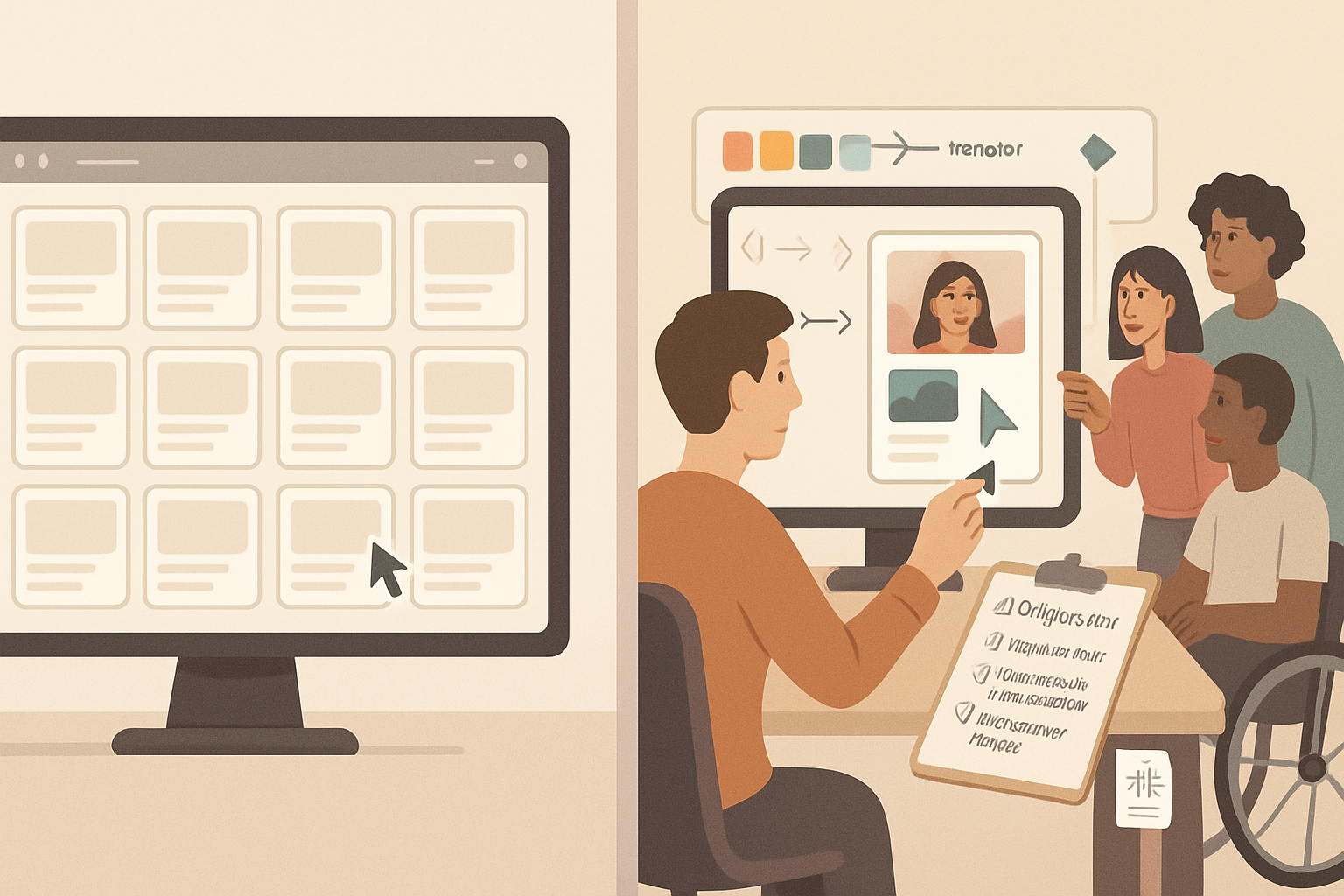
Outcome: After reading this article you’ll be able to decide when to use a template, how to adapt it ethically for your brand, and how to avoid common legal and reputational pitfalls.
Why this matters - fast
Templates get you to a polished page fast. They lower barriers. They help small teams and solo founders produce consistent visuals without a big budget. But speed comes with a cost: the same speed that makes design accessible can dilute originality, confuse audiences, and introduce legal or cultural risks.
You can keep the accessibility gains while protecting your brand’s uniqueness. This article shows how.
What we mean by “templates”
When I say “templates” I mean pre-designed layouts-graphics, social posts, presentations, websites-intended to be reused by many people. Canva is the exemplar platform, but the ethical questions apply to templates from any vendor.
Templates are tools. Tools become problems when they’re used without thought.
The clear benefits (why designers and non-designers reach for them)
- Accessibility - They lower skill and budget barriers and help non-designers produce credible work quickly.
- Consistency - Good templates encourage coherence across communications.
- Efficiency - Time-to-publish drops dramatically.
- Onboarding and scalability - Teams can maintain visual standards without one gatekeeper.
Those benefits are real and valuable-especially for small businesses, nonprofits, and community groups.
The ethical concerns (what we lose or risk)
1) Dilution of originality and brand confusion
When multiple organizations use the same or very similar template without meaningful customization, audiences begin to conflate brands. Distinctiveness-what helps people remember and trust you-erodes.
2) False impressions of expertise
A polished template can make an amateur look professional. That’s often harmless. But if the visual polish misrepresents the quality or reliability of a product, service, or information, that’s ethically questionable.
3) Cultural appropriation and insensitivity
Templates sometimes repurpose motifs, imagery, or typography from different cultures without context. Reusing those assets thoughtlessly can perpetuate stereotypes or offend communities.
4) Intellectual property and licensing confusion
Template components (photos, icons, fonts) may have license restrictions. Users sometimes assume they own what they customize. That assumption can lead to trademark clashes or copyright infringement disputes.
5) Inequity among creators
Templates level-up visual output for many. But they can also squeeze professional designers: if clients expect low-cost, templated solutions for bespoke brand work, creative labor is devalued.
Legal guardrails you should know (brief)
- Read the content and asset license for the template platform. For Canva, consult Canva’s content license and terms of use for rules about commercial use, print runs, and trademarking derivative works (Canva Terms and Content License).
- Copyright protects creative expression. Using a template does not automatically convey ownership of all embedded assets. For an overview, see WIPO’s basic guidance on copyright (WIPO Basics on Copyright).
- Trademark law protects identifiers of source. If a template uses a logo-like mark similar to an existing trademark, adopting it could invite problems.
This is not legal advice. Consult counsel for edge cases.
A pragmatic ethical framework - how to use templates responsibly
Use this four-step framework before you hit “publish”:
- Audit - Know every asset in the template (images, icons, fonts). Check licenses and authorship. If anything is unclear, replace it.
- Purpose-check - Ask what your design will
- Customize - Change layout, typography, color, imagery, and copy. The goal is to make the template yours-not to mask the original but to evolve it.
- Document and own - Keep a record of what you changed and why. If you scale teams, create a living design brief so future users don’t erode distinctiveness.
Practical customizations that protect originality (quick wins)
- Replace photography with original or commissioned images, or with licensed stock that fits your voice.
- Create a unique color palette and stick to it across assets.
- Swap fonts. (Licensing matters-ensure selected fonts are cleared for your use.)
- Alter the grid and layout proportions; change emphasis and hierarchy.
- Rewrite all copy to reflect your brand voice. Never leave filler copy or default headlines.
Small changes compound. A few deliberate edits can move a template from generic to recognizably yours.
When templates are ethically the right choice
- Early-stage ventures that need to test messaging and product-market fit quickly.
- Nonprofits and community groups with limited budgets but urgent communications needs.
- Internal documents or operational templates where uniqueness isn’t required.
- Accessibility-first designs where templates implement best practices for legibility and contrast.
In short: templates are a responsible choice when they increase access without misrepresenting value or erasing identity.
When templates are a poor fit
- Core brand identity work (primary logos, naming, foundational visual systems).
- High-stakes legal or regulated communications where precision and provenance matter.
- Cultural artifacts where authorship and provenance are essential.
If the stakes are high, invest in bespoke design or work with a designer to adapt templates into something original.
Case vignette: a hypothetical small nonprofit
A small environmental nonprofit used a free social-post template to promote a fundraising campaign. It looked polished and drove donations. But volunteers later learned the imagery used a stylized indigenous motif copied from another organization’s artwork, causing backlash.
What went wrong?
- No audit of imagery provenance.
- No cultural sensitivity check.
- The initial speed to publish overshadowed due diligence.
What could have prevented it?
- Replace questionable imagery with commissioned photography or vetted, culturally appropriate assets.
- Run a quick community review when content touches cultural topics.
- Document asset sources and retain records of license purchases.
The lesson: accessibility and ethics are not mutually exclusive. They require procedures.
Designing accessible templates - a counterpoint
Templates can be powerfully ethical when they raise baseline accessibility for everyone. A thoughtfully-made template enforces proper color contrast, readable typography, and semantic markup for web. For guidance on accessibility basics, see W3C’s introduction to web accessibility (W3C WAI Introduction).
So templates can reduce inequity in information access. That’s an ethical win.
A short checklist for teams and creators
- Audit every visual and font asset for license and provenance.
- Ensure the template aligns with your organizational values and messaging.
- Customize colors, type, imagery, and copy before public use.
- Run a cultural-sensitivity check if using motifs or imagery related to specific communities.
- Verify accessibility - color contrast, font size, and markup (for web).
- Keep records of edits and licenses.
- If in doubt and stakes are high, hire a designer or legal counsel.
Final thoughts - the balancing act
Templates democratize design. They make good design accessible to people who otherwise wouldn’t have it. They accelerate communication. They increase inclusion when accessibility features are baked in.
But used without thought, templates flatten identity, risk cultural harm, and sometimes sideline professional creators. The ethical choice is not template versus no-template. It’s deliberate-versus-casual use.
Use templates as scaffolding-not as finished architecture. Put effort into customization, provenance checks, and clarity of message. Do that, and you preserve both accessibility and originality.
If there’s one takeaway: a template should never be an excuse for ethical laziness. It should be a tool that you shape intentionally so that what you publish represents who you are, not everyone else.