· creativity · 6 min read
Controversial Take: Is BandLab Making Musicians Lazy?
BandLab lowers the barrier to making music - but does that convenience corrode musical skill? This post examines both sides, cites research on automation and skill, and offers concrete habits to keep creativity from becoming complacency.
Outcome up front: after reading this you’ll be able to decide whether BandLab is hurting or helping musical development - and you’ll get a practical toolkit to use the platform without letting convenience hollow out your skills.
Why start here? Because BandLab is everywhere. It promises multitrack recording, built-in mastering, collaboration, loops, and instant distribution - all in your browser or phone. Use it well and you can make polished tracks quickly. Use it thoughtlessly and you might never learn why a part actually works.
What BandLab is and why it matters quickly
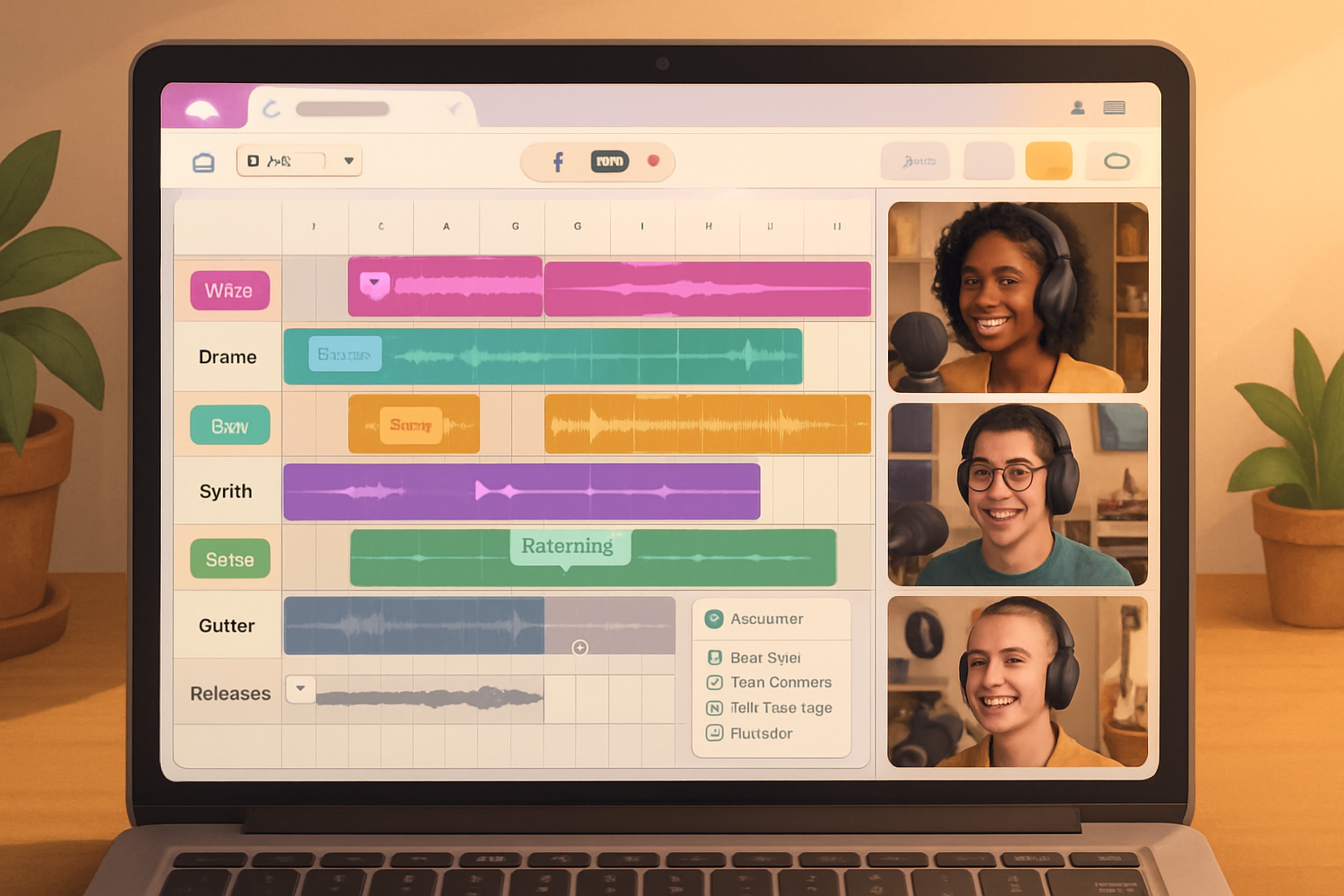
BandLab is a cloud-based digital audio workstation (DAW) and social platform that bundles recording, editing, collaboration, effects, mastering and distribution into one accessible package (see BandLab features). It’s a representative example of a larger trend: powerful creative tools moving from specialist hardware and steep learning curves into everyday devices. For context, see the Wikipedia entry on digital audio workstations.
That shift is enormous. It democratizes music-making. It also changes how we learn.
The crux of the controversy - the “easy” problem
BandLab’s ease comes from features designed to remove friction:
- Templates, one-click mastering and preset chains
- Built-in loops and samples you can drag into a project
- Automated effects and AI-assisted tools
- Seamless collaboration and instant sharing
Those conveniences are the platform’s selling point. But they’re also the source of the criticism: when the tool does the heavy lifting, do musicians skip the heavy lifting of practice and critical listening?
Arguments: How BandLab could make musicians lazy
Over-reliance on presets and automation
Presets shortcut decision-making. They give instant polish but hide signal flow, EQ choices, compression settings and the reasons those choices were made. Without reverse-engineering presets, you miss the learning curve.
Loop-and-assemble composition
Using pre-made loops to build tracks accelerates output but can erode skills in arrangement, groove creation and part-writing. It’s easy to assemble something that sounds like a song without understanding how the parts interact musically.
Reduced incentive to practice technical fundamentals
If you can MIDI-quantize a sloppy performance, pitch-correct a vocal and replace a drum in a single click, there’s less pressure to develop timing, intonation and touch.
Immediate publishing reduces iterative refinement
Fast sharing can short-circuit the patient cycles of revision that sharpen taste. A track that’s “good enough” and instantly uploaded may never face the edits that teach restraint and craft.
Social feedback loops encourage shortcuts
If likes and views reward catchy production over musicianship, creators optimize for virality. That optimization can favor quick tricks over durable skill.
These are real risks. They map to broader phenomena like automation bias - where people defer to automated systems and stop monitoring outcomes - which has been studied across domains.
Counterarguments: Why BandLab might actually improve musicianship
Accessibility increases practice opportunities
If the barrier is lower, more people create more often. Quantity paired with feedback can accelerate improvement. A beginner who records weekly on BandLab will likely progress faster than one who never records because setup is too hard.
New skills matter too
Modern music-making values different skills: sound design, arrangement for electronic contexts, sample manipulation, and collaborative cloud workflows. Mastery of these is legitimate musicianship.
Gateway effect
BandLab can be a first step. Many producers start on simplified platforms and migrate to deeper tools once they’re curious. The platform acts as scaffolding rather than a trap.
Rapid experimentation fuels creativity
When the cost of trying an idea is near zero, you test more concepts. Some of those experiments teach musical intuition as surely as slow, disciplined practice.
History provides precedent: drum machines, sequencers and samplers were once accused of producing lazy musicians, yet they contributed to new genres and new technical proficiencies.
Evidence and nuance: what research and history suggest
Automation and skill decay - Studies in human factors show that automation can reduce vigilance and the development of manual skills if users defer entirely to the system. See automation bias.
Deliberate practice - The research on deliberate, effortful practice (see deliberate practice) reminds us that skill growth requires focused, challenging repetition - the kind of practice that a “one-click fix” will not replace.
Put those together and you get a precise claim: tools like BandLab don’t inherently make people lazy; they provide an environment where laziness is easier. Whether musicians become complacent depends on how they use the tool.
Practical rules to use BandLab without losing your edge
If you like BandLab (and you should if it helps you make music), adopt constraints and habits that preserve skill development.
Treat presets as starting points, not finishes
When you use a preset, reverse-engineer it. Solo the track, bypass the plugin, inspect the signal chain. Ask: What is this preset doing, and why?
Set “no-automation” practice windows
Periodically disable pitch correction, auto-quantize and sample replacement. Record raw takes to maintain timing and tone skills.
Build tracks from stems, not loops
Challenge yourself to create at least one track per month without using loop libraries. Compose parts manually or record live. This forces arrangement and groove work.
Use versioning and delayed release
Hold projects for 72 hours before publishing. Revisit with fresh ears and make at least two changes before uploading.
Learn signal flow and basic mixing on purpose
Allocate short, focused workouts: 20 minutes of EQ work one day; compression basics the next. Deliberate practice on a small set of mixing skills pays off.
Collaborate with constraints
When collaborating on BandLab, set rules: limit the number of takes, or assign roles (one person on sound design, one on arrangement) so that each collaborator practices a craft.
Keep an “offline” instrument habit
Maintain a weekly practice on a physical instrument - even 30 minutes. It preserves technique and musical touch.
Use BandLab’s social features for critique, not validation
Seek specific feedback (e.g., “Does the chorus melody feel resolved?”), not just likes.
Tools and exercises you can try right now
- Reverse a preset - pick a vocal preset, disable each component one at a time and describe its effect.
- Quantization quarantine - record a groove without quantizing. Compare it to a quantized version and note what you learned.
- Minimalist mix - limit yourself to three tracks (kick, bass, vocal) and make them sound complete. This sharpens arrangement and frequency-space thinking.
Final take - balanced, and conditional
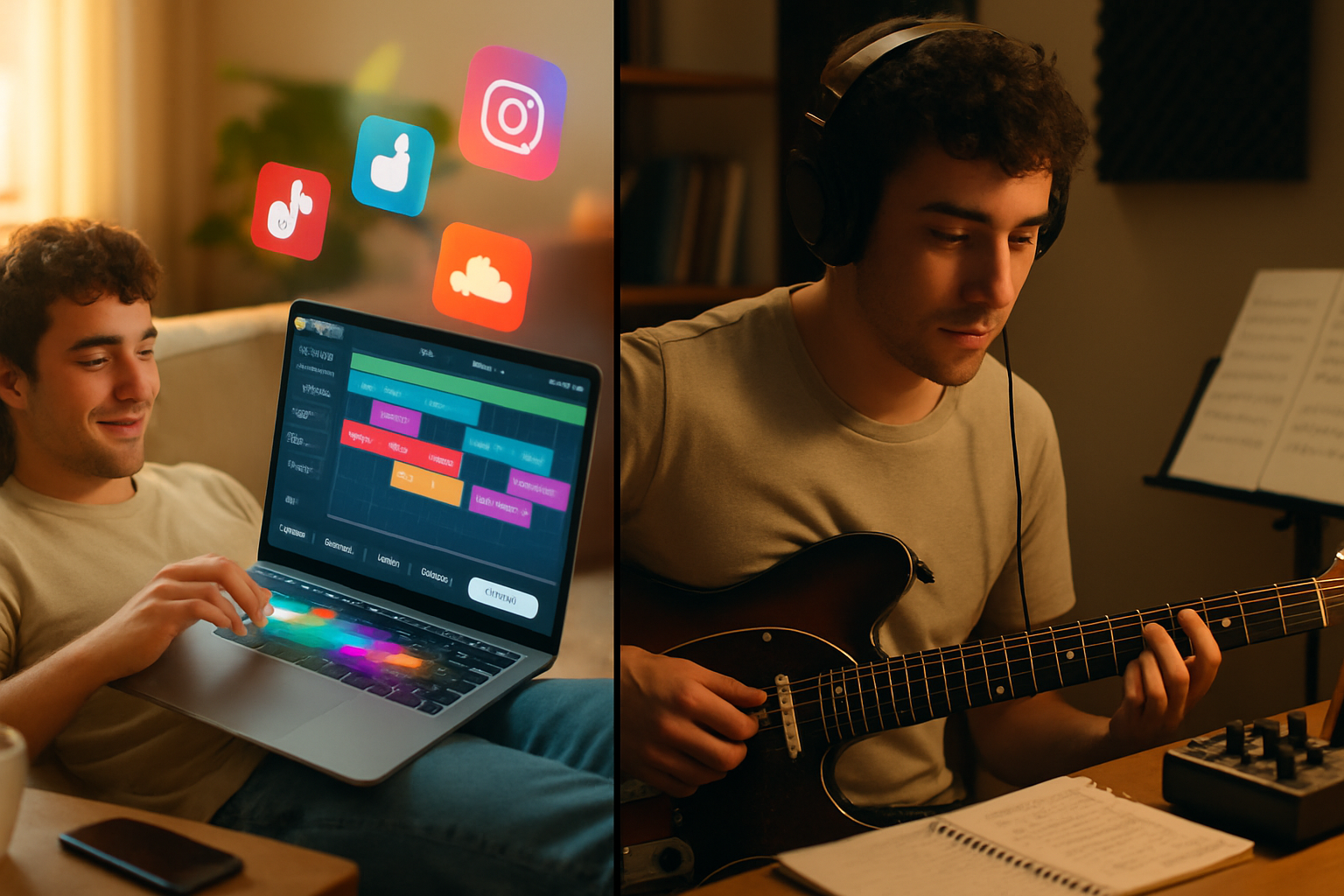
BandLab is not a villain. It’s a powerful, democratising tool that lowers technical barriers and accelerates creative iteration. But power is neutral. It amplifies intent. If your intent is to shortcut learning and chase instant polish, BandLab will make that easier and you will become shallower for it. If your intent is to learn faster, experiment more, and then deliberately drill fundamentals, BandLab can be a force multiplier.
So the honest answer to the headline question - “Is BandLab making musicians lazy?” - is: sometimes. But more importantly, it enables a new choice point. You can treat convenience as a tool for creativity and learning, or you can treat it as an escape from craft. Which one you choose matters.
If you want a tight rule of thumb: use BandLab for output and experimentation; use focused, analogue or constrained practices for skill-building. The platform can accelerate both - or accelerate decline. The difference is intentionality.
References
- BandLab features: https://www.bandlab.com/features
- BandLab (overview): https://en.wikipedia.org/wiki/BandLab
- Digital audio workstation: https://en.wikipedia.org/wiki/Digital_audio_workstation
- Automation bias: https://en.wikipedia.org/wiki/Automation_bias
- Deliberate practice: https://en.wikipedia.org/wiki/Deliberate_practice