· business · 6 min read
The Future of Social Media Management: Integrating AI with Buffer
Explore how integrating advanced AI into Buffer can transform content creation, audience targeting, and performance forecasting - with practical feature ideas, implementation steps, and governance recommendations for a responsible, high-ROI rollout.
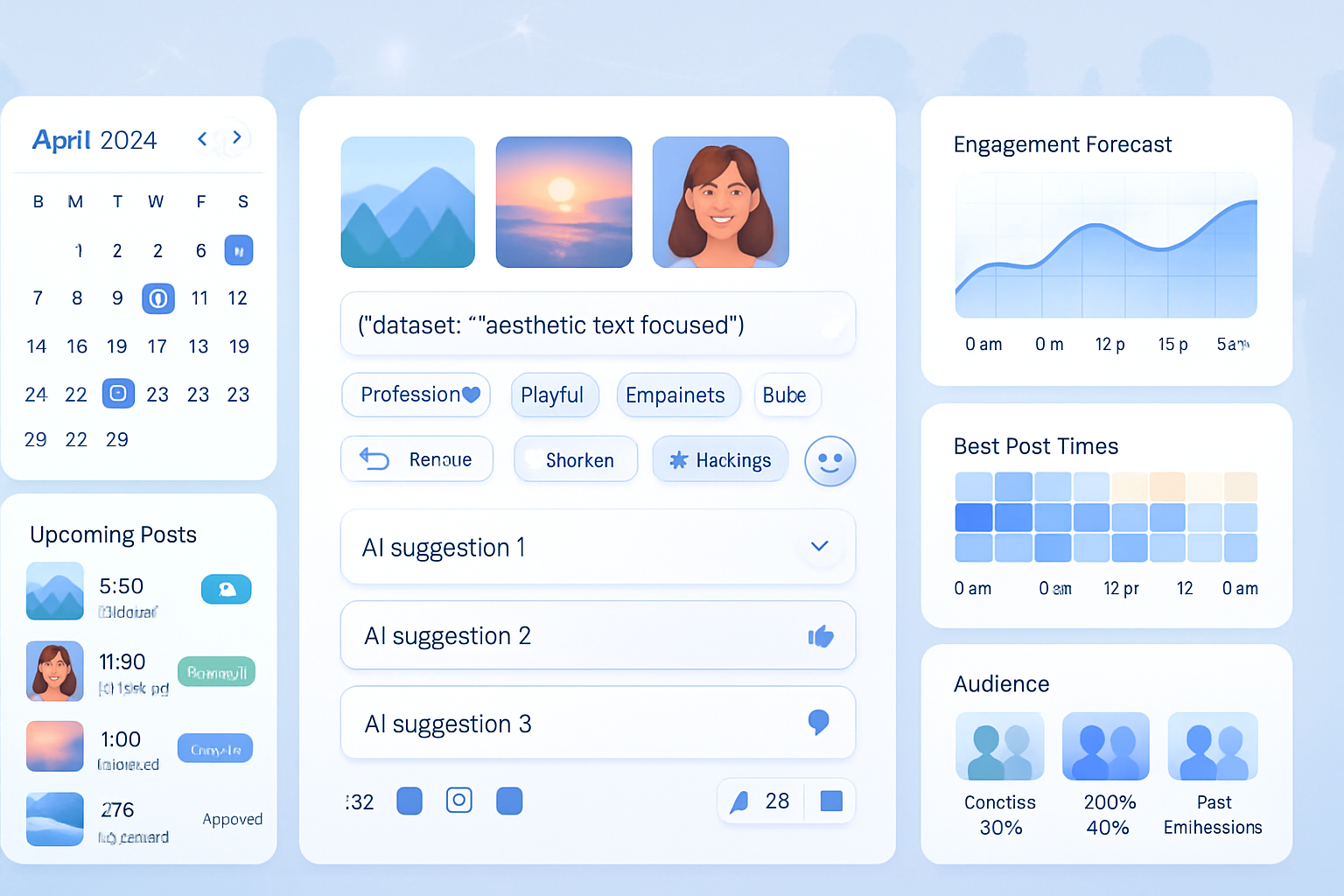
What you can achieve after reading this
You’ll leave with a clear picture of how AI can make Buffer smarter, faster, and far more strategic - from automated content ideas that save hours each week to predictive analytics that shift social from reactive reporting to proactive growth. Read on to see concrete features, technical approaches, governance guardrails, and business metrics to measure success.
Why integrate AI into Buffer - the outcome-first case
Social teams want three things: better content, more relevant reach, and measurable outcomes. AI can help deliver all three at scale. Short story: AI reduces time spent on repetitive tasks, surfaces content that resonates, and forecasts what will work next - so teams focus on strategy, not scheduling.
Longer story: organizations are sitting on huge volumes of engagement, audience, and creative data. When that data is paired with modern AI, it becomes predictive insight and generative assistance. The result is less guesswork and more repeatable wins.
Sources: Buffer’s platform context buffer.com, industry takes on AI for social Hootsuite and Sprout Social.
Three core roles for AI inside Buffer
1) Automated content suggestions - creativity, faster
What it does:
- Generate caption variants tuned to tone, length, and platform (LinkedIn vs. Instagram). Short. Crisp. Platform-optimized.
- Suggest visuals and cropping for each platform, including image prompts for generative image systems or layout suggestions for carousel posts.
- Surface trending topics and headline hooks based on a brand’s historical performance and live trends.
- Auto-generate hashtags ranked by relevance and predicted reach.
How it helps:
- Shrinks content creation time from hours to minutes.
- Increases post-to-post consistency while allowing brand voice customization.
Implementation ideas:
- A “Content Assistant” module integrated into Buffer Composer that offers 3-5 headline/caption variations and explains why (e.g., “shorter captions perform better for this audience”).
- An optional image-generation integration that creates on-brand visual concepts from prompts, with selectable styles and licensing metadata.
Reference: generative AI capabilities outlined by platforms such as OpenAI.
2) AI-driven audience targeting - right message, right people
What it does:
- Build micro-segments from followers, engagers, and CRM lists using behavioral and temporal signals.
- Recommend optimal audience segments and personalize copy per segment.
- Suggest boosting or paid-targeting mixes that historically maximize conversion (CTR, signups, purchases).
How it helps:
- Moves beyond broad demographics to behaviorally informed outreach.
- Improves ROI on organic and paid spend by identifying high-value micro-audiences.
Implementation ideas:
- A recommendation panel that ranks segments by predicted lift and shows the estimated cost-per-acquisition change if content is promoted.
- Integrations with ad platforms for one-click audience export or campaign creation.
Context: modern marketing AI is focused on turning first-party behavioral signals into precise actions (see McKinsey on AI in marketing) McKinsey.
3) Performance predictions - forecasts that inform strategy
What it does:
- Predicts engagement, reach, and conversion for a given post before it’s published.
- Suggests the best publish time and advises on frequency (when to re-share or repurpose content).
- Recommends experiments (A/B test variants and target metrics) and forecasts probable outcomes.
How it helps:
- Converts reporting from after-the-fact measurement to forward-looking guidance.
- Reduces wasted posts and budget through better planning.
Implementation ideas:
- A scoring system that rates a draft post on likely performance and lists actionable improvements (e.g., shorten, add CTA, swap image).
- A calendar heatmap that forecasts expected weekly reach based on scheduled content and historical patterns.
Supporting thinking: predictive analytics in marketing is a fast-growing use case for AI and offers measurable ROIs when done with quality data.
Operational architecture: how Buffer could integrate AI safely and effectively
- Hybrid inference model - run lightweight models locally for instant assistance (e.g., grammar, shorter suggestions) and call larger, cloud-hosted models for heavy tasks (image generation, deep predictive modeling).
- Data pipelines - aggregate anonymized first-party performance and audience data into an analytics layer that trains continuous models. Include feature stores and feedback loops so model outputs improve with real-world outcomes.
- Plug-in ecosystem - allow certified third-party AI providers to offer specialized models (creative style, vertical-specific targeting) accessible inside Buffer.
Technical considerations:
- Latency - keep UI interactions snappy with cached suggestions and incremental results.
- Explainability - every AI recommendation should show the top 2–3 signals that drove it (e.g., “Recommended because posts with this image style gained 32% more saves”).
Governance, ethics, and privacy - do this right
- Consent and data minimization - follow GDPR/CCPA principles. Only use personal data when consent or legitimate interest exists and provide opt-outs. See
- Bias and fairness - test models for demographic bias, especially when automating audience targeting. Provide human overrides and audit trails.
- Content safety - include safeguards to prevent toxic, misleading, or infringing content. Flag hallucinations and provide source citations where factual claims are generated.
- Transparency - label AI-generated content and provide a “why” for each recommendation.
The credibility of AI features will come from predictable behavior and visible guardrails - not miraculous secrecy.
Human-in-the-loop: preserve creative control
AI should assist, not replace. The strongest workflows are collaborative: Buffer suggests, the human edits, and the platform learns. Examples:
- Suggest-and-approve workflows for regulated industries.
- Team roles where junior staff draft via AI and senior editors finalize.
- Automated drafts that require at least one human approval before posting in brand accounts.
Measuring success - KPIs that matter
Track short-, mid-, and long-term KPIs:
- Efficiency - time saved per post, posts per hour, reduced reliance on external agencies.
- Engagement lift - percentage change in likes, comments, shares, saves vs. baseline.
- Conversion outcomes - leads, signups, purchases attributed to AI-assisted content.
- Cost metrics - CPA for promoted posts and overall ad-spend efficiency.
Set A/B tests early: compare AI-assisted workflows to human-only control groups to quantify lift and catch failure modes.
Roadmap: a phased approach for Buffer
- Foundational features (0–6 months) - grammar/style suggestions, hashtag recommendations, scheduling optimization.
- Mid-tier features (6–12 months) - caption generation, image suggestions, basic predictive scoring, and explainability tags.
- Advanced features (12–24 months) - deep personalization, one-click paid campaign creation, cross-platform forecasting, and a certified plugin marketplace.
Each phase should include pilot customers, rigorous evaluation, and a public changelog of how recommendations are generated.
Risks, mitigations, and business considerations
- Risk - hallucinated facts or misleading captions. Mitigation: require source citations for factual claims and a revision history.
- Risk - audience segmentation that violates privacy norms. Mitigation: strict data-use policies and privacy-preserving techniques like differential privacy where needed.
- Risk - creative homogenization. Mitigation: offer multiple stylistic archetypes and encourage custom brand presets.
From a business perspective, monetize premium AI features while keeping core scheduling features accessible - this increases revenue without alienating existing users.
Example user stories (concrete scenarios)
- The small ecommerce founder - uses AI caption templates and automatic product-tagging to turn 30 minutes of product photography into a week’s worth of platform-tailored posts.
- The agency social lead - runs predictive forecasts across client content calendars to allocate ad budget to posts with the highest predicted lift.
- The enterprise compliance officer - approves suggested posts through a regulated pipeline where AI flags risky language and sources.
Final thoughts - where Buffer can lead
Integrating AI into Buffer isn’t just about faster posting. It’s about transforming social from a scheduling tool into a strategic growth engine: creative assistance that learns brand nuance, targeting that moves beyond broad demographics, and predictions that let teams act before trends peak. Done right - with explainability, human oversight, and privacy-first design - AI will make Buffer the place where reliability meets foresight. Stronger creativity. Smarter reach. Predictable outcomes.
Buffer | Hootsuite: AI for social media | Sprout Social: AI and social | McKinsey on AI in marketing | GDPR overview