· business · 7 min read
Breaking Down Klaviyo Success Stories: What You Can Learn from Top Brands
Analyze how top brands use Klaviyo-what flows, segments, creative tactics, and measurement frameworks drove their results-and get a practical 30/60/90 day playbook to replicate their success.
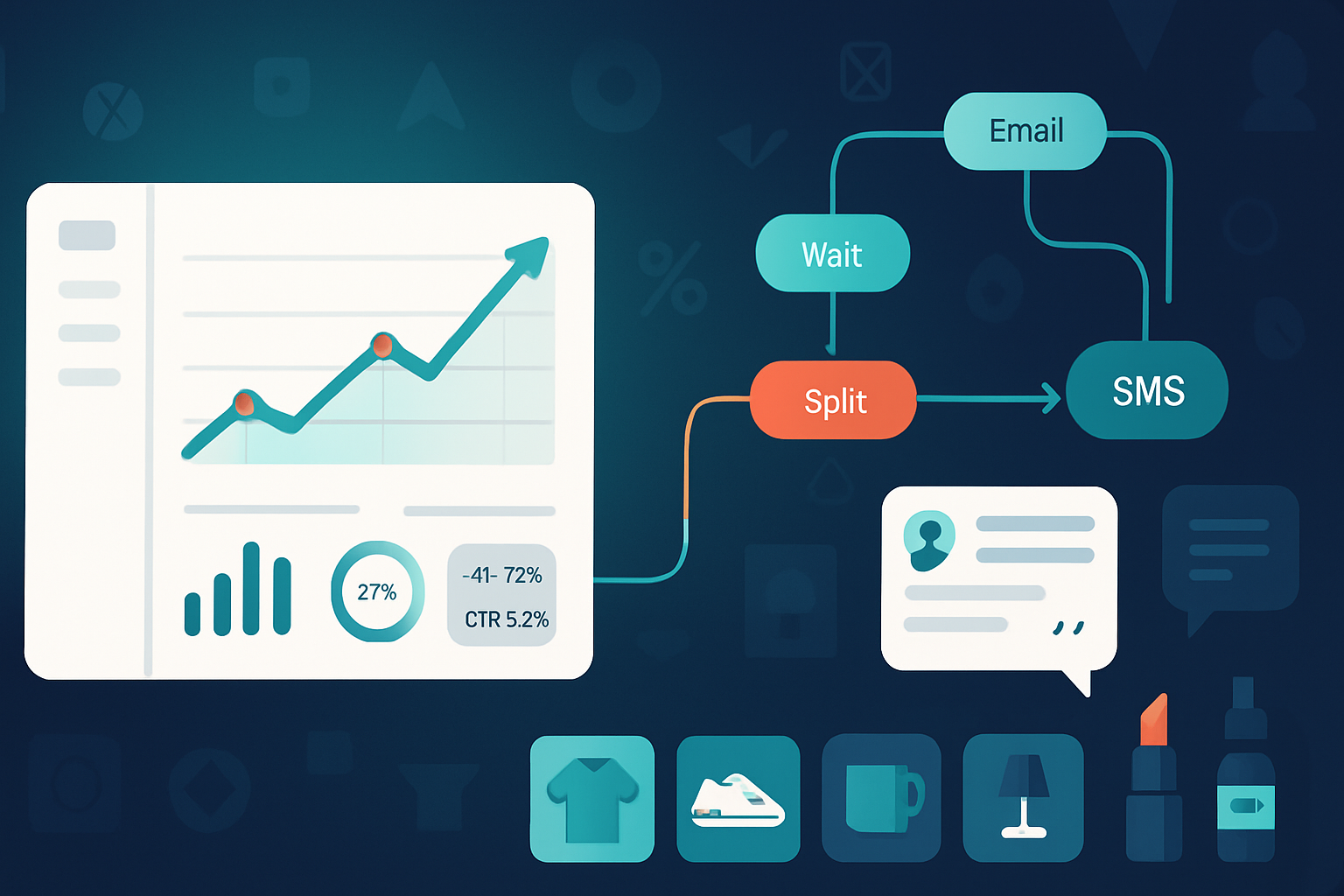
Outcome first: after reading this you’ll walk away with a clear list of the exact Klaviyo tactics top brands use, a prioritized 30/60/90 day plan to implement them, and the KPIs to track so you actually know if you’ve won.
Why this matters. Email and SMS still drive the highest ROI for many ecommerce brands. But the winners don’t just “send more emails.” They use data, automation, and smart creative to create experiences that feel personal - and that convert. In this article we break down the recurring patterns in Klaviyo case studies and translate them into concrete steps you can take next.
Quick context: what makes Klaviyo different
Klaviyo is built around three strengths that top brands exploit:
- Deep data integration with ecommerce platforms (product, order, behavioral events).
- Robust segmentation and predictive analytics (CLTV, churn risk, predicted next order date).
- Flexible flows and dynamic content blocks for hyper-relevant messaging.
If you lean on those strengths, your email and SMS program stops being a broadcast channel and becomes a revenue engine.
(For examples of brands and case studies, see Klaviyo’s customer library: https://www.klaviyo.com/customers and their blog: https://www.klaviyo.com/blog.)
Recurring success patterns from top Klaviyo users
Below are the tactics the best case studies have in common. For each tactic: what it is, why it works, and how brands implement it.
1) Lifecycle-first automation: flows over isolated campaigns
What it is: A set of automated flows that map to the customer lifecycle - welcome, browse abandonment, cart abandonment, post-purchase, replenishment, win-back.
Why it works: Automation captures intent and triggers the right message at the right moment. That consistency compounds revenue.
How top brands implement it:
- Layered flows - welcome -> first-purchase nudge -> post-purchase onboarding -> cross-sell/up-sell -> replenishment -> winback.
- Use dynamic product blocks to recommend items based on recent views or purchases.
- Attribute revenue by flow vs campaign to know what to scale.
Metric wins to expect: high flow conversion rate, steady increase in flow-attributed revenue, improved LTV from automated cohorts.
2) Segmentation + personalization beyond the first name
What it is: Segments built on purchase behavior, product affinity, lifecycle stage, and engagement recency - then personalized content accordingly.
Why it works: Highly targeted messages reduce noise and increase relevance. Relevance drives opens, clicks, and conversion.
How top brands implement it:
- Product affinity segments - people who bought category A now see cross-sells from category B.
- High-intent segments - frequent browsers who never purchased receive urgency or social-proof messages.
- VIP segments - early access, exclusive drops, or tailored loyalty offers.
Tip: Use predicted CLTV and predicted next order date from Klaviyo to tailor cadence and offers.
3) Omnichannel orchestration: email + SMS that complement each other
What it is: Coordinated messaging that uses email for rich content and SMS for short, urgent prompts.
Why it works: Different channels meet customers where they are. Used together, they lift conversion without extra acquisition cost.
How top brands implement it:
- SMS for time-sensitive nudges (abandoned cart, flash sales) and transactional updates (shipping).
- Email for storytelling, product education, and long-form onboarding.
- Unified suppression and consent logic so recipients aren’t spammed across channels.
Measure: incremental revenue lift from adding SMS to existing email flows, conversion rates on SMS CTAs.
4) Creative and copy that reflect brand voice - consistently
What it is: Brand-driven templates, subject-line testing, and on-brand microcopy across flows.
Why it works: Consistent voice builds trust. Trust increases click-throughs and conversions.
How top brands implement it:
- A/B test subject lines and preview text aggressively.
- Maintain consistent cadence and design system across flows.
- Use humor, scarcity, social proof, or urgency only where it fits the brand.
5) Data-fueled experimentation and measurement
What it is: Test hypotheses, measure lift, and iterate with statistical rigor.
Why it works: Without measurement, you’re guessing. The best brands optimize lift per test and reallocate spend to winners.
How top brands implement it:
- Holdout tests for flows (e.g., 10% control) to measure true incremental revenue.
- Track flow-to-campaign attribution and cohort LTV changes over time.
- Use revenue per message and revenue per recipient to prioritize work.
Klaviyo resources to help: https://help.klaviyo.com/ (Flows, experiments, and metrics guides).
Concrete examples (what winners actually did)
Welcome system - The fastest-growing brands set a multi-step welcome flow (0–3 emails) that converts new subscribers into first-time buyers with a mix of brand story, social proof, and a timely first-purchase incentive.
Abandonment cavalry - High-performing stores don’t stop at a single cart-abandon email. They deploy a short series: reminder -> urgency (low stock) -> social proof/testimonial -> SMS nudge if consented.
Replenishment + predictives - Brands selling consumables use predicted reorder dates to send replenishment messages before customers run out - often timed to predicted next-purchase date for maximum ROI.
VIP treatment - Brands that segment top spenders and give them early access or special offers see disproportionate revenue from small VIP cohorts.
These are distilled from multiple Klaviyo case studies and blog posts. See Klaviyo’s customer stories for brand-specific breakdowns: https://www.klaviyo.com/customers
Tactical playbook: 30 / 60 / 90 day rollout
A prioritized plan so you can replicate the best practices without burning time.
30 days - baseline and quick wins
- Audit - Map existing flows and tag every automation in Klaviyo.
- Implement/optimize these flows - Welcome (multi-step), Cart Abandonment, Order Confirmation (with tracking), and Browse Abandonment.
- Add SMS for cart-abandon (if you have consent).
- Clean up segmentation - create lifecycle buckets (new, active, at-risk, lapsed).
- KPI to watch - flow revenue % of total email revenue, welcome to first purchase conversion.
60 days - personalization and experimentation
- Add dynamic product recommendations to cart, browse, and post-purchase flows.
- Build VIP and high-intent segments and a reactivation flow for lapsed customers.
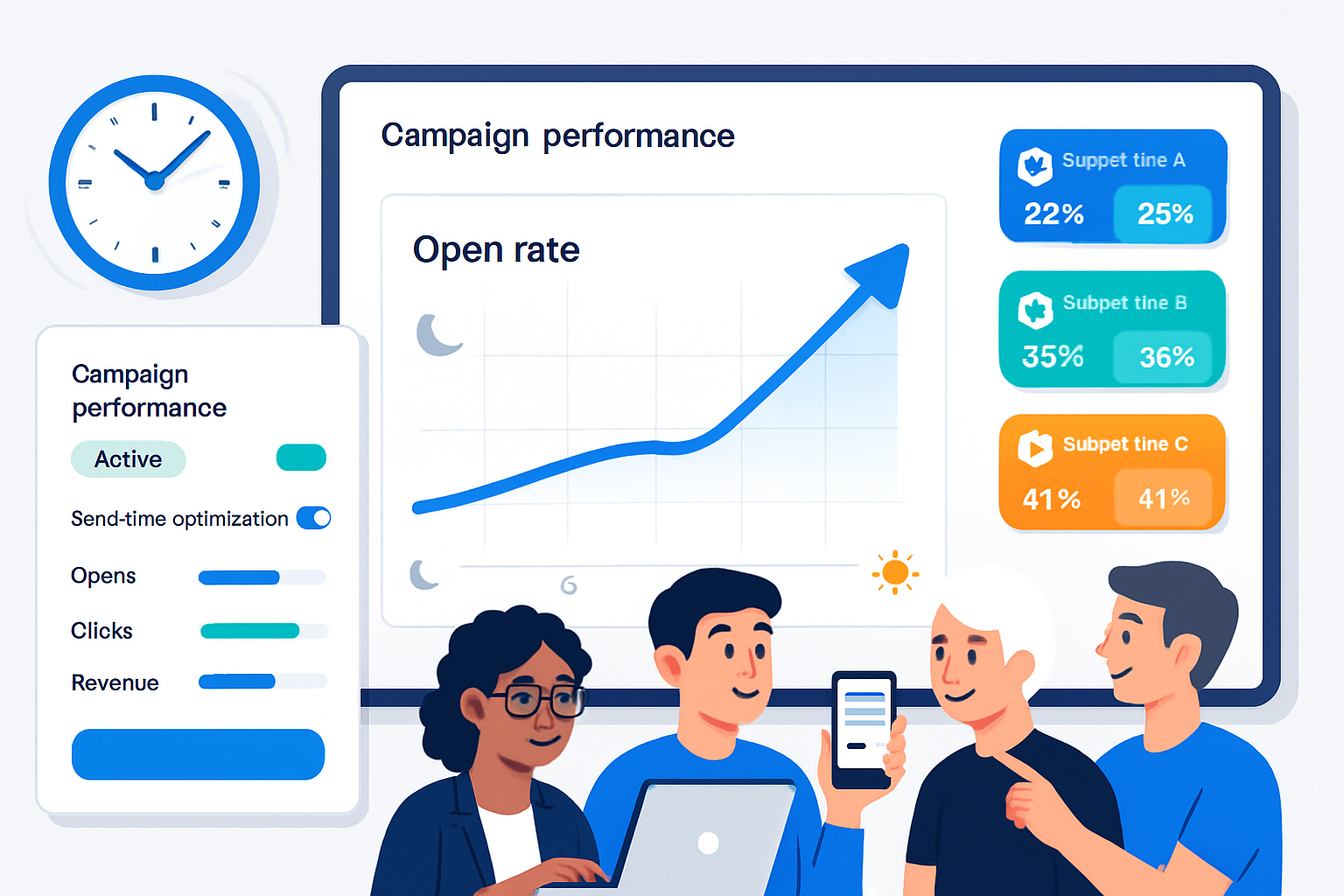
- Start A/B testing subject lines, sender names, and early-vs-late send windows.
- Implement simple holdout experiments on one key flow to measure incremental lift.
- KPI to watch - A/B open/click lift, flow incremental revenue vs control.
90 days - scale and refine
- Expand SMS use cases - shipping updates, replenishment reminders, flash promotions.
- Use predicted CLTV and next order date to change cadence by segment.
- Build multivariate experiments for creative templates and offer structures.
- Establish a monthly dashboard - flow revenue, campaign revenue, revenue per recipient, CLTV change.
- KPI to watch - change in cohort LTV quarter-over-quarter, revenue per recipient.
Sample flows and copy ideas (short templates)
Welcome series (3 messages):
- Subject - “Welcome - here’s 10% to get started” - value + quick CTA.
- Subject - “Why customers love [product]” - social proof + product benefit.
- Subject - “Still thinking it over?” - urgency + best sellers.
Cart abandonment (3 messages + SMS):
- Reminder within 1 hour - show items + images.
- 24 hours - social proof + scarcity.
- 72 hours: offer (if margin allows) or show alternatives. SMS: short link + 1-sentence benefit within 12–24 hours.
Measurement: the numbers to live by
Always report these metrics to know if you’re improving:
- Flow-attributed revenue (weekly/monthly)
- Campaign revenue and revenue per recipient
- Open, click, and conversion rates by flow
- Replenishment rate and predicted next purchase accuracy
- Incremental lift from experiments (holdout vs exposed)
Benchmarks vary by vertical, but the right signal is directional improvement over time - not a fixed industry number.
Common pitfalls (and how to avoid them)
- Sending more, not smarter. More sends without segmentation burns lists. Fix - prioritize high-intent segments and automation.
- Ignoring attribution. If you don’t separate flow vs campaign revenue, you’ll misallocate resources. Fix - set up clear tracking and dashboarding.
- Poor SMS governance. SMS works - until people opt out. Fix - concise copy, frequency caps, clear consent.
- Over-relying on discounts. Discounts drive short-term orders but erode margins and customer loyalty. Fix - test non-discount hooks (exclusivity, education, bundles).
Final takeaway
Top Klaviyo success stories share one core habit: they treat email and SMS as product features-designed, measured, and iterated-rather than one-off campaigns. Build flows that map to real customer intent. Test with holdouts. Let data decide what to scale.
Do that, and you’ll move from sending messages to building lasting customer relationships that compound revenue.
Further reading and resources
- Klaviyo customers and case studies: https://www.klaviyo.com/customers
- Klaviyo blog and benchmarks: https://www.klaviyo.com/blog
- Klaviyo help center (flows, segmentation, experiments): https://help.klaviyo.com/