· creativity · 6 min read
Boomy vs. Traditional Music Production: The Future of Sound Creation
A comprehensive comparison of Boomy (AI-driven song creation) and traditional music production workflows-what each does best, where each limits you, real-world use cases, legal and creative considerations, and practical recommendations for musicians and creators.
What you’ll be able to do after reading this
Decide-quickly and confidently-whether Boomy, a traditional Digital Audio Workstation (DAW) workflow, or a hybrid approach best serves your creative goals, budget, timeline and career stage. You’ll also get practical next steps to apply each method depending on whether you’re a hobbyist, a working musician, a sync composer, or a label-backed producer.
The short answer up front
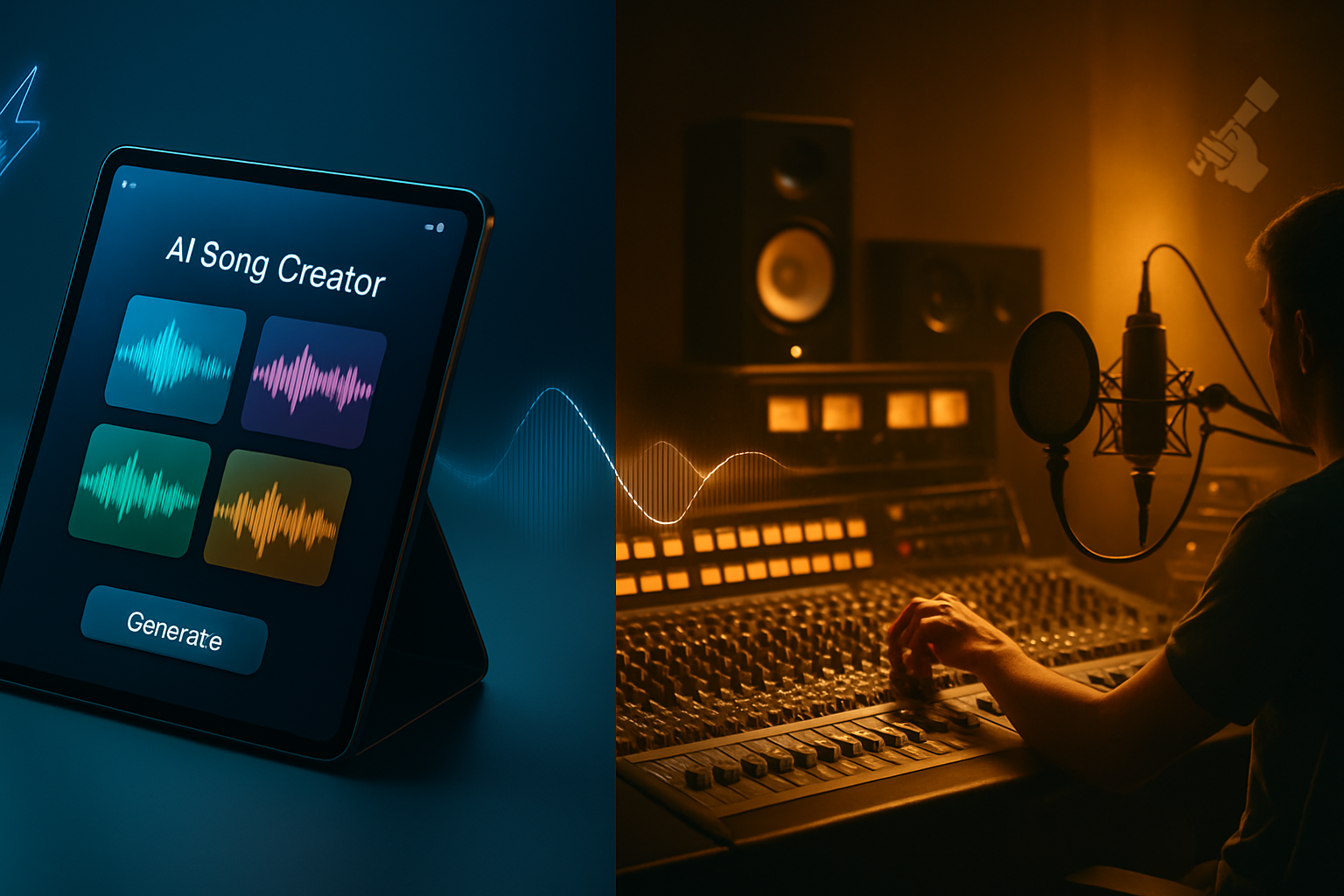
Boomy is extraordinary at turning ideas into finished tracks fast, cheaply, and at scale. Traditional production gives you deep control, higher fidelity for nuanced projects, and the craft tools professionals use when every sonic detail matters. Both are tools. Neither replaces musical judgment. Use the one that gets you the result you need-fast. Or combine them to win.
What is Boomy - and why it matters
Boomy is an AI-driven platform that lets users create and release songs in minutes via an intuitive interface and algorithmic composition tools. It hides technical complexity behind simple choices: select a style, tweak a few parameters, generate a song, and optionally distribute it to streaming services via their publishing pipeline (boomy.com).
Why that matters:
- Speed - Turn an idea into a release in minutes. Fast iteration. Immediate feedback.
- Accessibility - Low barrier to entry for non-musicians and people without studio gear.
- Scale - Hundreds of variations can be produced quickly-useful for content creators and certain sync needs.
What we mean by traditional music production
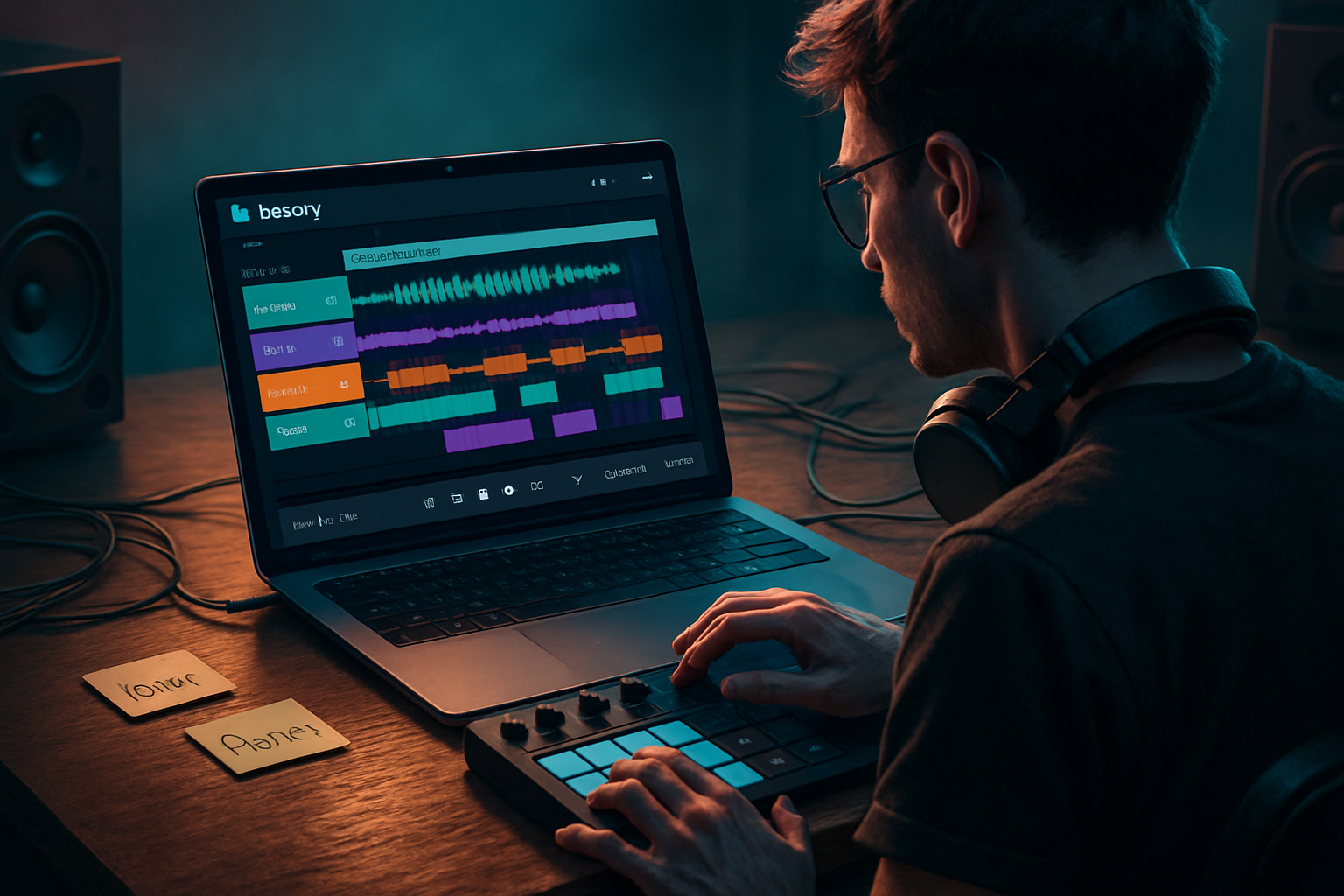
Traditional production centers on a DAW (Digital Audio Workstation), microphones, instruments, outboard gear, human performers, and a production workflow that includes composition, arranging, recording, editing, mixing and mastering. The DAW is the hub-software like Ableton Live, Logic Pro, Pro Tools, or FL Studio-supported by years of craft, technique and human taste (Digital audio workstation - Wikipedia).
What traditional production delivers:
- Detailed sonic control (mic placement, performance dynamics, plugin choices).
- Human expressivity captured via performers.
- Tailored mixing and mastering for specific listening environments.
Side‑by‑side: Advantages and limitations
Below is a practical comparison to help you choose.
Speed & iteration
- Boomy - Instant creation. Great for quick demos, background music, and testing melodic ideas. You can generate many versions in minutes.
- Traditional - Slower. Real takes, detailed editing, and mix decisions take hours to weeks. But iteration with humans yields unique, expressive results.
Cost & accessibility
- Boomy - Low to no equipment cost. Subscription or distribution fees may apply. Democratic access-anyone can release.
- Traditional - Higher costs-interfaces, microphones, plugins, studio time, and learning investment.
Creative control & uniqueness
- Boomy - Some parameter control, but outputs use algorithmic templates and learned patterns. Great for speed, weaker for idiosyncratic or signature sounds.
- Traditional - Full creative control. You can design unique timbres, performances, and production signatures.
Sound quality & nuance
- Boomy - Good for modern, produced-sounding tracks, especially in electronic/pop genres. May lack the fine-grained dynamics and organic imperfections of real performances.
- Traditional - Potentially superior fidelity and nuance when recorded and mixed well. Real instruments and room acoustics add depth.
Learning curve
- Boomy - Minimal. Little to no technical knowledge required.
- Traditional - Steep. Requires time to learn recording, mixing, mastering, and people skills.
Legal & ownership questions
AI-generated outputs raise questions about copyright, authorship and sample provenance. Platforms like Boomy provide terms and distribution tools, but legal frameworks are evolving-see discussions at international IP offices (WIPO on AI and IP). Traditional production has clearer chains of authorship, but still requires attention to samples and clearance.
Monetization & distribution
- Boomy - Built-in distribution options and royalty-sharing models make it easy to get songs on streaming platforms quickly.
- Traditional - More manual, often requiring distributors, label deals, or DIY release tools. But high-quality productions can command higher sync and licensing fees.
Real-world scenarios: which to pick
Use these short profiles to match tool to goal.
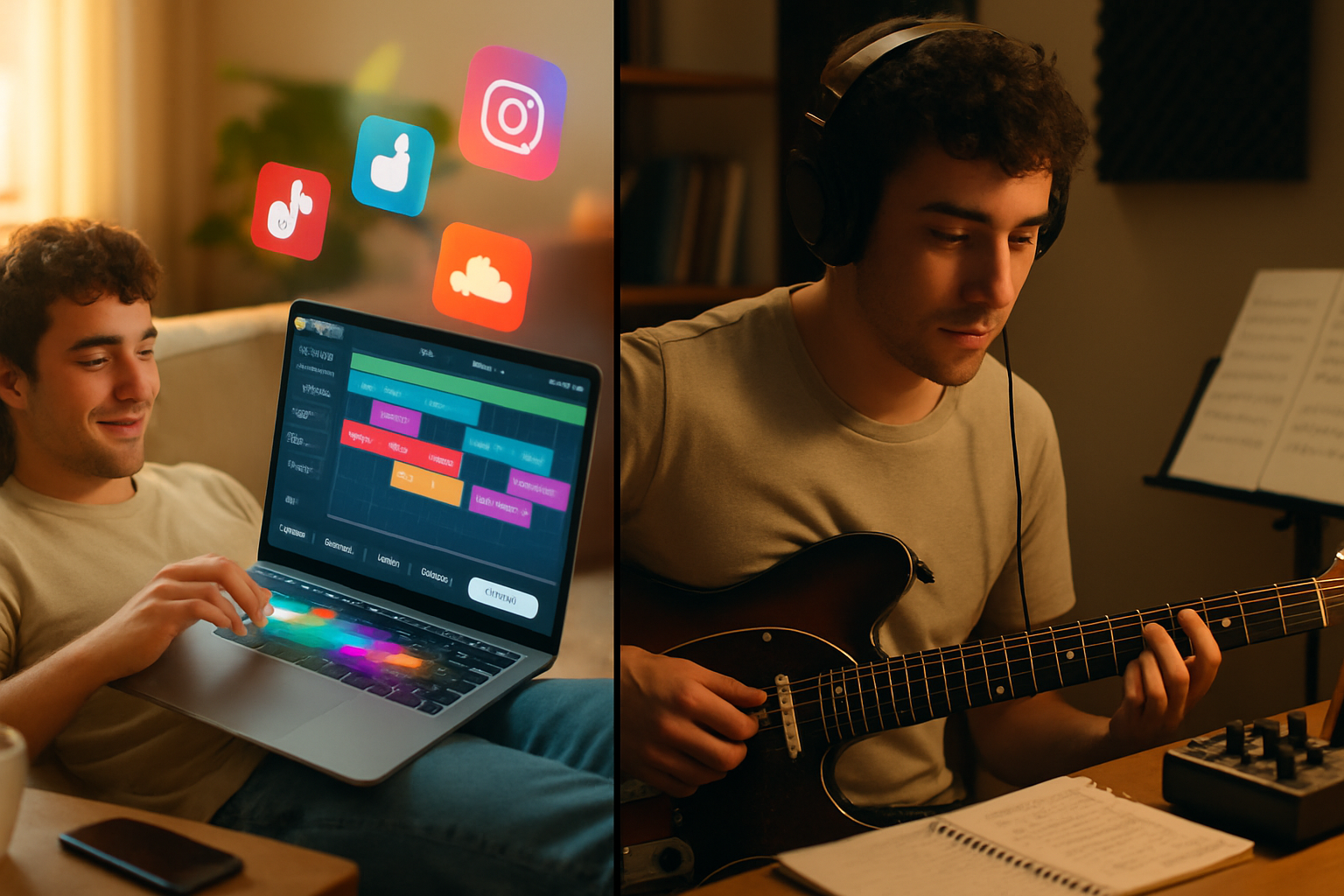
- Hobbyist or social creator who wants background music for videos - Boomy. Fast and simple.
- Singer-songwriter wanting to release a nuanced, intimate acoustic album - Traditional. Human performance matters.
- Producer making electronic/beat-driven releases for playlists - Both. Use Boomy to sketch ideas and your DAW to refine and humanize.
- Composer for film/TV who must meet exact cues and deliver stems - Traditional. Tailored scoring and stems are non-negotiable.
- Entrepreneur building a large catalog for playlists, ads, or background licensing - Boomy’s scale advantage is real.
A pragmatic hybrid workflow (the best of both worlds)
Don’t treat Boomy and traditional production as binary choices. Hybrid workflows are often the fastest route to great results.
- Rapid ideation - Generate dozens of Boomy stems or arrangements to find a vibe.
- Import into your DAW - Export stems or audio and use them as templates, layering live instruments, vocal takes, and unique elements.
- Humanize - Replace or augment AI parts with human performance where character matters.
- Re-mix and master - Use human-guided mixing to add depth, space, and personality.
This approach keeps speed while adding signature sonic detail. It’s practical. It’s future‑proof. It wins.
Creative and ethical considerations
- Originality - Be mindful of homogeneity. AI systems often reflect common patterns in training data, which can produce formulaic results. Inject intentional human choices to differentiate your work.
- Attribution - Know what your platform requires. Some territories and platforms ask for disclosure of AI involvement.
- Artist development - Relying solely on AI for creative output can stunt skill growth. Use it to accelerate learning, not replace it.
Tips for getting the best results from either method
- From Boomy - Treat it like a songwriter’s sandbox. Generate multiple variations and treat the best outputs as sketches-then edit and personalize.
- From DAW workflows - Invest time in mic technique, room treatment, and critical listening. Small improvements in capture and arrangement yield disproportionate gains.
- From hybrid use - Focus human effort where it matters most-vocals, lead instruments, arrangement decisions.
The future: coexistence, not replacement
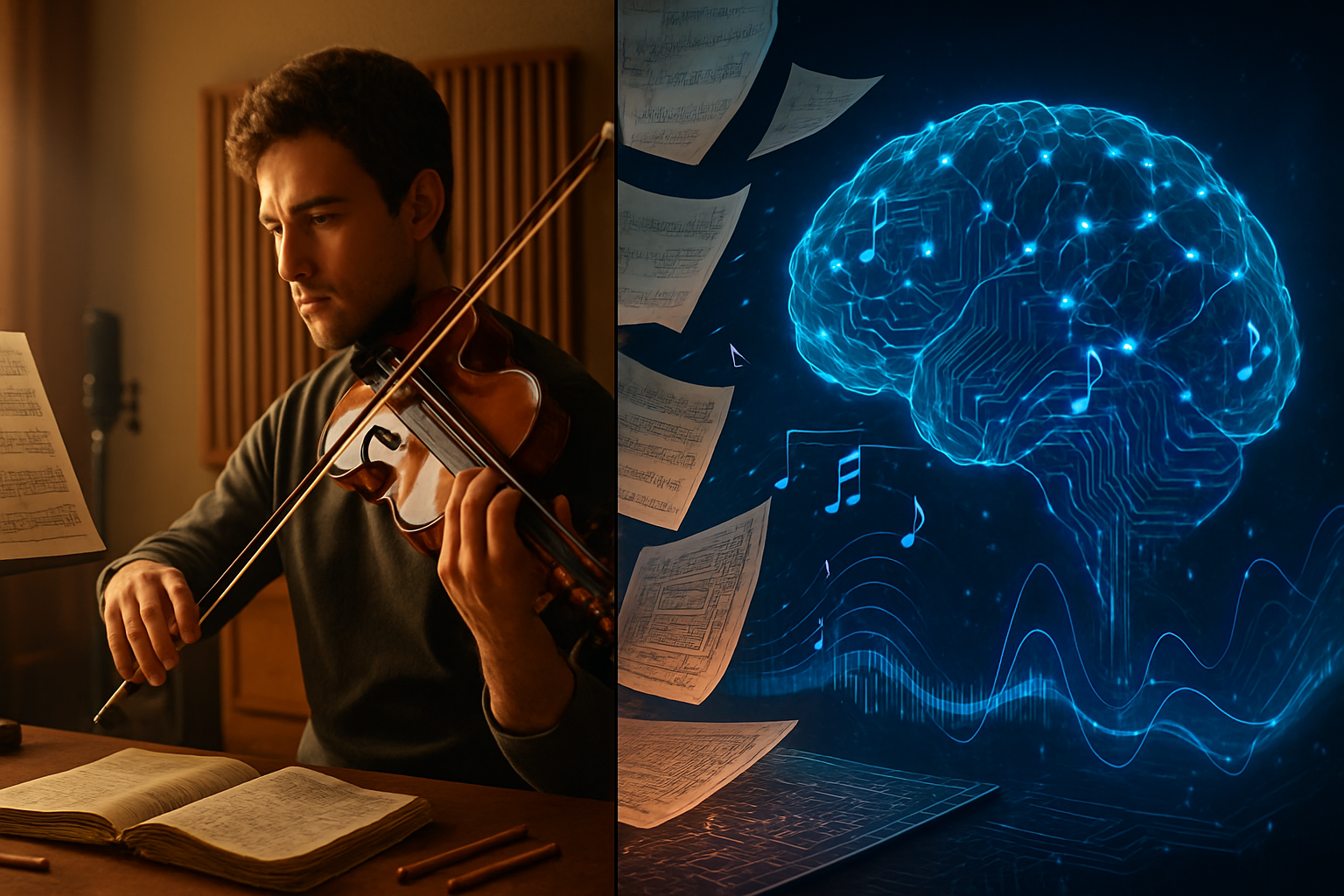
AI platforms like Boomy expand who can create music and how quickly they can release it. Traditional production remains indispensable for projects that require craft, unique voice, and high sonic fidelity. Expect more integration: DAWs with AI-assisted comping, AI-driven mastering with human tweaks, and collaborative tools that let humans and algorithms iterate together.
The strongest prediction is simple: tools will continue to lower barriers while raising expectations. Creators who learn to use both speed and craft will shape the sound of the next decade.
Quick takeaway - when to choose which
- Choose Boomy when you need speed, scale, and low cost. Choose traditional production when you need craft, control, and unique sonic identity. Choose both when you want speed without sacrificing character.
Further reading
- Boomy - official site: https://boomy.com
- Digital audio workstation - Wikipedia: https://en.wikipedia.org/wiki/Digital_audio_workstation
- World Intellectual Property Organization (WIPO) - AI & IP: https://www.wipo.int/about-ip/en/artificial_intelligence/