· creativity · 7 min read
Controversial Uses of Aiva: Is AI Music Composition Threatening Traditional Musicians?
A deep look at Aiva and similar AI composers: how they work, why they're controversial, the legal and ethical fault lines, and practical steps musicians and industry can take to adapt and protect creative labor.
Outcome first: by the end of this article you’ll be able to separate real threats from hype, decide whether and how to use AI composition tools in your own practice, and take concrete steps to protect creative rights and income.
Why this matters - fast
AI tools like Aiva can write film cues, pop hooks and ambient textures in minutes. That sounds exciting. It also sounds threatening. Which is closer to reality? You don’t need certainty. You need a roadmap: the practical facts, the ethical stakes, and clear next steps. Read on.
What is Aiva and how do these systems actually work?
Aiva is an AI-driven composition platform that generates music for media, games and creators by learning musical patterns from large datasets and producing new arrangements on demand (Aiva official site).
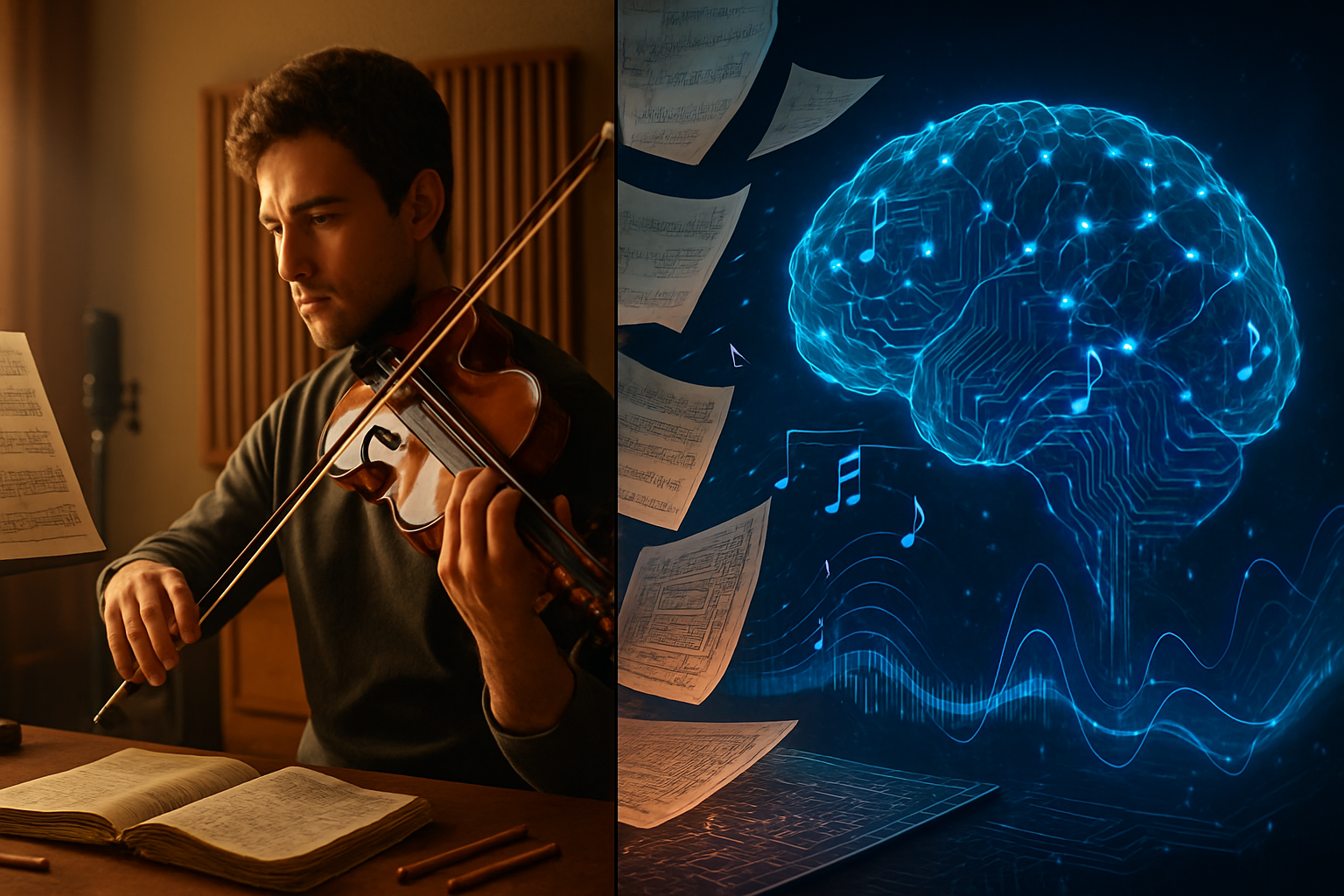
Under the hood, contemporary music AIs are statistical pattern machines. They learn from examples (scores, MIDI files, audio) and model how notes, harmonies, rhythms and timbres tend to follow one another. Systems range from sample-based generators and MIDI-style models to end-to-end audio generators such as research projects like OpenAI’s Jukebox that synthesize full audio directly (OpenAI Jukebox).
Important to keep in mind: these systems don’t ‘feel’ music the way humans do. They recombine patterns and produce outputs that statistically resemble their training data. Sometimes the result sounds fresh. Sometimes it echoes existing songs.
Where the controversy begins
There are five core fault lines driving the debate around Aiva and tools like it:
- Training data and consent
- Authorship and copyright
- Economic displacement and market value
- Artistic authenticity and cultural impact
- Voice and style cloning
I’ll unpack each and explain the real-world ramifications.
1) Training data and consent
A major ethical concern is what music these models were trained on and whether creators consented. Many datasets are compiled by scraping public internet sources without explicit permission. That raises questions about:
- moral rights - using an artist’s work as training fuel without compensation or notice;
- representational bias - over- or under-representing genres, cultures or independent creators;
- provenance - difficulty tracing which pieces influenced a generated output.
These are not merely academic concerns. They affect who benefits when an AI-generated cue is licensed, and whether the original creators’ labor is being monetized indirectly.
2) Authorship and copyright
The legal terrain is unsettled. Some jurisdictions are clarifying that works created solely by machines, without human authorship, do not qualify for copyright protection. For example, the U.S. Copyright Office has taken the position that works generated without human authorship are ineligible for registration (U.S. Copyright Office – AI).
That matters because copyright confers exclusive rights - the right to license, collect royalties, and enforce against copycats. If AI-only compositions are unprotectable, their commercial value and the incentives to create (and invest in) them change.
At the same time, there are gray areas: What counts as sufficient human input? If a composer curates and edits an AI’s output heavily, are they the author? Courts and agencies will decide. Meanwhile, licensing models are evolving, and music companies are already experimenting with new contracts to address AI-derived works.
3) Economic displacement and market value
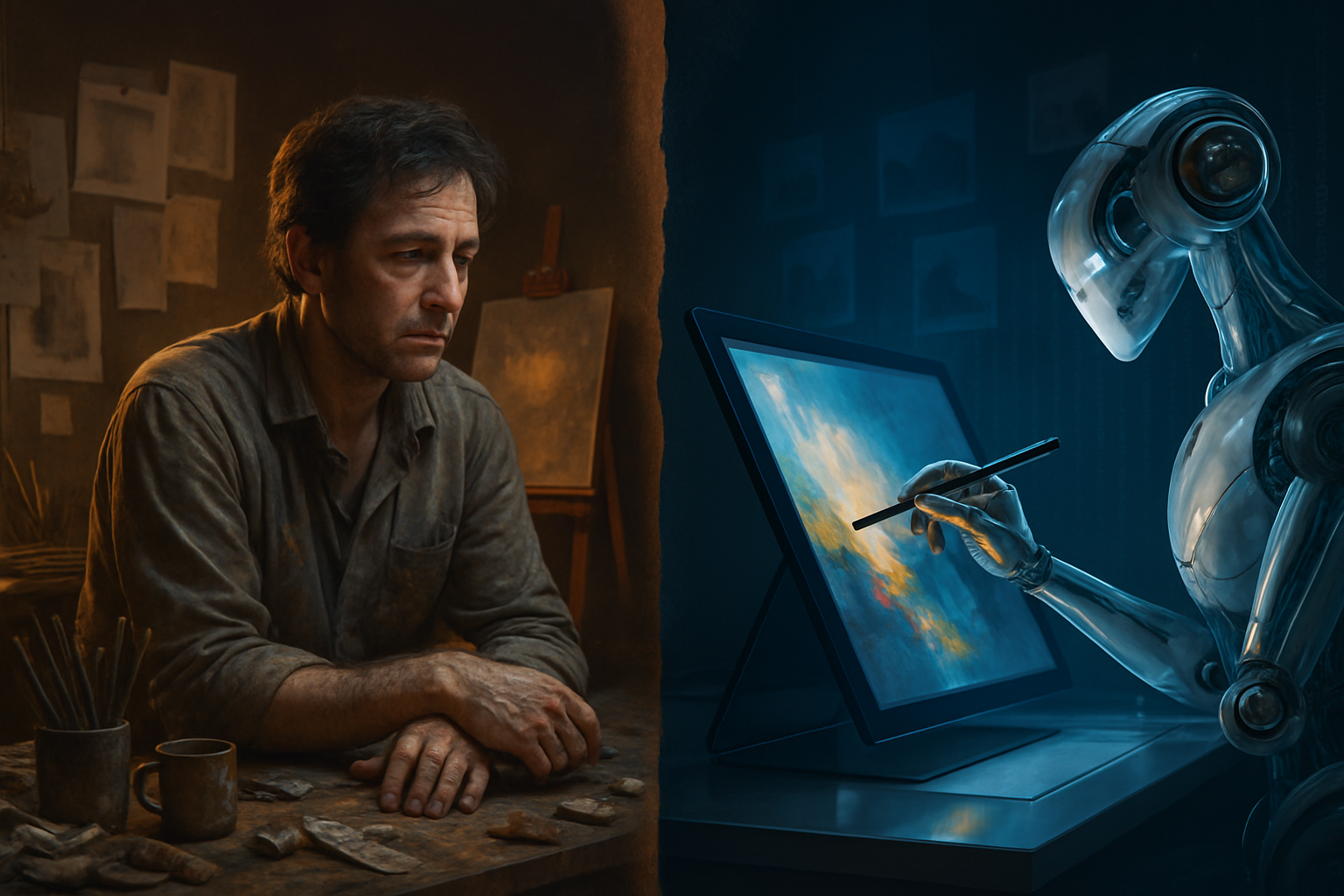
There is a simple economic worry: tools that lower the cost of producing music could depress fees for routine composing work - stock music, advertising jingles, background game music - and displace some jobs.
But the picture is mixed. AI can also create new market demand, lower production costs for small creators, and free human composers from repetitive tasks so they can focus on higher-value, original, or bespoke work. The outcome depends heavily on how rights, pricing and platforms evolve.
4) Artistic authenticity and cultural impact
For many listeners and artists, music is valued for human expression - the context, intent and lived experience behind a piece. AI-generated scores risk feeling hollow if used as a substitute for human storytelling.
Cultural concerns also arise when AI flattens stylistic nuance. If most commercial background music is AI-derived, the market could converge on homogenized musical tropes that favor what models reproduce well, rather than what pushes boundaries.
5) Voice and style cloning
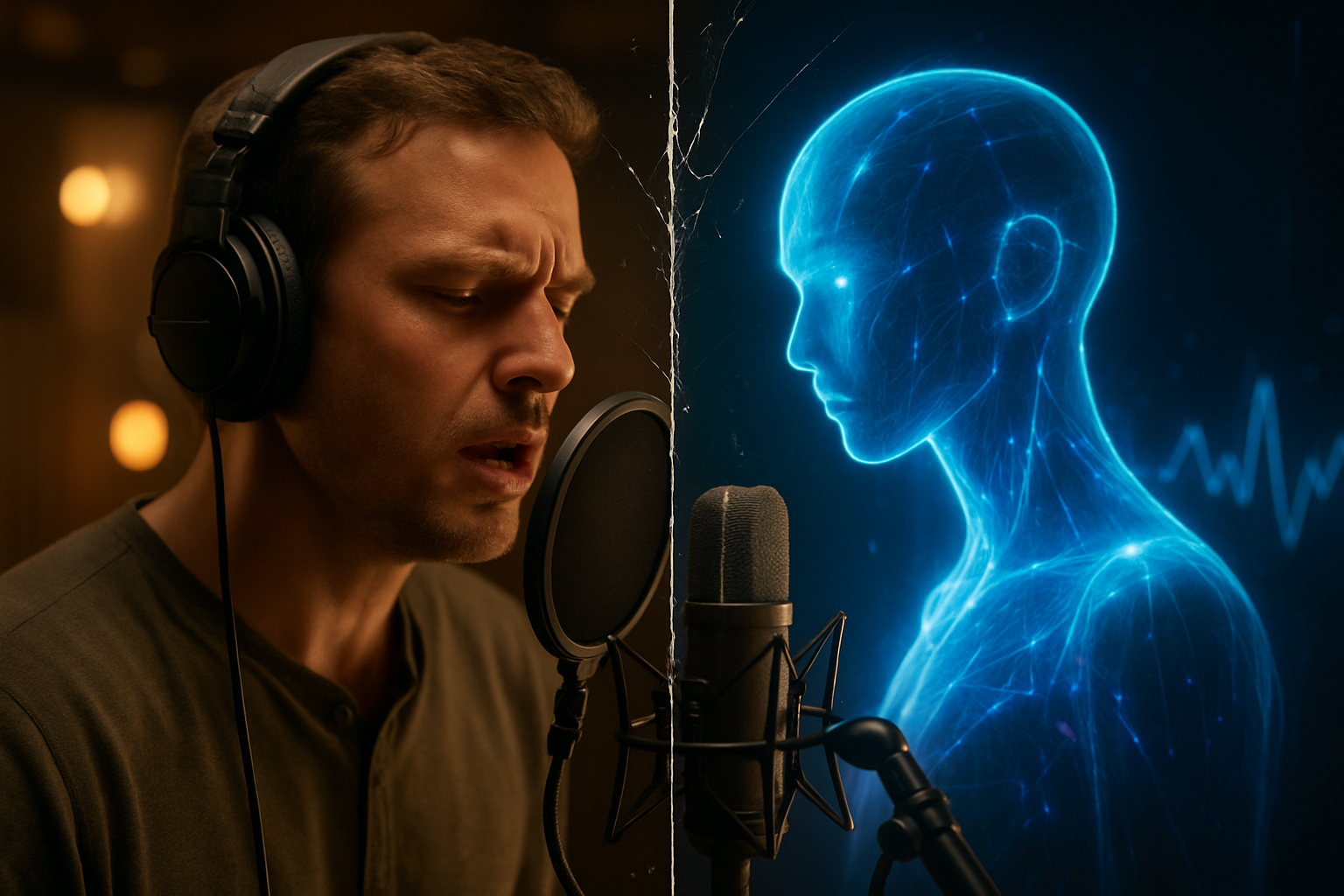
The ability to reproduce the timbre and style of a specific singer or composer - sometimes with disturbingly high fidelity - introduces acute ethical problems. Cases of AI-cloned voices being used without consent have already circulated online and provoked backlash. When a recognizable human signature can be synthesized, issues of impersonation, moral rights, and economic loss become immediate.
Arguments from both sides - practical clarity
Pro-AI arguments
- Democratization - creators with limited resources can generate quality music quickly.
- Productivity - composers can prototype faster and iterate more ideas.
- New art forms - hybrid human-AI collaborations open unexplored creative territory.
Anti-AI arguments
- Labor risk - reduced demand for routine composing work and potential wage pressure.
- Attribution and reward - original creators whose work trained models may see no benefit.
- Cultural erosion - homogenization and commodification of musical expression.
Both sets of arguments contain truth. The nuance is in the details - which genres, which market segments, and what policies govern deployment.
The current legal and policy landscape - what to watch
- Copyright offices and courts are wrestling with authorship definitions; many hold that purely machine-made works are not copyrightable (U.S. Copyright Office – AI).
- Licensing markets are experimenting - some platforms require creators to disclose AI assistance; others are exploring revenue-sharing models with sample owners.
- Governments and regulators (e.g., the EU’s AI Act in development) are beginning to consider obligations for transparency, safety and accountability in AI systems. These frameworks can shape how musical AIs are deployed.
Expect rapid legal developments. Creators should watch agency guidance, major litigation, and contract clauses that address AI explicitly.
Practical advice for musicians and composers
If you’re a working musician or composer, here are concrete actions you can take now:
- Learn the tools on your own terms. Try Aiva or comparable tools to understand strengths and limits. Familiarity reduces fear and increases leverage.
- Shift toward high-value services - bespoke composition, emotional storytelling, live performance, and client relationships are harder to fully automate.
- Negotiate licensing clauses. Insert explicit protections around AI use and derivative rights into your contracts.
- Be visible about your craft. Attribution, provenance and branding make human creators more valuable to clients and fans.
- Join or form collectives and unions to pursue industry-wide standards for compensation and dataset opt-outs.
- Protect distinctive voices - preserve vocal recordings and stems, and consider registering works and styles where legally strategic.
These are survival strategies, but they’re also ways to use AI as an amplifier rather than a replacement.
What platforms and studios should consider
For companies building or licensing AI music:
- Transparency - disclose training data sources and offer provenance metadata with generated tracks.
- Consent and opt-out - allow rights holders to remove works from training sets when feasible.
- Attribution and licensing - build mechanisms that recognize and compensate original creators behind influential training material.
- Safety filters - prevent unauthorized cloning of identifiable voices or copyrighted compositions.
Policies that bake in fairness and transparency make AI tools more socially sustainable and commercially defensible.
A few plausible futures
- Coexistence and augmentation - AI becomes a routine tool in the composer’s toolkit. Human creativity remains central to high-value, emotionally resonant works.
- Market bifurcation - commoditized AI music dominates stock/background segments while human artistry thrives in premium niches and live experience.
- Disruption without guardrails - unchecked deployment depresses incomes for many creators and triggers legal and cultural pushback.
Which path unfolds depends on choices by platforms, lawmakers and artists over the next few years.
Ethics checklist for anyone using Aiva or similar tools
Before publishing or licensing AI-composed music, ask:
- Did I (or the vendor) disclose the use of AI to the buyer or audience?
- Are there identifiable elements that echo a living artist’s work or voice?
- What are the licensing terms for the AI tool and its outputs?
- Who will collect royalties and how will revenue be shared?
- Would using AI here undermine a living artist’s livelihood or moral rights?
Honest answers protect you legally and ethically.
Final thoughts - a call to action
Aiva and systems like it are neither purely benevolent nor inherently malicious. They are technologies with enormous creative potential and real social consequences. The right response is not to reflexively ban or to blindly embrace, but to shape their use so human artists and listeners flourish.
That means: clearer rights and datasets, stronger attribution, fairer compensation models, and commitments from platforms to prevent impersonation. It also means artists learning the tools that matter to them and bargaining collectively when markets change.
AI can amplify human creativity. Or it can displace it. The difference will be decided by policy, platform incentives, and the choices artists make now. Choose to shape the future - not just survive it.
References
- Aiva official: https://www.aiva.ai
- OpenAI Jukebox research: https://openai.com/research/jukebox
- U.S. Copyright Office guidance on AI and copyright: https://www.copyright.gov/ai/