· creativity · 6 min read
The Controversial Side of Jasper: Is AI Writing Taking Jobs from Human Writers?
Explore the heated debate around Jasper and AI writing: what evidence exists about job impact, where real risk lies, and concrete strategies writers can use to protect and enhance their careers by partnering with AI.

Outcome first: by the end of this article you’ll have a clear framework to decide whether Jasper-style AI is a threat to your writing career - and a practical playbook to use AI to strengthen your value, not replace it.
Why read this now? Because the writing market is changing fast. AI writing tools like Jasper are already part of many content workflows. You don’t have to be replaced. You can adapt, specialize, and even earn more - if you know how to position your skills.
The controversy in one sentence
Jasper and other AI writing tools can produce readable copy at scale. That capability threatens certain writing jobs while amplifying others. The debate is not just technical; it’s economic, ethical, and cultural.
What Jasper is - and why it matters
Jasper is a commercial AI writing assistant that generates marketing copy, blog posts, social media text, and more using large language models (Jasper.ai). It promises speed and output quantity. For businesses that need volume - product descriptions, ad variants, SEO snippets - that promise is attractive. For writers, it raises two immediate questions: will clients choose cheaper AI output? And what happens to quality and originality?
The evidence: will AI take writing jobs?
Short answer: some jobs, yes; all jobs, no. Several reputable analyses show automation affects tasks more than whole occupations. McKinsey’s assessment of the future of work highlights that automation transforms job tasks and creates new roles even as it displaces others (McKinsey). Brookings likewise emphasizes geographic and task-based impacts rather than uniform job loss (Brookings). The World Economic Forum’s Future of Jobs reports predict both displacement and new opportunities as AI augments human labor (WEF). The Stanford AI Index documents rapid capability gains that increase the speed of these shifts (AI Index).
What those reports share is this nuance: automation replaces predictable, repetitive tasks fastest. Creative judgment, deep expertise, investigative work, relationship-driven assignments, and complex editing are harder to automate.
Where the risk is highest - and where it’s not
High risk
- Content farms and bulk SEO writing where low-cost, formulaic copy is the goal.
- Simple product descriptions, short ad variants, and first drafts for obvious topics.
- Junior-level roles centered on churn and volume without strategic or editorial responsibility.
Lower risk
- Investigative journalism, long-form narrative, and deeply researched features.
- Creative fiction and poetry that rely on human experience and voice.
- Thought leadership, strategy-driven content, and work requiring domain expertise or exclusive interviews.
Real-world example: newsrooms that replace beats with automated summaries typically lose public trust and nuance. Meanwhile, outlets that use AI to summarize transcripts or aid reporters often free journalists to do deeper reporting.
The ethical and legal flashpoints
- Hallucinations and inaccuracies - AI can invent facts. That’s dangerous in journalism and technical content.
- Copyright and training data - Questions remain about whether models trained on copyrighted texts can be used to generate derivative content without permission.
- Transparency and disclosure - Audiences and clients may expect to know whether content was AI-assisted.
- Labor and fairness - Widespread adoption could depress wages for commoditized writing tasks.
Stakeholders like the Writers Guild of America have pushed back on unregulated uses of generative AI in labor negotiations, reflecting these concerns (WGA statements).
Why some employers prefer AI - and why that can backfire
Employers like AI for speed, cost, and scale. For certain objectives, AI performs well and cheaply. But there are trade-offs: tone drift, factual errors, brand inconsistency, and algorithmic sameness that can harm brand trust and SEO in the long run. Many businesses end up using AI-generated drafts that require human rewriting and vetting - which is where skilled writers regain critical importance.
How writers can coexist - a practical playbook
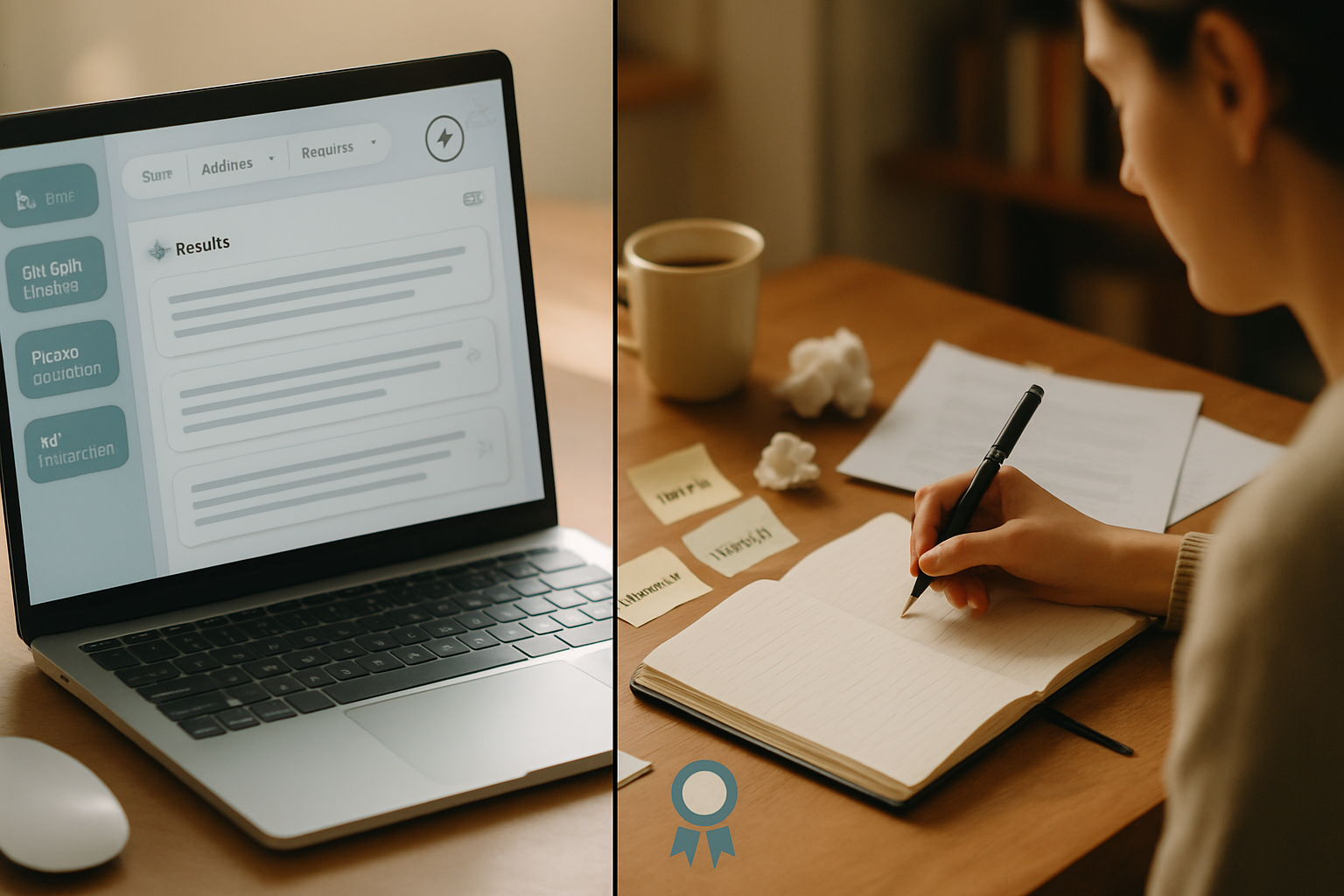
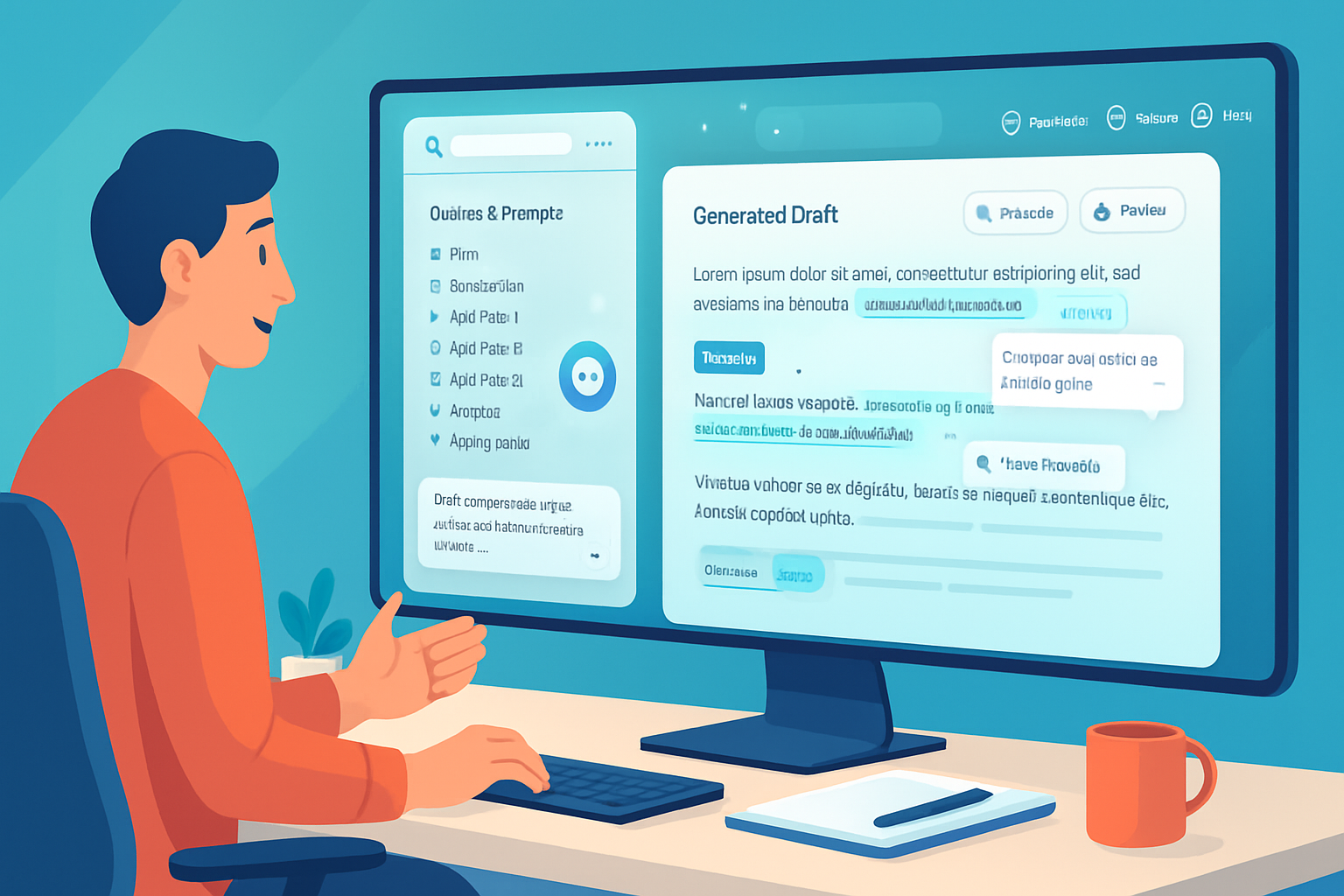
Treat AI as a co-pilot, not a competitor. Use tools like Jasper for ideation, outlines, and first drafts - then add human insight.
Double down on what AI struggles with:
- Investigative reporting and original reporting.
- Unique voice, humor, and emotional resonance.
- Complex argumentation, synthesis, and narrative structure.
- Niche technical expertise and regulated content.
Become an editor of AI output. Offer editing, fact-checking, localizing, and voice-consistency services. Clients will pay for quality control.
Learn prompt engineering. Writing prompts that produce reliable, on-brand outputs is a new skill that commands rates.
Create hybrid services - research + human narrative; interview-led features where AI handles transcription and notes; conversion services that turn reports into blog series.
Build a portfolio that highlights human-led work. Display projects that required judgement, sources, or a distinct voice.
Negotiate contracts explicitly about AI use, credit, and ownership. Protect your IP and clarify whether AI-assisted work is permissible.
Upskill continuously. Take courses in domain expertise, data literacy, multimedia storytelling, or SEO strategy to increase your leverage.
Example workflows that scale human value
Marketing agency workflow - AI generates 10 headline options → human strategist selects and tailors 3 → copywriter refines the chosen headline and drafts creative assets → editor ensures legal and brand safety.
Feature journalism workflow - AI transcribes interviews and suggests a tentative outline → reporter verifies facts, conducts follow-ups, and writes the narrative → editor polishes voice and sources.
E-commerce workflow - AI drafts product descriptions in bulk → human specialist optimizes high-value SKUs and writes brand narratives for hero products.
Prompt templates that protect quality (examples)
“Draft a 500-word blog post on [topic] for [audience], using a professional but warm tone. Include three credible sources and list them at the end. Flag any claims that need citation.”
“Produce 8 headline options for [product], each 6–10 words, emphasizing [benefit]. Mark the top two best for conversions and explain why in one sentence.”
Using templates like these forces the model to surface uncertainty and makes editing more efficient.
Pricing and business model tips for writers
- Charge for results and expertise, not just words. Position services as conversion optimization, thought leadership, or research-driven storytelling.
- Offer bundled packages that include AI-assisted drafts plus human finalization and guarantees (accuracy, brand voice).
- Sell training and workshops - teach teams to use Jasper responsibly and effectively.
The long view: markets adjust, roles change
History shows technology reshapes labor but also creates new categories of jobs and value. The printing press, radio, and web all disrupted creators yet produced new professions and higher-order creative niches. Policy and collective action matter too - from retraining programs to fair contract terms for gig work.
If you’re a writer, your best defense is a mix of craft, domain expertise, and adaptability. Tools will continue to get better. So should your skills.
Quick checklist: Are you at risk - and what to do now?
- Do your tasks include repetitive, formulaic writing? If yes - automate and pivot to editing and specialization.
- Do clients value investigation, interviews, or unique perspective in your work? If yes - emphasize those strengths in pitches and portfolios.
- Are you comfortable using AI for drafts and ideation? If not - experiment and learn prompt design.
- Do your contracts specify AI usage and ownership? If not - add explicit clauses.
Final reckoning
Jasper and similar AI writing systems will continue to erode some segments of the writing market - especially commodity, volume-driven work. But they also create opportunity: faster ideation, larger output capacity for those who can scale quality, and new markets for editing, human-led storytelling, and AI workflow consultancy. The people who thrive will be those who treat AI as a tool to amplify distinctively human skills rather than a one-click replacement. The future won’t be human or machine. It will be human plus machine - and the balance you choose will decide whether you are replaced or elevated.