· business · 6 min read
The Future of Accounting: How Wave is Pioneering AI Integration
An in-depth look at how Wave is using AI and machine learning to simplify bookkeeping for small businesses, what this means for owners and accountants, the risks to watch, and practical steps to benefit from the shift.
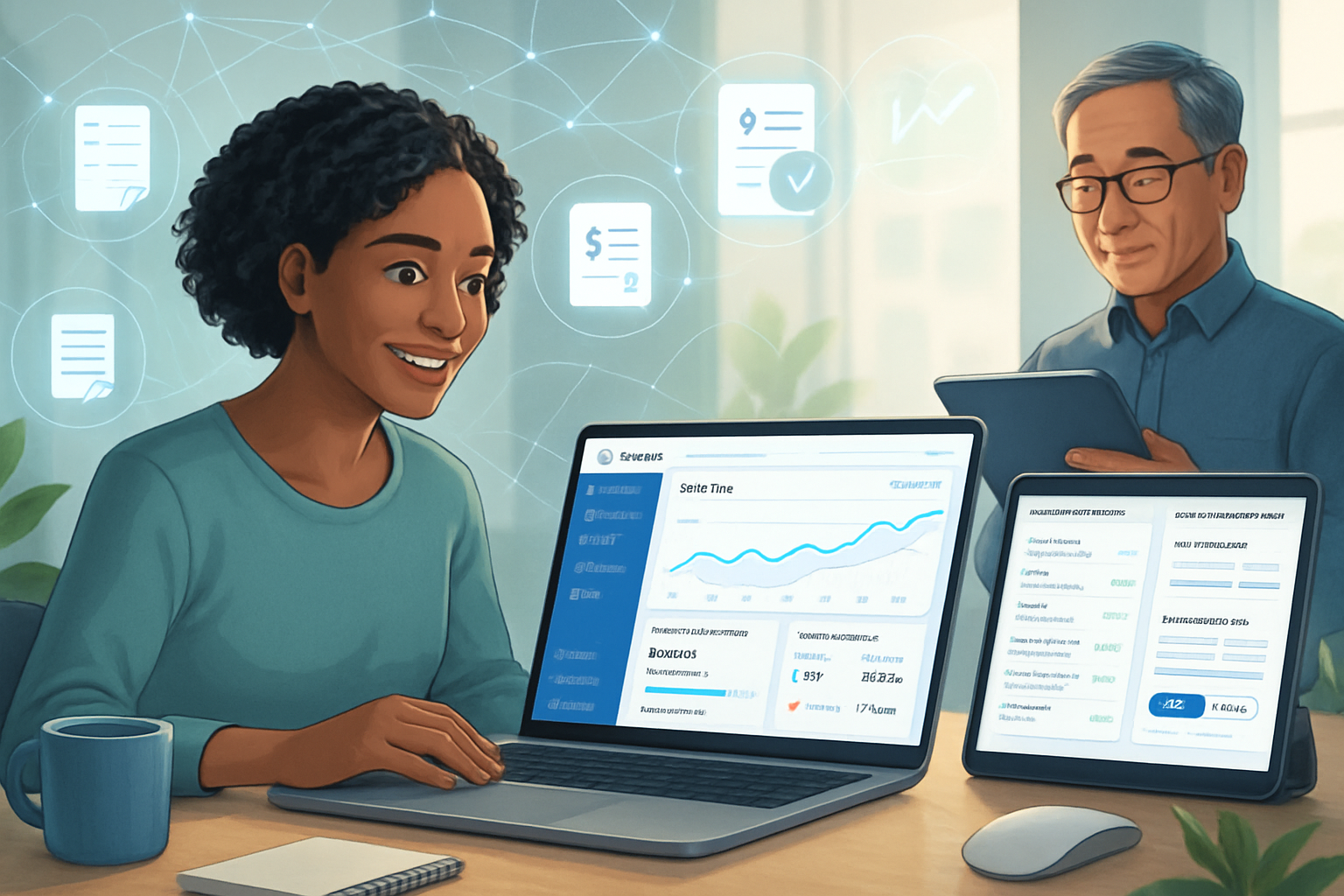
Read this and you’ll know what Wave’s AI-driven future means for your small business - and how to act now to get ahead.
You’ll save time. You’ll reduce errors. You’ll gain clearer cash-flow insights. And you’ll change the way you work with your accountant.
Why this matters now
Accounting used to be a slow, manual grind. It still can be. But automation and AI are changing the equation, especially for small businesses that don’t have big finance teams. Wave, the free-first accounting platform widely used by small business owners and freelancers, is positioned to make those gains widely accessible.
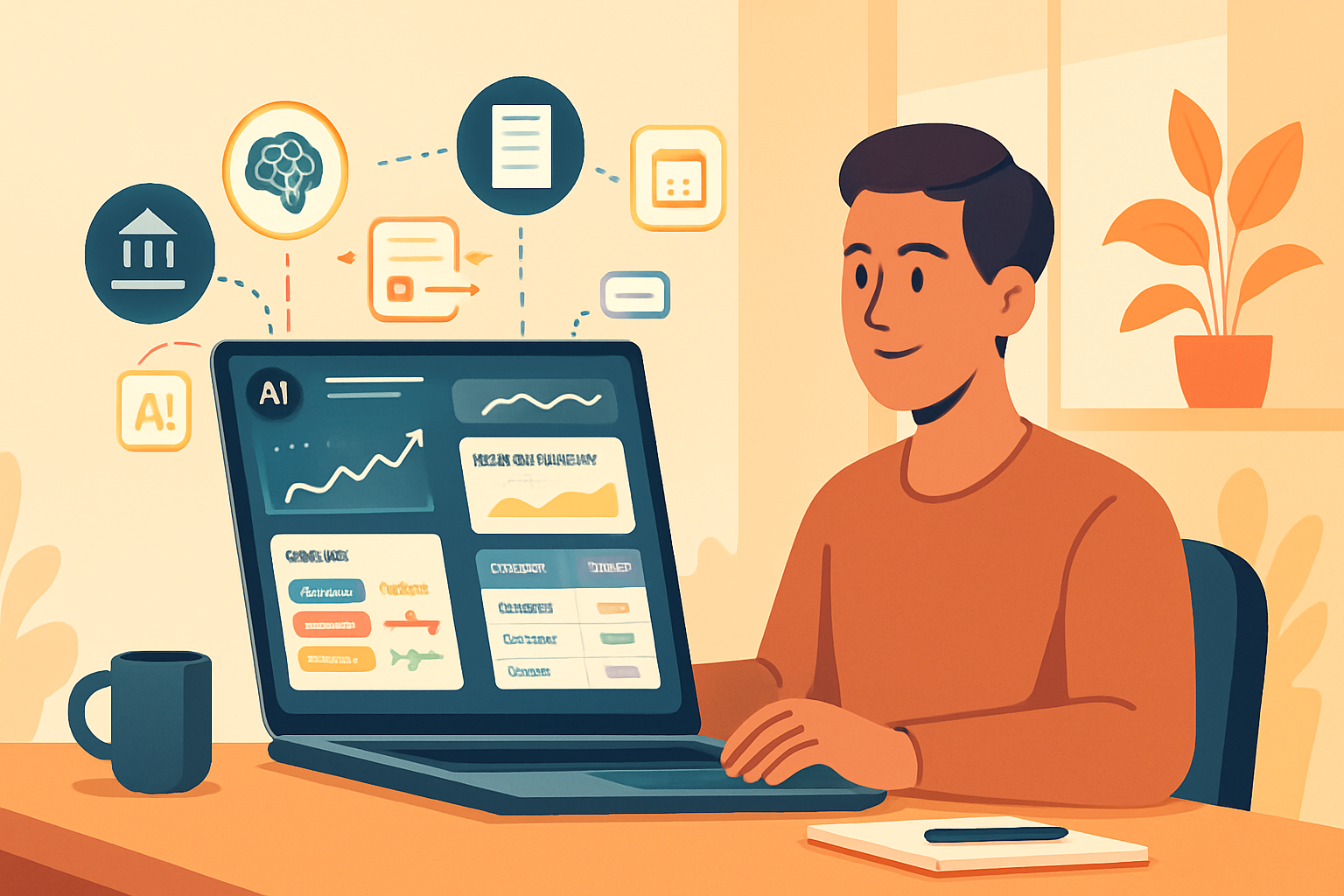
Wave already provides core bookkeeping, invoicing, receipt capture and bank connections. Many of those features benefit from machine learning and OCR. That’s the foundation. What comes next is about turning data into proactive advice, not just records.
What Wave brings to the AI table (today and next)
Below are the concrete ways Wave is - or logically can - integrate AI to change accounting for small businesses. Some of these are already in place in different forms (receipt OCR, auto-categorization) and others are near-term extensions that follow the same technical trends.
Automated transaction categorization
- Machine learning models can learn how you categorize expenses and apply that pattern to new transactions, cutting manual sorting to near zero.
Receipt scanning and OCR
- Wave’s mobile receipt capture already uses OCR and image-processing techniques to extract date, vendor and amounts from photos - speeding bookkeeping and reducing entry errors.
Faster bank reconciliation
- AI can match bank lines to invoices and bills with higher accuracy and surface probable matches rather than forcing manual search.
Smart invoicing and collections
- Predictive models can suggest optimal invoice reminders, detect invoices likely to go unpaid, and prioritize follow-ups to maximize cash flow.
Cash-flow forecasting and scenario modeling
- Using historical patterns and seasonal effects, Wave can produce short- and medium-term cash forecasts and run “what if” scenarios for growth or expense changes.
Natural-language queries and insights
- Ask Wave in plain English - “How much did I spend on contractors last quarter?” or “Which client is 60 days overdue?” and get instant, contextual answers.
Expense policy and fraud flags
- Algorithms can flag outlier transactions or duplicate expenses for review, acting as a first line of fraud detection.
Automated bookkeeping workflows
- AI-driven rules and templates that adapt to your business, reducing the need for custom configuration as your operations scale.
If you want to explore Wave’s current features and roadmap, their product pages and blog are good starting points: https://www.waveapps.com/features and https://www.waveapps.com/blog/.
Why this is especially powerful for small businesses
Large firms have long used expensive ERP systems and teams to make sense of financials. Small businesses haven’t had that luxury. That changes when a low-cost platform like Wave applies AI.
- Time reclaimed. Small owners spend fewer hours on paperwork and more on customer-facing work.
- Lower cost. Automation reduces the need for hourly bookkeeping and the friction of hiring help.
- Better decisions. Forecasts and trend detection let owners act earlier - reorder inventory, delay non‑critical spend, or chase slow payers.
- Democratized insights. Small teams get the same kinds of financial signals that used to be available only to larger companies.
Industry analysis shows finance functions are shifting from ledger work to insight and strategy as automation matures (see Deloitte on AI in finance: https://www2.deloitte.com/).
The accountant’s changing role
AI doesn’t replace accountants. It changes their job. Repetitive data entry fades. Advisory and interpretation grow.
- More advisory work - accountants will focus on tax optimization, forecasting, and business strategy.
- Higher-value workflows - reviewing AI-suggested classifications, adjusting forecasts, and coaching clients.
- New skills - familiarity with automation rules, data governance and interpreting model-driven outputs.
Small business owners who retain or partner with accountants will get the most value by reassigning routine tasks to the platform and using human time for strategic help.
Risks, limits and what to watch for
AI is powerful. It isn’t perfect. Here are the real trade-offs and governance questions:
- Accuracy - models make mistakes. Misclassifications can cascade into bad reports or tax issues.
- Privacy and security - financial data is sensitive. Understand where your data is stored and who can access it.
- Explainability - AI suggestions should be transparent so you and your accountant can validate them.
- Bias and edge cases - uncommon transactions might be misinterpreted. Manual review must remain possible.
- Overreliance - full automation without checks is risky. Controls and periodic audits are essential.
Regulation will also shape how accounting AI is used, especially for tax reporting and audit trails. Stay current with local compliance requirements.
Practical steps for small business owners using Wave
- Start small and validate
- Enable automations like transaction categorization, but spot-check results weekly for a month.
- Keep an audit trail
- Don’t delete receipts; link images to transactions and keep notes for unusual items.
- Use role-based access
- Limit who can change classifications or export data. Segregation of duties still matters.
- Back up exports regularly
- Export CSVs or PDF reports monthly and store them off-platform as a backup.
- Partner with your accountant early
- Let your bookkeeper or accountant review AI rules and exceptions so they can build trust in the system.
- Evaluate cash-flow tools
- Use forecasting outputs to build simple action plans (minimum-cash buffer, receivables follow-ups).
- Review privacy settings and vendor policies
- Know how Wave uses data and what controls you have over it (sharing, deletion, export).
Recommendations for Wave and similar platforms
If you’re building or evaluating AI for small-business accounting, prioritize these areas:
- Human-in-the-loop workflows - keep people in the review loop for unusual items.
- Clear explainability - show why a transaction was classified a certain way and let users correct and teach the model.
- Simple guardrails - provide defaults for smaller users and advanced controls for power users and accountants.
- Local compliance modes - tax rules differ by jurisdiction; AI should surface local tax impacts and reminders.
- Privacy-first design - minimize data retention where possible and make data portability easy.
The near-term future (2–3 years)
Expect incremental but impactful changes:
- Routine bookkeeping will be largely automated for most simple businesses.
- Dashboards will become predictive rather than purely descriptive.
- Accountants will offer bundled advisory packages - strategic planning plus oversight of automated books.
- More integration across payroll, payments, and tax services so AI can produce end-to-end recommendations.
Wave, with its footprint among freelancers and micro-businesses, is well-placed to make these advances broadly available and low-cost. That’s important: not every small business can afford bespoke AI - many will adopt bundled solutions from providers they already trust.
Final perspective
AI’s arrival in accounting is not about replacing human judgment. It’s about removing friction and amplifying the decisions that matter. For small businesses, the payoff is tangible: less time on data, more time on growth. For accountants, it’s a mandate to evolve from bookkeeper to trusted advisor.
Wave’s combination of accessible product design, existing automation features, and a large small-business user base means it can be a major conduit for that shift. The practical outcome is simple: better bookkeeping, smarter forecasts, and more time to focus on building your business.
References
- Wave features and product information: https://www.waveapps.com/features
- Wave blog: https://www.waveapps.com/blog/
- Industry perspectives on AI in finance - Deloitte Insights -
- Coverage of Wave’s market presence and context - TechCrunch -